Lovable vs Emergent: Which AI App Builder is Right for You in 2026?
Key Takeaways
- Lovable provides full frontend code ownership, allowing teams to refine, export, and extend React and Supabase projects with real developer control.
- Emergent generates complete full-stack apps instantly, covering frontend, backend, database, and hosting from a single prompt with no setup.
- Lovable is design-first and fully editable, making it ideal for UI-heavy apps, prototypes, and smooth developer handoff.
- Emergent focuses on speed and automation, fitting solo founders who need a fast MVP without deep customization or code export.
- Lovable scales better for long-term growth, while Emergent excels in early build-and-ship workflows.
- Vitara offers a balanced approach with full-stack code ownership and rapid automated app generation without ecosystem lock-in.
AI app builders like Lovable and Emergent promise to turn your prompt into a working product in minutes. But how far can each of them really take you when it’s time to scale beyond the first draft?
Both tools let you describe your idea in plain English and get instant results. Emergent focuses on automation and speed, ideal for non-technical founders who want a full-stack MVP without touching code. Lovable leans more toward creative control, giving you editable React and Supabase code that you can fine-tune or pass along to your dev team.
In this guide, we’ll break down Lovable vs Emergent feature by feature. We’ll look at design flexibility, backend automation, pricing, export options, and who each platform is really built for. You’ll also see when it makes sense to start with one, and when you might need to switch to something more customizable down the road.
What is lovable?
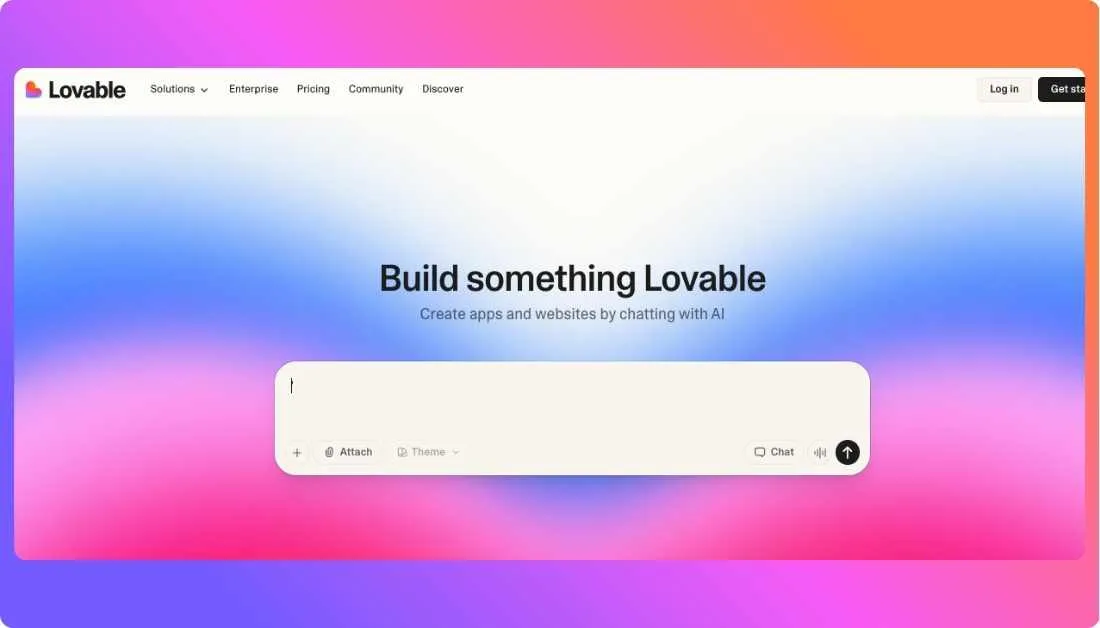
Lovable is an AI-powered app builder that turns plain English prompts into real, editable code. It focuses on frontend design and gives you clean React and Supabase output you can actually work with. Instead of locking you into a hosted platform, Lovable hands over the code so you or your dev team can build on top of it.
Continue reading: Top Lovable Alternatives
Lovable vs Emergent.sh at a glance
| Category |
Lovable |
Emergent.sh |
| Build approach |
AI generates editable React/Supabase frontend with live preview |
AI creates full-stack apps from a single prompt, including backend and hosting |
| Code ownership |
Full frontend export; backend setup handled outside Lovable |
Limited or no code export; backend stays managed within Emergent |
| Database & backend |
Supabase included but locked down; backend logic added post-export |
Fully auto-generated backend and database with little to no user setup |
| Editing model |
Visual editor with code export; devs can extend or refactor freely |
No visual editing; regenerate flows or prompt again for changes |
| Hosting & deploy |
Preview on Lovable Cloud; export to GitHub for full control |
Auto-deployed apps with live links; limited custom deployment options |
| Authentication |
No built-in auth; handled manually or via integrations |
Basic auth auto-included with limited customization |
| Collaboration |
GitHub-based handoff and team review flows |
Not team-centric yet; designed for solo builds and fast launches |
| Pricing model |
AI usage credits with rollover on paid plans |
Usage-based tiers with generation limits; no rollover credits |
| Mobile responsiveness |
Solid on most layouts; may need tweaking post-export |
Generally responsive out of the box, but limited layout control |
| Typical use cases |
Design-led prototypes, UI-first projects, developer handoff |
Solo founders building MVPs, backend-heavy ideas, no-code launches |
Lovable AI Key Features
Prompt-to-code with full front-end export
Lovable takes your app idea and instantly turns it into polished React and Supabase code. You get clean, editable components with smart defaults that actually look good. It’s great for product teams or designers who want to move fast but still have control over the code when it’s time to refine or scale.
Live previews and design-first workflow
Every app you build is previewed in Lovable Cloud, so you can see how it looks before exporting. This makes it easy to iterate quickly without needing to deploy every version. While it doesn’t manage your backend, the frontend is production-grade and handoff-ready.
Visual edits + AI regeneration
Instead of starting over when something feels off, you can tweak layouts visually or rephrase your prompt to regenerate sections. If you’re working with a developer, they can jump in and refine the exported code directly. It’s a flexible system that fits both design-driven and code-driven teams.
GitHub integration and team handoff
On paid plans, Lovable lets you export your full frontend to GitHub, where your team can continue building. This gives you total ownership of your codebase and makes collaboration easier. Backend logic, auth, and hosting still need to be handled outside Lovable, but that trade-off brings flexibility for teams who want full-stack control.
What Lovable is best for
Lovable is built for teams and solo builders who want control over the frontend without starting from scratch. It’s ideal for designers, product managers, or developers who care about how things look and feel, and want real, editable code they can refine or hand off. Lovable has grown to nearly 8 million users worldwide, ranking it among the fastest-adopted AI app-building platforms.
You can use Lovable to:
- Design and prototype apps quickly with AI-generated React components that are clean, readable, and production-ready.
- Create frontends for startup MVPs, internal tools, or client demos, while keeping full ownership of the code through GitHub export.
- Collaborate with developers by handing off exportable code that can be extended with APIs, backend logic, or third-party services.
- Iterate visually and regenerate sections as needed using the built-in editor, so you’re not locked into a rigid flow or waiting on engineers for every change.
Limitations of Lovable AI
While Lovable gives you solid control over the frontend, there are a few trade-offs to keep in mind:
- It doesn’t generate the backend, so you’ll need to connect to external services or write your own APIs.
- There’s no built-in authentication, which means setting up login flows manually.
- You can’t access or modify the bundled Supabase instance directly.
- Hosting is for preview only, and full deployment requires exporting the code.
- Some layout refinements may still need manual code tweaks for a production-ready finish.
Lovable AI Pricing
Lovable offers four pricing tiers, starting with a generous free plan and scaling up to enterprise solutions for larger teams. Lovable Pricing is credit-based, with monthly limits and the ability to roll over unused credits on paid plans.
Free: $0/month. Includes 5 daily credits (up to 30 per month), unlimited collaborators, 5 lovable.app subdomains, and access to public projects on Lovable Cloud. No credit card required.
Pro: $25/month. Shared across unlimited users. Comes with 100 credits per month, custom domains, credit rollovers, user roles and permissions, and the ability to remove the Lovable badge.
Business: $50/month. Designed for growing teams. Adds internal publishing, SSO, personal projects, opt-out from data training, and access to premium design templates. Includes everything in Pro.
Enterprise: Custom pricing. Built for organizations that need advanced governance, onboarding support, custom connections, and private design systems. Includes all features in Business, plus priority services.
Breaking down the real cost of using Lovable
Lovable’s pricing feels straightforward at first, but the real cost depends on how often your team runs AI generations and how much you’re relying on Cloud hosting or advanced features. Credits reset monthly, and while paid plans offer rollover, usage can scale up quickly depending on your workflow.
Here’s what that means in practice:
- Credits go faster than you think: The Pro plan includes 100 monthly credits plus daily extras, but those can disappear quickly during active development. Regenerating UIs, previewing changes, or exploring different ideas can use up your balance in just a few days.
- Exporting and branding need a paid plan: The free tier is great for trying things out, but if you want to remove the Lovable badge, connect custom domains, or export to GitHub, you’ll need to pay at least $25/month.
- No backend means extra services: Lovable doesn’t handle backend logic or authentication, so you’ll likely need to pair it with Supabase, custom APIs, or other services and those might add to your overall costs.
- Team use is unlimited, but shared credits matter: Even though paid plans allow unlimited users, everyone pulls from the same credit pool. That’s fine for solo builders but can get tight for active teams.
In short, Lovable stays budget-friendly for prototyping and design-first workflows, but costs can add up fast once you start scaling collaboration or need deeper customization.
What is Emergent?
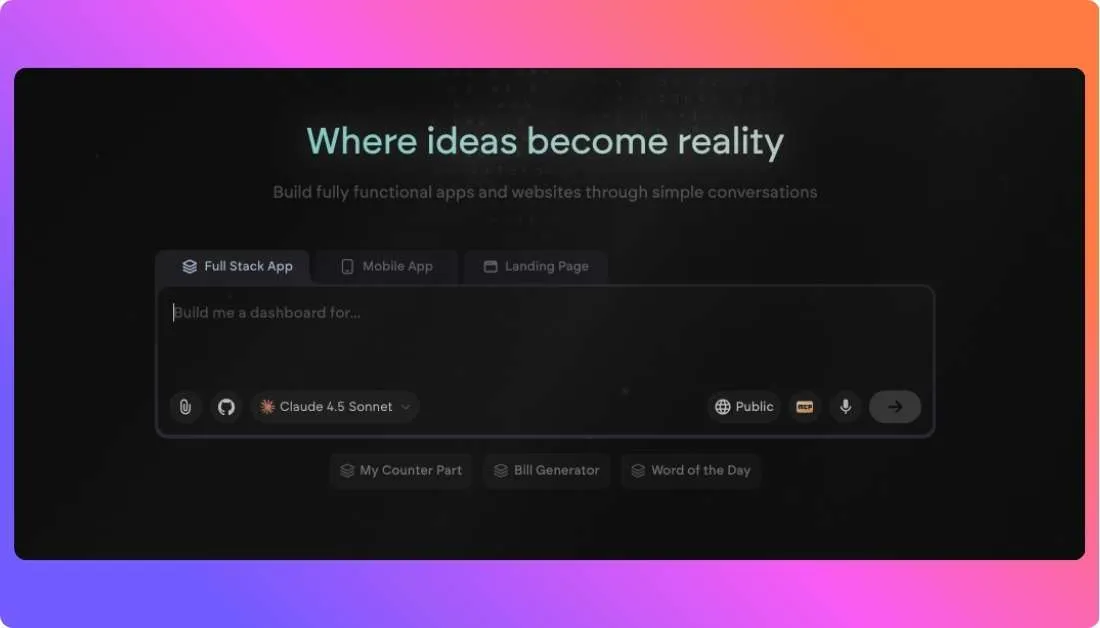
Emergent is a full-stack AI app builder designed for speed and simplicity. You describe your idea once, and it generates the frontend, backend, database, and even deployment in one go. It’s built for people who want to launch a working product fast without writing or editing any code.
Keep reading: Best Emergent Alternatives
Emergent.sh Key Features
Full-stack generation from a single prompt
Emergent builds your entire app using just one prompt. It creates the frontend, backend, database, and authentication automatically. Whether you’re building a job board or a booking system, it handles everything without needing any code or setup.
Instant hosting and live app links
Every project is hosted immediately on Emergent’s cloud. As soon as your app is generated, you get a live link to test or share. There’s no need to manage servers, connect databases, or deal with deployment tools.
One-click regeneration and multi-agent workflows
Emergent uses a network of AI agents that collaborate to build your app behind the scenes. You can regenerate your app with a single click if the first version isn’t right. Each agent handles specific tasks like layout, routing, and data modeling.
Zero-setup authentication and backend
User login, backend APIs, and data models are included by default. You don’t need to write API code or configure database connections. Everything is wired up for you, making it easy to launch a working product in minutes.
What Emergent.sh is best for
Emergent is best for solo builders, founders, or small teams who want to launch full-stack MVPs quickly without writing or managing any code. This capability is enabled by emergent AI research, which shows that advanced AI behaviors appear only at large scales emergent AI capabilities have been observed primarily in models with hundreds of billions of parameters, while smaller models consistently show performance below 20% on the same tasks.
You can use Emergent.sh to:
- Build and ship production-ready apps from a single prompt, with the backend, database, and frontend all generated and hosted for you.
- Skip technical setup entirely, making it a great choice for non-technical founders who need a working product fast to test with users or show to investors.
- Create internal tools or prototypes that require real functionality, like user auth, form handling, and data storage, without needing developer support.
- Launch live apps instantly using Emergent’s built-in hosting and auto-generated links, so you can share or test your product as soon as it’s built.
Limitations of Emergent.sh
While Emergent makes it easy to go from idea to live app in minutes, there are some trade-offs to consider:
- You can’t export code, which limits flexibility if you want to customize or migrate later.
- The backend is fully managed, so there’s no access to internal logic or database structure.
- Regeneration is the main way to make changes, which can feel limiting for detailed control.
- There’s no visual editor, so every update depends on prompts instead of hands-on design tweaks.
- Collaboration tools are minimal, making it less ideal for larger teams or shared workflows.
Emergent.sh Pricing
Emergent.sh’s pricing starts with a free tier and scales up to professional and team plans that fit a range of builders, from individuals testing ideas to companies launching real products. Credits are included with each tier and reset monthly, so your cost depends both on the plan and how much AI work you use.
Free: $0/month. Includes 10 free credits each month and access to core platform features, so you can experiment, build simple flows, and get a feel for the full-stack app builder without spending anything.
Standard: $20/month (annual billing also available with discounted price). Designed for first-time builders or solo founders. Adds 100 credits per month, private project hosting, GitHub integration, and the ability to purchase extra credits if needed.
Pro: $200/month (annual billing also available with discounted price). Built for serious creators who need advanced tools. You get 750 credits per month, a 1M context window, system prompt editing, custom AI agent creation, high-performance computing, and priority support.
Team: Around $300/month (may vary). Designed for collaborative workspaces. Includes a shared credit pool, unified billing, team collaboration tools, and support for multiple members.
Enterprise: Custom pricing. Tailored for larger organizations with needs like single sign-on, role-based access controls, and expanded usage limits beyond the standard and Pro tiers.
Breaking down the real cost of using Emergent.sh
Emergent.sh keeps things simple on the surface, but how much you actually spend depends on how often you’re building, regenerating, or scaling your apps. Every generation, change, or rebuild uses credits, which reset monthly and are shared across your workspace if you’re on a team plan.
Here’s what that means in practice:
- Credits can burn fast, especially on Pro or Team plans. A single app build might use multiple credits, and if you regenerate or iterate often, you’ll hit limits quicker than expected.
- Collaboration costs scale quickly. While team plans support multiple users, everyone pulls from the same shared credit pool, which means active teams may need frequent credit top-ups.
- Customization depends on your plan. Features like custom AI agents, editing system prompts, or accessing larger context windows are only available on Pro or higher.
- No code export means lock-in. Since you can’t download the code, migrating away from Emergent or customizing your stack later may require rebuilding from scratch.
- Backend simplicity trades off with flexibility. While the instant backend is convenient, it may not suit complex workflows or data handling needs for production-level apps.
In short, Emergent.sh is great for fast launches and hands-off development, but real costs can rise fast for teams, frequent builders, or anyone needing deeper control.
Want an alternative to Lovable and Emergent?
If you’ve outgrown Lovable’s frontend-only approach or find Emergent too locked down, Vitara offers a smarter middle ground. It’s a full-stack, AI-powered development platform that gives you editable code, real backend control, and a real shot at shipping production apps without getting boxed in. Vitara.ai has shown strong early traction, with over 10,000 users signing up within weeks of launch, and claims to enable developers to build applications up to 12× faster compared to traditional development workflows, highlighting its effectiveness for shipping production-ready software quickly.

Unlike Lovable, which generates frontend code only, and Emergent, which handles everything but keeps the code locked away, Vitara gives you both: frontend and backend code that’s production-ready and fully yours to edit, deploy, or scale.
You can describe your app in plain language and Vitara instantly builds out responsive UIs with React, backend logic with Supabase, built-in auth, APIs, and database connections all in one go. Then, you can iterate on your app with simple prompts or dive into the actual code to refine it further.
Real code, real control
Every part of your app is editable. Export your code, integrate it with GitHub, or keep building inside Vitara’s environment. You’re never stuck with a generated version you can’t tweak.
Backend included, no glue work needed
While Lovable leaves the backend to you and Emergent hides it from you, Vitara gives you direct access to both sides of your stack. Everything is generated together, wired up, and ready to run.
Prompt-based building that actually scales
Vitara doesn’t just throw together quick mockups. It follows best practices, giving you clean architecture that’s scalable, readable, and built for the long haul.
Flexible deployment and hosting options
You’re not locked into Vitara’s hosting. Deploy your app wherever you want. Vitara just helps you get there faster.
Made for devs and non-devs alike
Whether you’re a founder with zero coding skills or a developer who wants to skip boilerplate, Vitara’s vibe coding experience bridges the gap. It’s fast, powerful, and built for real-world software.
In short, Vitara delivers where Lovable and Emergent hit limits. It gives you full-stack freedom, real code ownership, and the power to move from idea to scalable product without hitting a wall.
What to read next:

Final Thoughts
Lovable and Emergent both offer exciting ways to build apps faster, but they serve very different goals. Lovable is perfect if you want control over your frontend and clean code you can take with you. Emergent is better when speed and simplicity matter most, especially if you’re a solo builder who doesn’t want to touch code at all.
If you’re looking for something in between, fast, flexible, and fully editable, Vitara is worth a serious look. It gives you the freedom to build full-stack apps with real ownership, without giving up on speed or hitting limits too early.
Frequently Asked Questions
Lovable lets you export the full frontend code, including React and Supabase, so you can keep building outside the platform. Emergent does not currently offer code export. Everything stays hosted within its own system.
Emergent is more beginner-friendly since it handles everything for you, including backend, database, and hosting. You just describe what you want, and it builds the full app.
Lovable gives more control but assumes you or your team can handle some technical setup.
Emergent generates the backend and APIs automatically, but you can’t view or edit the code. Lovable does not include backend logic by default, so you’ll need to connect your own APIs or use services like Supabase after exporting the code.
Both are great for MVPs, internal tools, dashboards, and prototypes. Emergent works best for fast full-stack apps without much customization. Lovable is better if you want design-first apps that developers can later scale or refine.
Emergent apps are generally responsive by default, but customization is limited. Lovable offers good starting points for mobile, though you may need to tweak layouts manually after export to polish the final result.
Emergent includes built-in authentication with minimal setup. Lovable doesn’t have native auth, so you’ll need to integrate it manually using Supabase or a similar service.
Lovable offers more scalability if you plan to grow or hand off the project to developers. Its exportable codebase gives you full control. Emergent is great for fast launches, but limited in terms of customization and long-term flexibility.
Yes. Vitara is a strong alternative that combines Lovable’s control and Emergent’s speed. It gives you editable frontend and backend code, built-in auth, and prompt-driven development that scales with your needs.