




AI Development Services for Restaurants Solutions Development - Prismetric

AI Development Services for Restaurants

We build custom AI solutions that help restaurants automate high-volume workflows, forecast demand, personalize guest experiences, and make faster operational decisions.

From voice ordering and intelligent agents to inventory forecasting and restaurant analytics, every solution is engineered around your data, existing systems, and growth priorities.

1000+ Happy Clients
1500+ Solutions Developed
50+ Countries
100+ Developers

Build Smarter Restaurant Operations With Purpose-Built AI

We help restaurants automate high-volume workflows, turn operational data into decisions, personalize guest experiences, and connect AI across restaurant technology.

Our End-to-End AI Development Services for Restaurants

We combine AI strategy, engineering, integration, and optimization to build restaurant solutions that move from early validation to production without losing sight of operational fit, performance, or scalability.

Discuss Your Requirement

We help restaurants identify high-value AI opportunities, assess data readiness, and define a practical roadmap aligned with operational and business priorities.

We engineer AI applications around your restaurant workflows, data, and technology stack, taking each solution from architecture through deployment and scaling.

  • Restaurant-Specific AI Architecture
  • Custom AI Application Development
  • Model and Workflow Engineering
  • API-First System Integrations
  • Production Deployment and Monitoring

We build AI agents that understand restaurant context, complete multi-step tasks, and coordinate actions across connected operational and customer-facing systems.

  • Agentic Restaurant Workflows
  • Tool and API-Based Actions
  • Multi-Agent Collaboration Frameworks
  • Human Approval for Sensitive Actions
  • Agent Monitoring and Guardrails

We develop generative AI solutions that help restaurant teams retrieve knowledge, create content, summarize information, and automate knowledge-intensive workflows.

We build machine learning models that turn restaurant data into predictions, recommendations, classifications, and optimization signals for everyday operations.

  • Demand Prediction Models
  • Customer Segmentation Engines
  • Menu Recommendation Systems
  • Classification and Scoring Models
  • Operational Optimization Models

We develop predictive systems that help restaurants anticipate demand, staffing needs, inventory usage, sales patterns, and changing customer behavior.

  • Sales and Demand Forecasting
  • Staffing Requirement Prediction
  • Inventory Consumption Forecasts
  • Customer Behavior Modeling
  • Location Performance Forecasting

We build conversational and voice AI systems that manage ordering, reservations, support, and menu interactions across digital and voice channels.

  • AI Voice Ordering Systems
  • Reservation and Booking Automation
  • Conversational Customer Support
  • Menu Q&A Assistance
  • Personalized Ordering Experiences

We integrate AI with your existing restaurant technology to create connected workflows across POS, ordering, CRM, inventory, reservations, and workforce systems.

  • POS and Ordering Integrations
  • CRM and Loyalty Connections
  • Reservation Platform Integration
  • Inventory and Workforce Connectivity
  • Real-Time Data Synchronization

We help restaurants validate AI ideas quickly by testing technical feasibility, data readiness, integrations, and user value before full-scale development.

  • Rapid AI Prototyping
  • Technical Feasibility Testing
  • Data Readiness Validation
  • Integration Proofing
  • MVP Performance Benchmarking

We improve existing AI systems, models, and workflows to strengthen performance, usability, scalability, reliability, and long-term operational value.

  • Model Performance Tuning
  • Workflow and Automation Optimization
  • AI Infrastructure Modernization
  • Monitoring and Reliability Improvements
  • Scale-Ready Architecture Upgrades

Custom AI Solutions We Build for Restaurant Operations

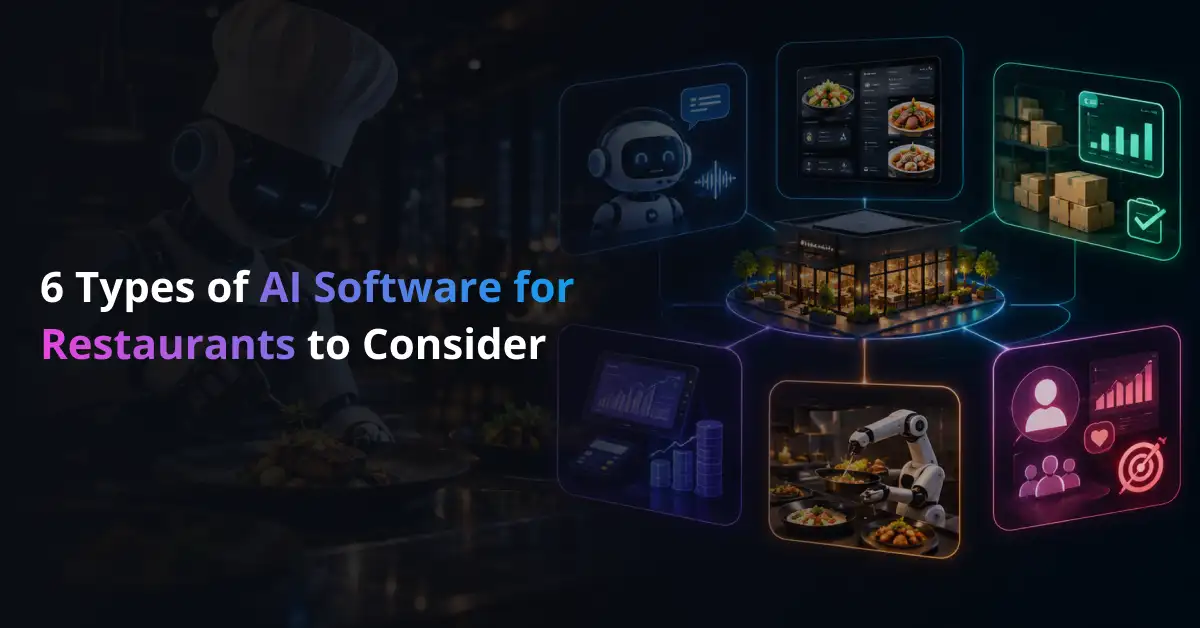
We build restaurant AI solutions across front-of-house and back-of-house workflows, helping teams automate routine work, respond to demand faster, and create more consistent guest experiences.

Custom AI Solutions We Build for Restaurant Operations

AI Voice Ordering Systems for Restaurants

Voice AI captures phone and drive-thru orders, understands modifications, and answers menu questions. It can recommend add-ons and route confirmed orders directly into connected POS systems.

AI Reservation and Table Management Systems

AI reservation systems automate bookings, confirmations, waitlists, cancellations, and table availability. They help reduce manual coordination, anticipate no-shows, and improve peak-hour table utilization during busy service periods.

AI Restaurant Chatbots and Virtual Assistants

Restaurant AI assistants answer menu questions, manage reservations, and handle routine customer requests. They support websites, apps, and messaging channels while escalating complex issues when needed.

AI-Powered Menu Recommendation Engines

Recommendation engines personalize menu suggestions using preferences, purchase history, dietary needs, and ordering context. They can surface relevant pairings, upgrades, and offers during each customer interaction.

Restaurant Demand Forecasting Solutions

Demand forecasting models analyze sales history, seasonality, events, and operational signals. They help restaurants plan staffing, purchasing, preparation, and inventory around expected customer demand.

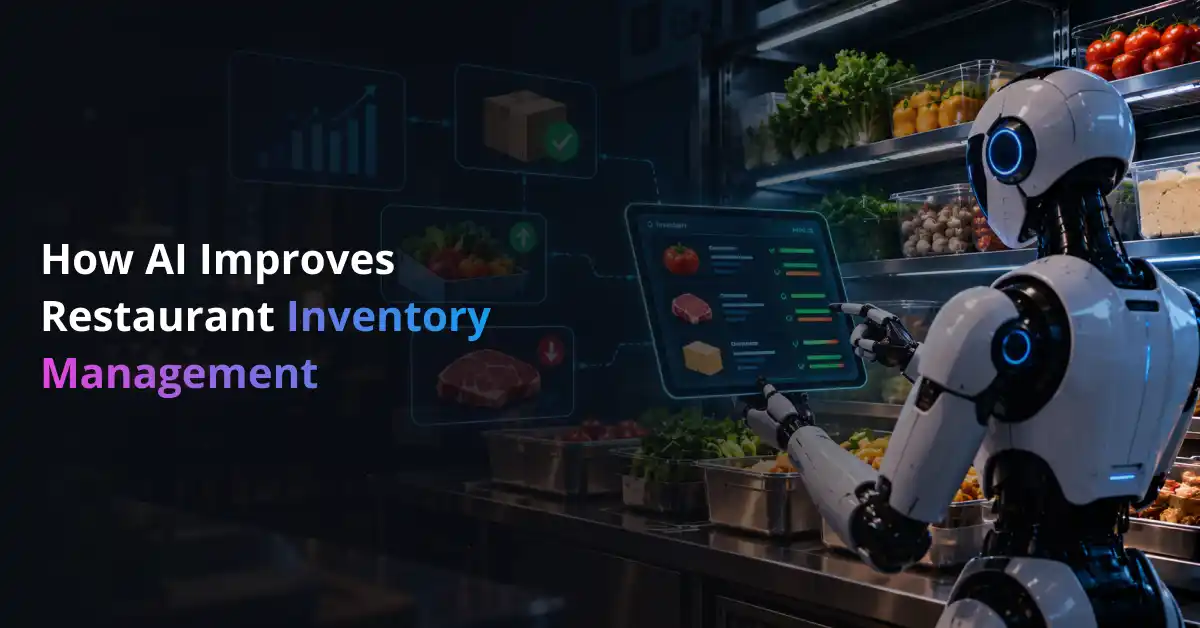
Intelligent Restaurant Inventory Management

AI inventory systems track ingredient consumption, stock levels, and expected demand. They help restaurants anticipate shortages, improve reorder timing, reduce overstocking, and control unnecessary waste.

AI Staff Scheduling and Workforce Optimization

Workforce optimization uses demand forecasts and historical activity to estimate staffing requirements. It helps managers improve shift coverage, labor utilization, and service consistency across busy periods.

AI-Powered Restaurant Analytics

Restaurant analytics combines sales, labor, inventory, customer, and menu data in one view. It helps managers spot anomalies, compare locations, and identify performance opportunities faster.

AI Customer Personalization and Loyalty Solutions

AI personalization uses customer behavior, purchase history, and loyalty activity to tailor experiences. It supports relevant offers, rewards, recommendations, and timely outreach that encourage repeat engagement.

AI Agents We Built for End-to-End Restaurant Operations

Restaurant AI agents handle defined operational tasks across ordering, reservations, inventory, marketing, customer engagement, and management. Each agent connects with relevant restaurant systems, uses current business context, and acts within configured rules. Human approval can remain in place for sensitive decisions, exceptions, or high-impact actions.

AI Ordering Agent

AI Ordering Agent

Processes phone and digital orders, understands modifications, suggests relevant add-ons, and sends confirmed orders into connected POS or ordering systems.

AI Reservation Agent

AI Reservation Agent

Handles bookings, cancellations, confirmations, waitlists, and guest requests while keeping table availability updated during busy service periods.

AI Inventory Management Agent

AI Inventory Management Agent

Tracks stock movement and ingredient usage, predicts potential shortages, and recommends replenishment actions based on demand and current inventory levels.

AI Restaurant Operations Agent

AI Restaurant Operations Agent

Combines sales, labor, inventory, and customer signals to flag exceptions, surface risks, and help managers respond before issues grow.

AI Customer Engagement Agent

AI Customer Engagement Agent

Uses purchase history, preferences, and loyalty activity to trigger relevant offers, recommendations, follow-ups, and personalized guest interactions.

AI Marketing Agent

AI Marketing Agent

Turns customer and campaign data into audience segments, personalized offers, content workflows, and automated marketing actions based on performance.

AI Manager Assistant

AI Manager Assistant

Lets managers ask questions about sales, staffing, inventory, costs, and location performance without searching across multiple dashboards.

Multi-Agent Restaurant Automation

Multi-Agent Restaurant Automation

Coordinates specialized agents across ordering, reservations, inventory, staffing, and customer workflows, sharing context and escalating decisions when human review is needed.

Where Restaurant AI Creates Measurable Business Value

The real value of restaurant AI shows up in daily performance. We focus on areas where better automation, forecasting, and decision intelligence can improve costs, service quality, revenue, and operational control.

Lower Labor and Operating Costs

Lower Labor and Operating Costs

Automate repetitive operational and administrative work so teams spend less time on manual coordination and more time on service-critical activities.

Improve Order Accuracy

Improve Order Accuracy

Capture orders and modifications more consistently across channels, helping reduce remakes, incorrect items, avoidable waste, and poor guest experiences.

Grow Average Order Value

Grow Average Order Value

Use contextual recommendations to surface relevant add-ons, upgrades, and combinations during ordering without relying entirely on staff-driven upselling.

Reduce Food Waste

Reduce Food Waste

Forecast ingredient demand more accurately to improve purchasing and preparation decisions while reducing overproduction, spoilage, and unnecessary inventory loss.

Plan Inventory With Greater Precision

Plan Inventory With Greater Precision

Anticipate stock requirements earlier and give teams clearer visibility into consumption, replenishment priorities, and potential shortages before they affect service.

Align Staffing With Real Demand

Align Staffing With Real Demand

Use demand forecasts to plan coverage by service period, helping restaurants control labor costs while maintaining the staffing needed for consistent operations.

Create More Relevant Guest Experiences

Create More Relevant Guest Experiences

Use behavioral and transaction data to personalize recommendations, rewards, promotions, and communications across different stages of the customer journey.

Strengthen Repeat Customer Engagement

Strengthen Repeat Customer Engagement

Identify customer patterns and trigger timely, relevant interactions that support repeat visits, stronger loyalty participation, and longer-term guest relationships.

AI Development Success Stories from Our Clients

Our AI works that shed light on our skill-set, successful work methodology and technical proficiency

AI-Powered Art Generator Platform

Use case: Generative AI app development

Industry: Creative technology

Stack: GenAI model integration, responsive web app, prompt workflow

Client Need

The client needed a faster way for users to create quality digital artwork without advanced design skills.

Prismetric Solution

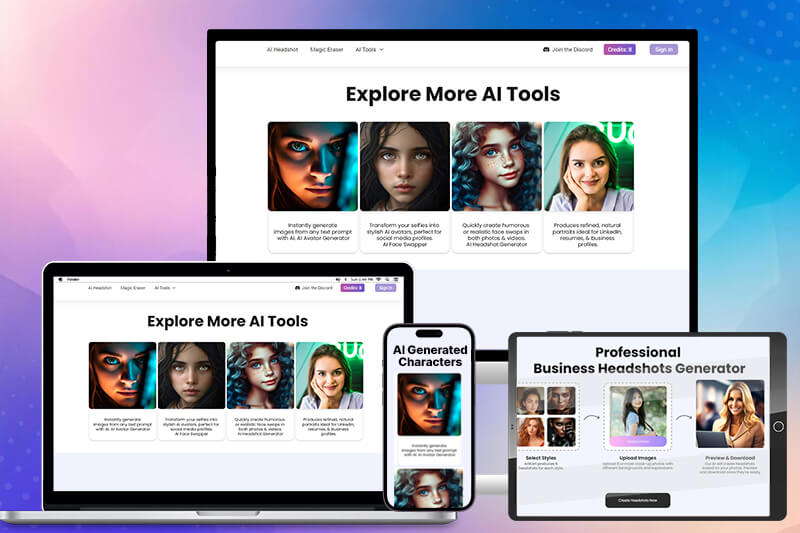
Prismetric built an AI art generator that converts text prompts into unique visuals within seconds across web, tablet, and mobile screens.

Business Impact

  • 4x faster artwork creation
  • 45% higher user engagement
  • 60% lower manual design effort
  • 30% improvement in repeat usage
View Case Study
AI-Based Art Generator Platform

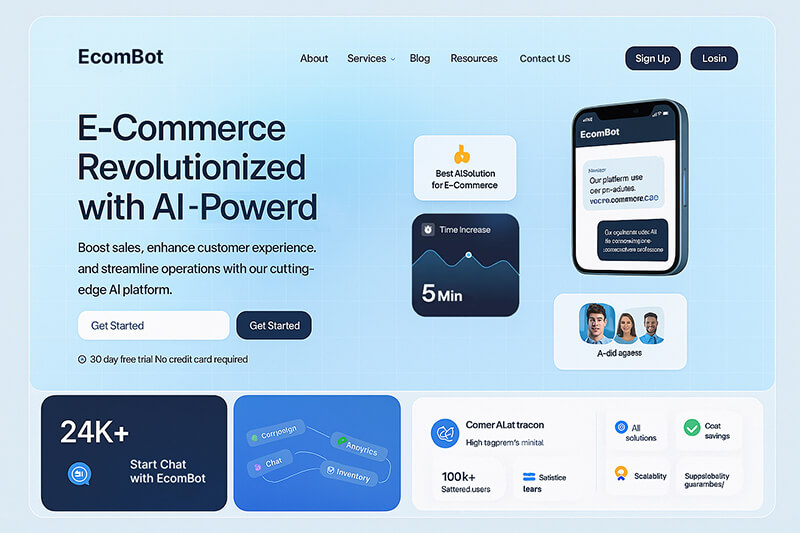
AI Chatbot for E-commerce Platform

Use case: AI chatbot development

Industry: E-commerce

Stack: NLP, chatbot workflow, product search, support automation

Client Need

The client needed a faster way to answer shopper questions, guide product discovery, and reduce delays in customer support.

Prismetric Solution

Prismetric built an AI chatbot that helps shoppers find products, get instant answers, and receive purchase support across the buying journey.

Business Impact

  • Up to 3x faster shopper query responses
  • Up to 40% higher customer engagement
  • Up to 35% lower repetitive support load
  • Up to 25% better conversion support
View Case Study
AI Chatbot for Ecommerce

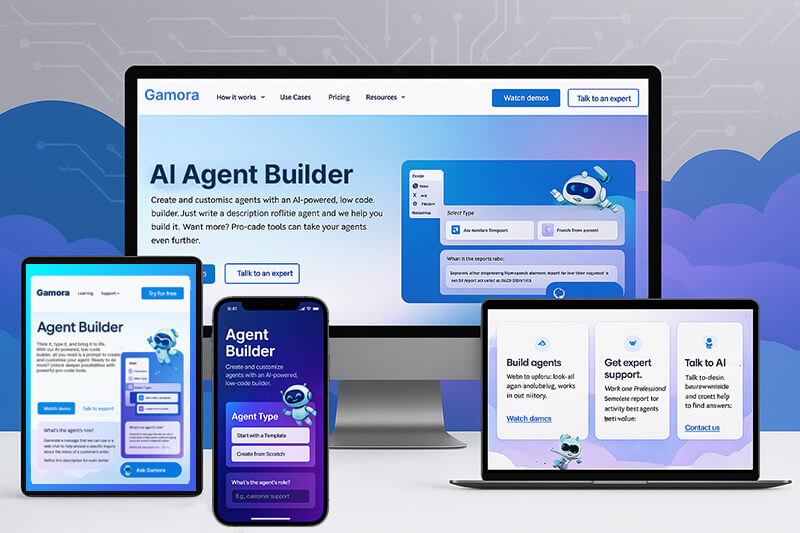
Custom AI Agent Builder

Use case: AI agent development

Industry: Business automation

Stack: LLM integration, agent workflow, task automation, API connectivity

Client Need

The client needed a faster way to build and launch AI agents for different business tasks without starting from scratch every time.

Prismetric Solution

Prismetric built a custom AI agent builder that helps teams design, configure, deploy, and manage intelligent agents across workflows.

Business Impact

  • 3x faster AI agent deployment
  • 40% reduction in manual setup effort
  • 35% improvement in workflow automation efficiency
  • 50% faster rollout of new agent based use cases
View Case Study
Custom AI Agent Builder

We Help You Connect AI With the Restaurant Systems You Already Use

As a restaurant AI development company, we connect intelligent capabilities with technology already supporting daily operations. Our integration approach links data, workflows, and applications so AI works within existing restaurant processes.

POS System Integration

POS System Integration

We integrate AI with POS data covering orders, menus, sales, and customers. This supports forecasting, recommendations, inventory intelligence, and faster operational decisions.

Online Ordering Integration

Online Ordering Integration

Our developers connect AI with online ordering platforms to personalize customer journeys. The integration also supports request validation, demand analysis, and better fulfillment.

Reservation System Integration

Reservation System Integration

As an AI engineering partner, we connect reservation data with availability and guest workflows. This supports confirmations, waitlists, no-show prediction, and table utilization.

CRM and Loyalty Integration

CRM and Loyalty Integration

Using customer profiles, purchase history, and loyalty data, AI can personalize guest interactions. Our integrations support targeted offers, rewards, recommendations, and timely communications.

Inventory System Integration

Inventory System Integration

Our integration team connects stock, ingredient, and purchasing data with AI models. This helps restaurants forecast requirements, identify shortages, and improve replenishment planning.

Workforce Management Integration

Workforce Management Integration

We connect scheduling and labor systems with demand forecasts across service periods. This helps managers improve shift planning, staffing levels, and workforce allocation.

Kitchen Display Integration

Kitchen Display Integration

Built around kitchen workflows, AI integration improves order sequencing and preparation visibility. It also helps teams monitor timing, detect bottlenecks, and manage service flow.

Delivery Platform Integration

Delivery Platform Integration

Our engineers connect delivery platforms with order and fulfillment data. Restaurants can analyze demand, delays, channel performance, and operational patterns across delivery workflows.

Accounting and ERP Integration

Accounting and ERP Integration

As a custom AI development provider, we integrate accounting and ERP data. This supports forecasting, cost visibility, purchasing analysis, and multi-location financial planning.

AI Technologies We Use to Build Smarter Restaurant Solutions

Different restaurant problems call for different AI capabilities. We combine the right models, data techniques, and automation technologies based on the workflow, business objective, available data, and required level of intelligence.

Generative AI

Generative AI

We use generative AI to build assistants and applications that create responses, summarize information, surface knowledge, and support content-heavy restaurant workflows.

Agentic AI

Agentic AI

We develop agentic systems that understand goals, use tools, make context-aware decisions, and complete multi-step tasks across connected restaurant operations.

Machine Learning

Machine Learning

We apply machine learning to restaurant data for forecasting, customer segmentation, recommendations, classification, optimization, and other predictive decision-making use cases.

Natural Language Processing

Natural Language Processing

NLP helps restaurant systems understand and process human language across chat, search, customer feedback, internal knowledge, and support interactions.

Predictive Analytics

Predictive Analytics

We use predictive models to anticipate sales, demand, labor requirements, inventory usage, and customer behavior before operational decisions need to be made.

Conversational AI

Conversational AI

We create conversational experiences that let customers and restaurant teams ask questions, complete requests, and interact naturally with connected systems.

Voice AI

Voice AI

Voice AI powers ordering, reservations, drive-thru interactions, and customer assistance where natural spoken conversations can replace repetitive manual handling.

Computer Vision

Computer Vision

We apply visual intelligence to use cases such as quality monitoring, occupancy analysis, recognition, and selected kitchen or operational workflows.

Recommendation Systems

Recommendation Systems

Recommendation engines use customer, order, and contextual data to personalize menu suggestions, item combinations, offers, and upsell opportunities.

Deep Learning

Deep Learning

We use deep learning for more complex restaurant use cases involving speech, visual recognition, language understanding, forecasting, and high-dimensional pattern detection.

Restaurant Data Analytics

Restaurant Data Analytics

Analytics brings fragmented operational data together so teams can understand sales, labor, inventory, customer behavior, and location performance more clearly.

Intelligent Automation

Intelligent Automation

We combine AI with workflow automation to connect systems, trigger actions, reduce repetitive work, and move restaurant processes forward automatically.

AI Models, Frameworks, and Platforms Behind Our Restaurant Solutions

As a restaurant AI development company, we stay model-agnostic across architecture and implementation. This flexibility helps us select technologies around performance, security, cost, deployment needs, and your existing restaurant ecosystem.

Large Language Models

We use OpenAI, Claude, Gemini, Llama, and Mistral across restaurant AI solutions. These models support assistants, generative applications, agents, and knowledge workflows.

Machine Learning Frameworks

Our machine learning teams use TensorFlow, PyTorch, and Scikit-learn for restaurant datasets. These frameworks support forecasting, recommendations, classification, segmentation, and optimization models.

Cloud AI Platforms

We deploy AI on Amazon Web Services, Microsoft Azure, and Google Cloud Platform. These environments support model hosting, data processing, integrations, monitoring, and production workloads.

AI Orchestration Frameworks

Our orchestration technologies connect AI models with restaurant data, tools, APIs, and business logic. They coordinate agentic and generative workflows across connected operational systems.

Vector Databases and Knowledge Retrieval

We implement retrieval systems that connect AI applications with relevant restaurant knowledge. Vector search helps ground responses, content generation, and automated actions in context.

Data Engineering Technologies

Our data engineering pipelines collect, clean, structure, and prepare restaurant information. Reliable data supports analytics, model development, retrieval, and intelligent operational applications.

API and Integration Technologies

We use secure API architectures to connect AI with POS, CRM, ordering, inventory, reservation, and workforce platforms. These integrations support controlled data exchange and automation.

How We Take Restaurant AI From Idea to Production

Building restaurant AI takes more than choosing a model. We follow a structured development approach that validates the business case, prepares the data foundation, reduces implementation risk, and gets each solution ready for real-world restaurant operations.

Discover the Right AI Opportunities

1. Discover the Right AI Opportunities

We start by understanding your restaurant workflows, operational bottlenecks, existing systems, and business priorities. This helps us identify where AI can create meaningful value instead of adding unnecessary complexity.

Assess Your Data and Technology Readiness

2. Assess Your Data and Technology Readiness

We evaluate available data, APIs, platforms, integration points, and infrastructure to understand what the proposed solution needs and where technical gaps may affect performance.

Define the AI Strategy and Architecture

3. Define the AI Strategy and Architecture

We map the solution architecture, AI capabilities, workflows, integrations, and success metrics before development begins, giving every stakeholder a clear direction for implementation.

Validate the Concept With a PoC

4. Validate the Concept With a PoC

Before scaling, we test the most important assumptions through a focused proof of concept (PoC). This helps validate feasibility, model performance, data quality, integration requirements, and practical user value.

Engineer the Production AI Solution

5. Engineer the Production AI Solution

Once the concept is validated, we build the required models, applications, agents, interfaces, and automation workflows around your restaurant’s real operational requirements.

Integrate With Your Restaurant Ecosystem

6. Integrate With Your Restaurant Ecosystem

We connect the solution with POS, CRM, ordering, reservation, inventory, workforce, and other business systems so AI works within existing day-to-day operations.

Test for Accuracy, Reliability, and Usability

7. Test for Accuracy, Reliability, and Usability

We validate model outputs, workflow behavior, performance, security, and user experience under realistic conditions before the solution moves into production.

Deploy Across the Right Environment

8. Deploy Across the Right Environment

We prepare the application, infrastructure, integrations, and configurations for production deployment across individual restaurants, multi-location groups, or broader enterprise environments.

Monitor, Learn, and Improve

9. Monitor, Learn, and Improve

After launch, we track model and workflow performance, identify drift or emerging issues, and use new data and feedback to continuously improve the solution.

Build Restaurant AI With Security, Control, and Accountability

As a restaurant AI development company, we design security and governance into every layer of the solution. Our approach protects sensitive data, controls system access, and keeps human oversight where business risk requires it.

Secure Data Handling by Design

Secure Data Handling by Design

Our security architecture limits unnecessary data exposure across processing, storage, and system interactions. Sensitive restaurant and customer information stays protected throughout AI workflows.

Role-Based Access Controls

Role-Based Access Controls

We define permissions around user roles and operational responsibilities. Employees, managers, administrators, and connected systems access only approved data, tools, and actions.

Data Encryption

Data Encryption

Encryption protects restaurant data both in transit and at rest. Our engineers apply it across AI applications, APIs, databases, and connected infrastructure.

Secure API Integrations

Secure API Integrations

As an AI development partner, we secure API connections across POS, CRM, ordering, inventory, and reservation systems to protect business data exchange.

AI Guardrails

AI Guardrails

AI guardrails define what models and agents can say, access, or execute. This reduces unsupported responses, inappropriate actions, and avoidable operational risk.

Human-in-the-Loop Oversight

Human-in-the-Loop Oversight

For sensitive restaurant workflows, human approval remains part of the decision path. Teams can review exceptions, high-impact actions, and agent recommendations before execution.

Continuous Model Monitoring

Continuous Model Monitoring

Our AI engineers monitor accuracy, reliability, and model behavior after deployment. Ongoing checks help identify drift, unusual outputs, and workflows requiring refinement.

Privacy-Aware AI Development

Privacy-Aware AI Development

By designing around necessary data only, we reduce unnecessary collection and exposure. This gives restaurants better control over how information supports AI workflows.

Responsible AI Practices

Responsible AI Practices

Our responsible AI approach considers transparency, fairness, reliability, and accountability throughout development. These controls keep restaurant AI understandable, manageable, and aligned with business requirements.

Why Restaurant Businesses Choose Prismetric for AI Development

Building restaurant AI takes more than access to models. It requires the right mix of AI engineering, data readiness, system integration, workflow understanding, and production experience to turn promising ideas into solutions that work reliably in real operations.

AI Built Around Your Restaurant, Not a Template

AI Built Around Your Restaurant, Not a Template

We design each solution around your workflows, data, customer journeys, locations, and existing technology instead of forcing your operations into a predefined product.

One Team From Strategy to Production

One Team From Strategy to Production

Our AI, engineering, data, design, and QA teams work across discovery, architecture, development, integration, testing, deployment, and ongoing optimization.

Deep Focus on Real Restaurant Workflows

Deep Focus on Real Restaurant Workflows

We design around the problems teams manage every day, from ordering and inventory to staffing, forecasting, guest engagement, and location-level operations.

Integration Without Unnecessary Disruption

Integration Without Unnecessary Disruption

We connect AI with the restaurant systems you already rely on, helping you add intelligent capabilities without replacing useful technology simply to modernize.

Architecture Designed to Scale

Architecture Designed to Scale

We engineer AI systems that can support growing transaction volumes, customer interactions, locations, users, data sources, and operational complexity over time.

Technology Chosen for the Use Case

Technology Chosen for the Use Case

We stay flexible across models, frameworks, and cloud platforms, selecting technology based on performance, security, cost, scalability, and integration requirements.

Agentic AI Engineering Expertise

Agentic AI Engineering Expertise

Our teams build AI agents that can use tools, access business systems, coordinate tasks, and operate within clearly defined controls and approval boundaries.

Strong Data Foundations Before Model Development

Strong Data Foundations Before Model Development

We assess data quality, availability, structure, and accessibility early so models are built on reliable inputs rather than assumptions that create problems later.

Collaborative Development From Day One

Collaborative Development From Day One

Regular feedback keeps business and technology teams aligned throughout development, helping us adapt quickly as workflows, priorities, or implementation requirements change.

What Clients Say About Our AI Development Services

With smiles of satisfaction, here’s what our clients’ had to say about our services

Taurean Gordon

Taurean Gordon

CEO Pairchute Corp

Prismetric is a perfect team to work with. We came to them with a product that was a dream they helped to turn it into reality and delivered it on time. Prismetric has great support, great managers, and ability to take your plan and develop a real product. We will be using them for building our future products as well.

Marc De Chellis

Marc De Chellis

Product Director- Launchpad Apps

I am happy that I found Prismetric through some trusted resource. We hired Prismetric team for our clients product development. They did very excellent job and completed the project in defined timeline. We found their team very active and professional. They did give their inputs in improving our app. Our experience was positive so definitely we will work together again.

Richard Tellier

Richard Tellier

President TellAText LLC

When I connected with Prismetric, they stepped up to the play and delivered. They developed TellAText and you know what, they are fantastic! They are the best! They are on time, under budget, and communication was great! Check them out for your development needs. If you need a genuine and productive developer overseas, then your choice should be Prismetric.

Curt Hayes

Curt Hayes

President Audio Design Inc

This was our first attempt in creating an app and Prismetric has taken us to the process of inception, testing and submitting step by step. Throughout they have been courteous and professional. I’m very pleased with how our app has turned out and certainly plan on continuing my relationship with the Prismetric team for whenever there are more updates and version changes. I’m happy to recommend them.

Frequently Asked Questions About Restaurant AI Development

Explore common questions about building, integrating, and scaling restaurant AI solutions, from development costs and timelines to voice agents, forecasting, system integrations, data security, and custom AI adoption.

Restaurant AI development services cover the strategy, design, engineering, integration, and optimization of AI solutions built around restaurant workflows. These can include predictive models, AI agents, voice systems, recommendation engines, intelligent automation, and custom integrations.

AI can support ordering, reservations, inventory, forecasting, workforce scheduling, customer engagement, personalization, marketing, analytics, and food waste management. Solutions can range from a focused automation tool to a connected intelligence layer spanning multiple restaurant operations.

AI can automate repetitive work, forecast demand, improve inventory planning, personalize guest experiences, and give managers faster access to operational insights. The right use cases can also support labor efficiency, order accuracy, waste reduction, and service consistency.

The cost depends on the solution scope, AI complexity, data readiness, required integrations, model selection, infrastructure, and production requirements. A focused PoC typically requires less investment than a multi-system or multi-location AI platform.

Timelines vary based on the use case, integrations, data quality, model complexity, and deployment requirements. A focused prototype can move relatively quickly, while production-grade systems usually need broader engineering, testing, security, and integration work.

Yes. We can connect AI with compatible POS platforms through APIs and available data interfaces, enabling access to orders, menus, sales, and customer information for forecasting, automation, personalization, analytics, and other workflows.

Yes. AI can connect with compatible inventory and digital ordering platforms to synchronize operational data and support forecasting, replenishment planning, order analysis, fulfillment workflows, and inventory optimization.

Yes. We develop voice AI agents that can understand menu requests, handle modifications, answer common questions, suggest relevant additions, confirm orders, and route completed transactions into connected restaurant systems.

Yes. Predictive models can estimate ingredient requirements using historical sales, demand patterns, seasonality, and operational data. Better forecasts can help reduce unnecessary purchasing, overproduction, spoilage, and recurring waste.

AI can combine sales, ingredient usage, purchasing history, stock levels, and expected demand to improve replenishment decisions. It can also identify potential shortages earlier and help teams avoid unnecessary overstocking.

Yes. Forecasting models can analyze historical sales alongside seasonality, events, customer behavior, and other contextual signals to estimate future demand and support staffing, purchasing, preparation, and inventory planning.

Yes. AI can forecast staffing requirements using expected demand, historical activity, service periods, and location-level patterns. These insights help managers align workforce coverage more closely with actual operational needs.

A restaurant AI agent is a system that can understand a goal, access connected tools or data, make context-aware decisions, and complete defined tasks across workflows such as reservations, ordering, inventory, customer engagement, or reporting.

Yes. We build chatbots around specific customer and operational workflows, including menu assistance, reservations, FAQs, loyalty support, and service requests. They can also connect with restaurant systems for more contextual responses.

Yes. Recommendation systems can use purchase history, preferences, dietary requirements, behavioral signals, and ordering context to suggest relevant dishes, combinations, upgrades, and offers for individual customers.

Yes. Smaller restaurants can begin with focused use cases such as voice ordering, customer support, or forecasting, while larger brands can connect AI across multiple locations, teams, systems, and operational workflows.

We design AI solutions with security, privacy, controlled access, encryption, secure integrations, monitoring, and appropriate human oversight. The exact safeguards depend on the solution architecture, connected systems, data involved, and business requirements.

Off-the-shelf products typically support predefined workflows and limited customization. Custom AI gives you greater control over integrations, data usage, automation logic, customer experiences, scalability, and how the technology fits your existing restaurant operations.

Related Blog

Have a question or need a custom quote

Our in-depth understanding in technology and innovation can turn your aspiration into a business reality.

1
Have a free technical consultation
2
Sign your NDA
3
Get connected to our tech team
4
Get our team onboard for you

      Connect With US

      x