Bubble Alternatives: Exploring the Top 10+ Competitors in 2026
Key Takeaways
- Bubble’s limits around scalability, performance, and flexibility push businesses to look for alternatives that support deeper integrations and smoother growth.
- Top alternatives such as Vitara.ai, Bolt.new, and Lovable offer AI-powered development, stronger security, and faster prototyping workflows.
- Replit and Windsurf appeal to developers who need full-stack or real-code control, while Glide and Softr enable non-coders to build apps from spreadsheets.
- Vitara.ai delivers enterprise-grade app building with compliance support and custom pricing, making it suitable for secure, scalable applications.
- Many competitors provide free or low-cost plans, allowing startups and teams to test tools before scaling without heavy upfront investment.
Are you searching for low-code or no-code platforms that give you more flexibility than Bubble? Are you finding it hard to scale your apps because of Bubble’s performance limits? Or are you simply ready to switch to a tool that fits your business needs better?
If yes, then it’s time to explore Bubble alternatives. These platforms offer stronger features, more reliable customer support, and a broader range of integrations with third-party services, APIs, and data sources all at competitive prices.
Bubble is a well-known no-code platform that helps startups, entrepreneurs, and teams build web applications without writing traditional code. It’s great for launching quickly, but as your project grows, challenges appear. You may need a platform that handles scaling smoothly, supports deeper integrations, and keeps costs predictable without a steep learning curve.
In this guide, we’ll highlight the top 10 Bubble competitors. For each, we’ll share a clear overview, standout features, and the key pros and cons. By the end, you’ll be equipped to choose the best low-code or no-code platform for your application development goals.
Our Criteria for Ranking the Top Bubble AI Alternatives
When you’re looking for a platform to replace Bubble, not every tool on the market will fit your needs. Some shine at rapid prototyping but stumble with scaling. Others are strong on integrations but lack user-friendly design tools. To make this guide practical, we built a clear selection process.
Step 1: Research Across Trusted Sources
We gathered candidates from leading software review sites such as G2, Capterra, Gartner, and GetApp. These platforms aggregate thousands of real user reviews, making them a solid starting point for spotting tools that businesses actually use and trust.
Step 2: Deep Evaluation of 25+ Platforms
From this larger pool, we looked closely at more than 25 low-code and no-code platforms. Each one was assessed on factors that matter most to growing businesses:
- Scalability: Can it handle large datasets and growing user bases?
- Flexibility: Does it allow customization beyond drag-and-drop?
- Integrations: How easily does it connect with APIs, databases, and third-party tools?
- Ease of use: Can non-technical teams learn it without months of training?
- Pricing transparency: Are costs predictable as projects scale?
- User support and community: Is help readily available when you hit a roadblock?
Step 3: Shortlisting the Top Competitors
After comparing features, pricing models, and customer feedback, we narrowed the list to standout Bubble alternatives. Each one offers a balance of advanced features, scalability, and ease of use, but they also bring their own strengths to the table. For example, some excel at building internal tools quickly, while others are better for cross-platform mobile apps.
Step 4: Ranking by Fit and Practical Value
Finally, we ranked them not just by popularity but by real-world value. The question we asked was simple: Would this platform make life easier for a team hitting Bubble’s limits? Only the platforms that passed this test made it into our list.
Top Bubble Alternatives and Competitors
1. Vitara – Best for Enterprise-Grade Low-Code Applications
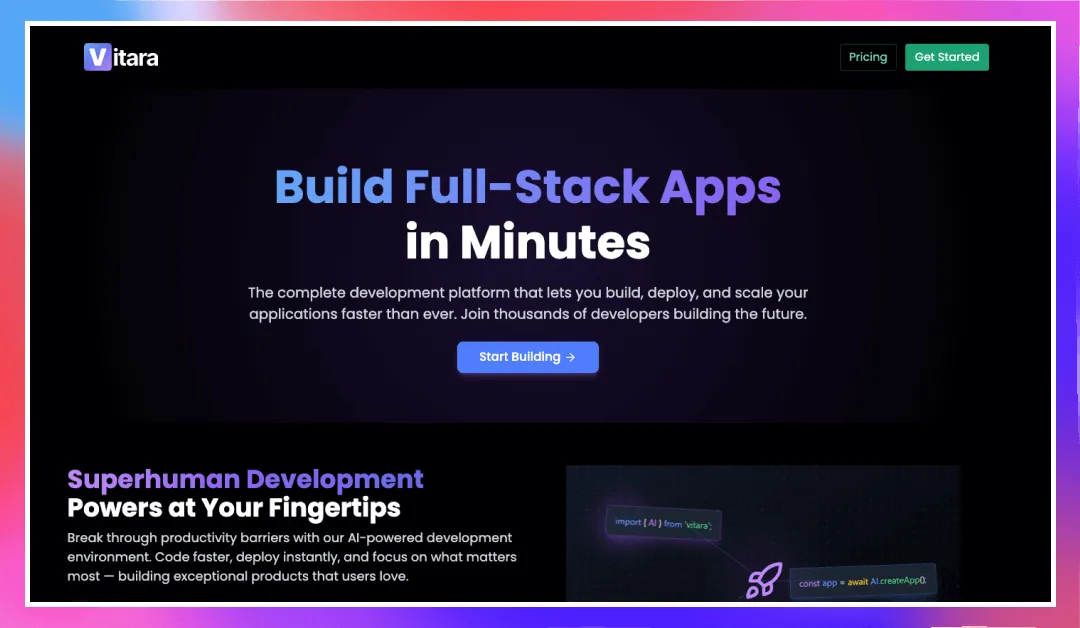
Vitara positions itself as a strong enterprise-ready alternative to Bubble, built for scalability and secure deployments. While Bubble is popular for startups and prototypes, Vitara is tailored to organizations that need strict compliance, deeper integrations, and robust governance.
Key features:
- Visual app builder with drag-and-drop simplicity
- Enterprise security, roles, and audit trails
- Built-in workflow automation
- API-first design for complex system integrations
- Multi-cloud and on-premise deployment options
Best for: Enterprises and mid-size businesses that need scalable, compliant apps.
Bubble competitor for: Enterprise security, governance, and advanced system integrations.
2. Lovable – Best for Fast UI Prototyping with AI
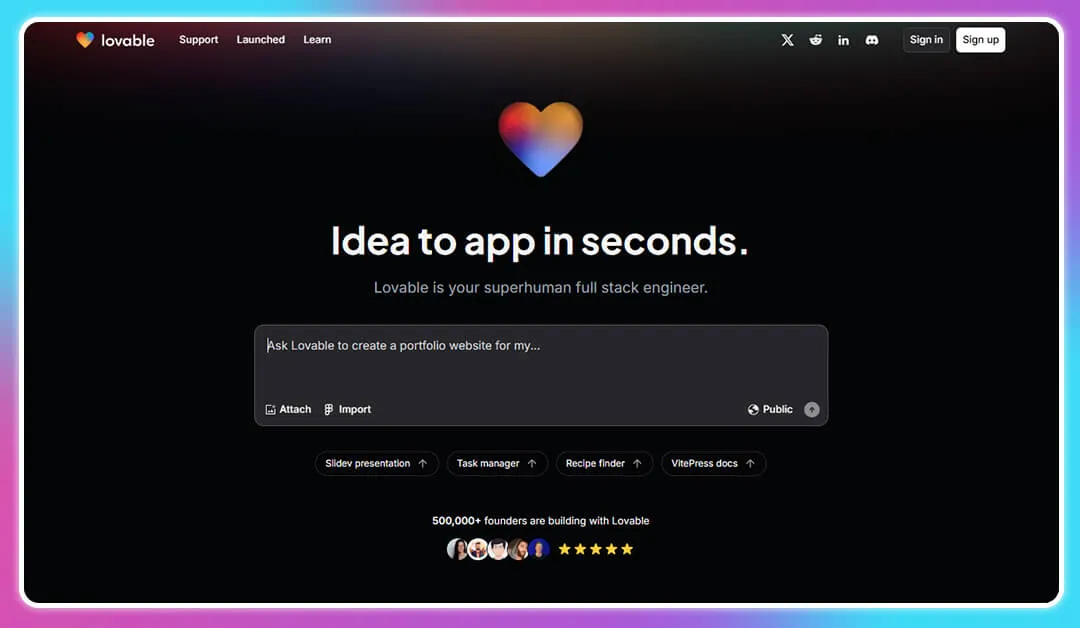
Lovable is an AI-powered platform that transforms simple prompts into polished UI layouts. Unlike Bubble, which requires detailed manual setup, Lovable lets teams generate functional app screens in minutes perfect for rapid prototyping.
Key features:
- AI prompt-to-UI generation
- Responsive design with drag-and-drop editing
- Export-ready React code
- Collaboration features for design and dev teams
- Ideal for quick mockups and MVPs
Best for: Designers, founders, and teams who need UI mockups fast.
Bubble competitor for: Rapid AI-powered prototyping without a steep learning curve.
Also Read: Top Lovable Alternatives
3. AppWizzy – best for production-ready apps with code ownership
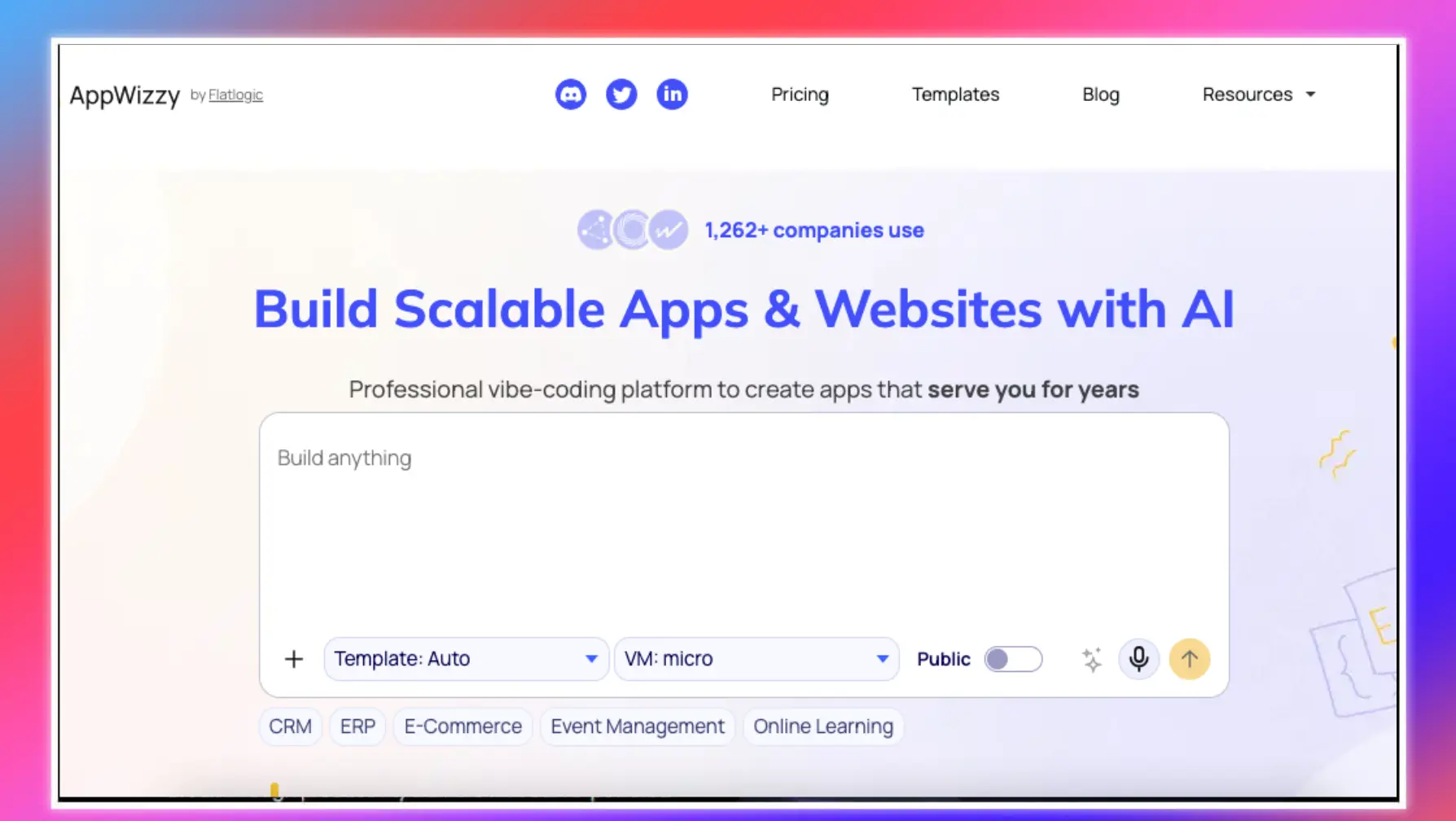
AppWizzy is a professional vibe-coding platform for generating production-ready web applications – with a real backend, database, authentication/roles, and deployable code (not just a UI demo). It follows a template-to-production workflow: you start from a proven app template (auth, CRUD, dashboard, data model), then use AI to customize and expand it with new entities, schema changes, integrations, and UI tweaks. Each project runs in a dedicated cloud environment, and you get full access to the codebase so you can download, modify, and scale with standard tools – no vendor lock-in.
Key features:
- Full-stack app generation (frontend + backend + database)
- Auth, roles/permissions, CRUD, dashboards out of the box
- Template-first workflow + AI-driven customization
- Dedicated cloud environment per project
- Full code access and exportability
Best for: Startups shipping production MVPs, teams building SaaS/internal tools/CRMs, and developers who want speed with code ownership.
Bubble competitor for: Production-grade apps, code export, and long-term maintainability.
4. Bolt.new – Best for Full-Stack AI App Generation
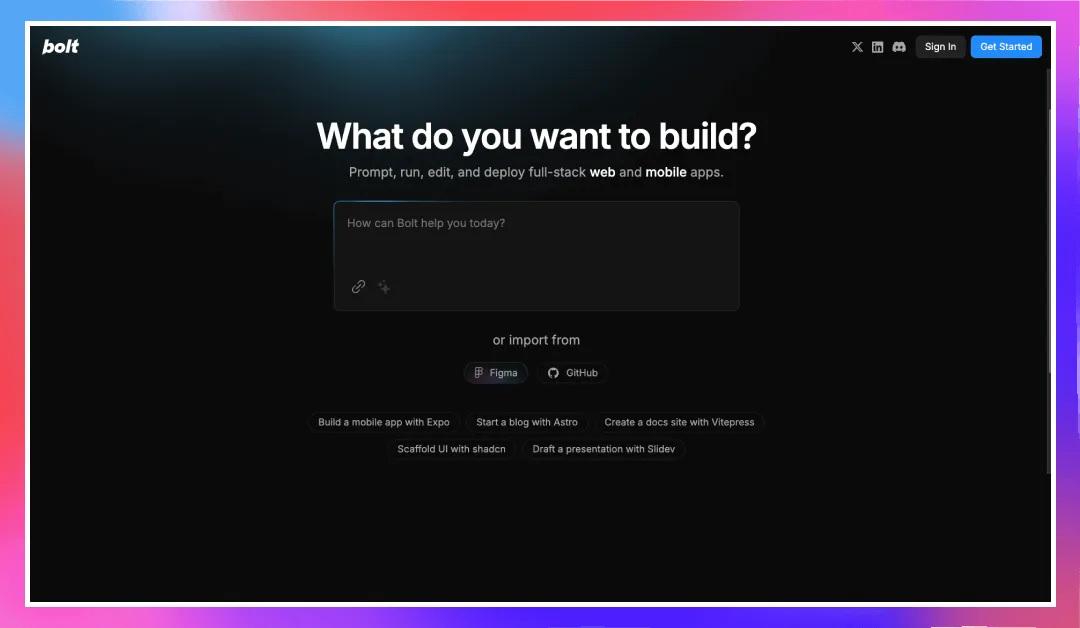
Bolt.new goes beyond UI mockups and offers full-stack app generation. Unlike Bubble, which locks you into its ecosystem, Bolt scaffolds production-ready codebases with React, Node.js, and PostgreSQL giving developers freedom to scale without limits.
Key features:
- AI-driven full-stack generation (frontend + backend)
- React, Node.js, Prisma ORM, and PostgreSQL out of the box
- GitHub sync and code export
- Built-in authentication and database setup
- Designed for MVPs that can grow into production apps
Best for: Startups and dev teams building deployable, production-grade apps quickly.
Bubble competitor for: Code export, scalability, and developer freedom.
Also Read: Best Bolt.new Alternatives
5. Windsurf – Best for AI-Native Coding and Flow-Driven Development
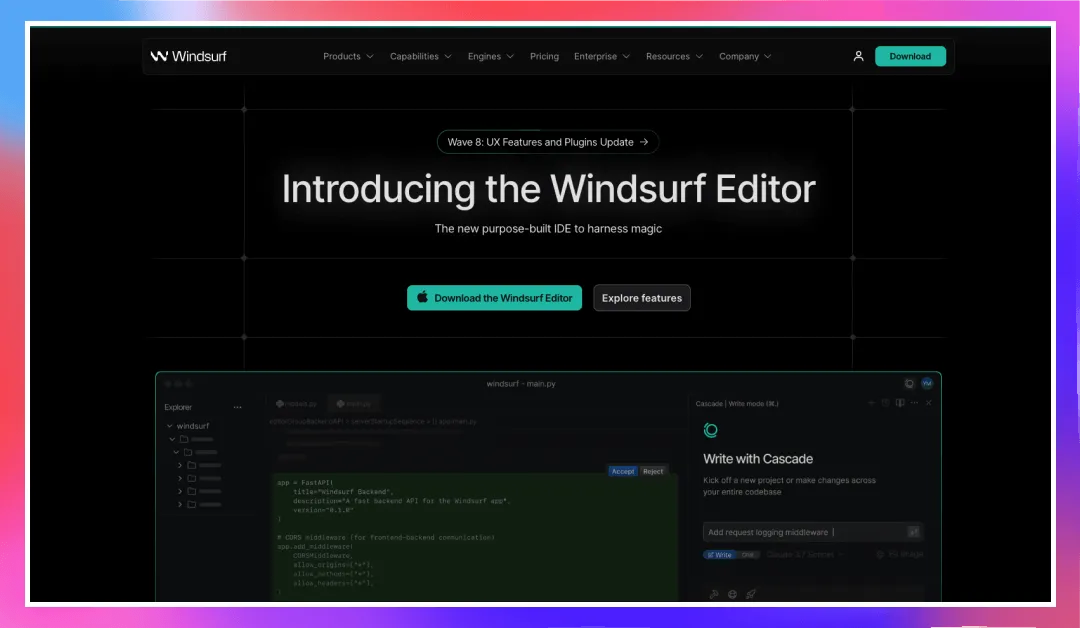
Windsurf is an AI-powered IDE focused on keeping developers in flow. Unlike Bubble, which is no-code and UI-centric, Windsurf writes real code from prompts ideal for building apps with deeper logic and flexibility.
Key features:
- Cascade agent that manages multi-step edits across files
- Context-aware code suggestions across functions and folders
- Real-time preview and server setup from prompt triggers
- Support for Next.js patterns, component scaffolding, and boilerplate reduction
- Enterprise-ready features like role controls, audit trails, and hybrid deployment
Best for: Developers and tech teams who want AI to assist in writing full applications while preserving developer control.
Bubble competitor for: Real-code, prompt-driven app building rather than visual UI blocks.
Also Read: Top Windsurf Alternatives
6. Replit – Best for Browser-Based Full-Stack AI Development
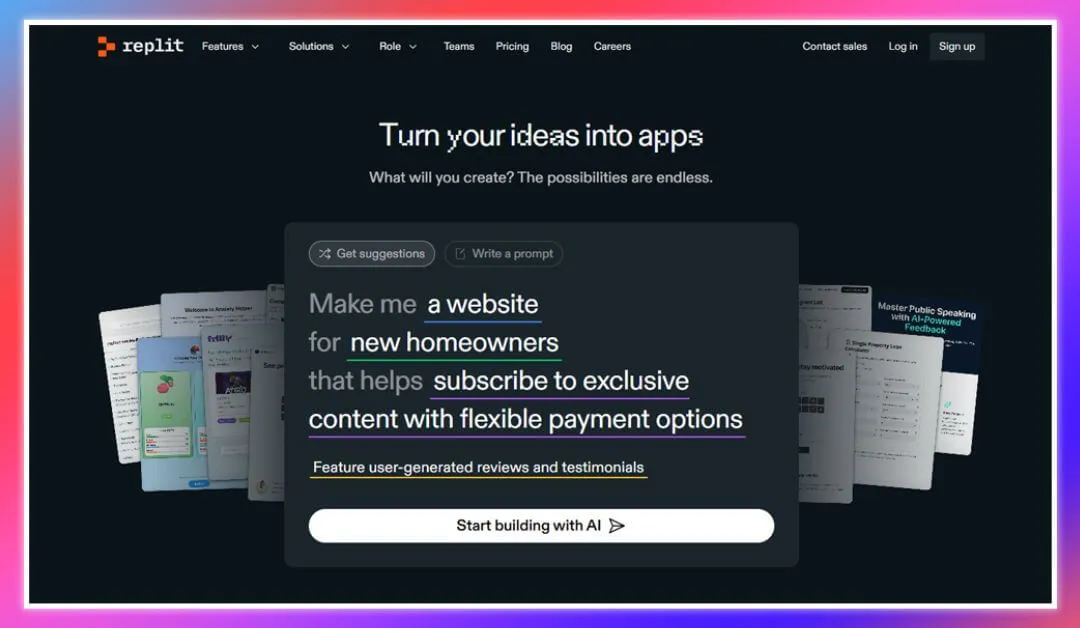
Replit gives you a full development environment in the browser. Rather than assembling visual blocks like Bubble, Replit allows you to write backend logic, connect data, and deploy all via AI-assisted workflows.
Key features:
- In-browser IDE supporting frontend and backend workflows
- AI Agent: describe your app in natural language and get app scaffolding
- Built-in deployment and database tooling
- Real-time collaboration with shared environments
Best for: Teams or solo developers who prefer working in the cloud with no setup hassle.
Bubble competitor for: End-to-end app creation and deployment with AI plus full code flexibility.
Also Read: Top Replit Alternatives
7. Cursor – Best for AI-Assisted Deep Code Editing
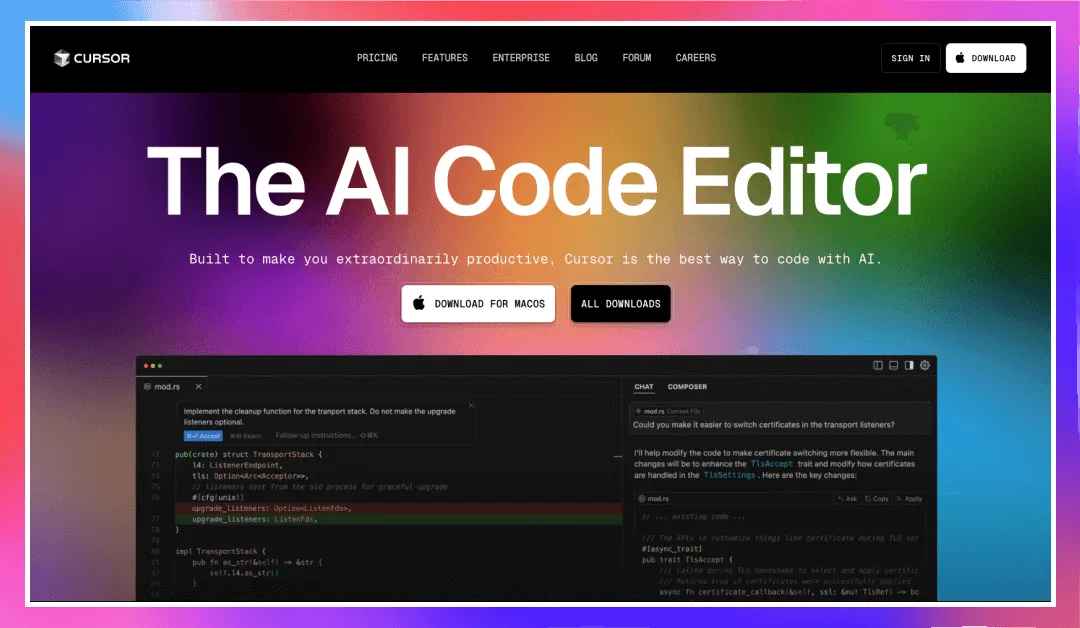
Cursor is an AI-native code editor built on top of VS Code. Instead of limiting you to visual workflows like Bubble, it enhances coding by letting you “instruct” changes, refactor large blocks, and query your codebase in natural language.
Key features:
- Natural language prompts to edit classes, functions, or modules
- Codebase-wide queries and automated refactoring
- Privacy Mode and local-first architecture with enterprise compliance
- Deep AI integration for debugging, suggestions, and context-aware edits
Best for: Developers who want AI support without giving up full control of their code.
Bubble competitor for: Intelligent code editing, refactoring, and combining AI with traditional development.
Also Read: Top Cursor Alternatives
8. Appsmith – Best for Open-Source Internal Tool Development
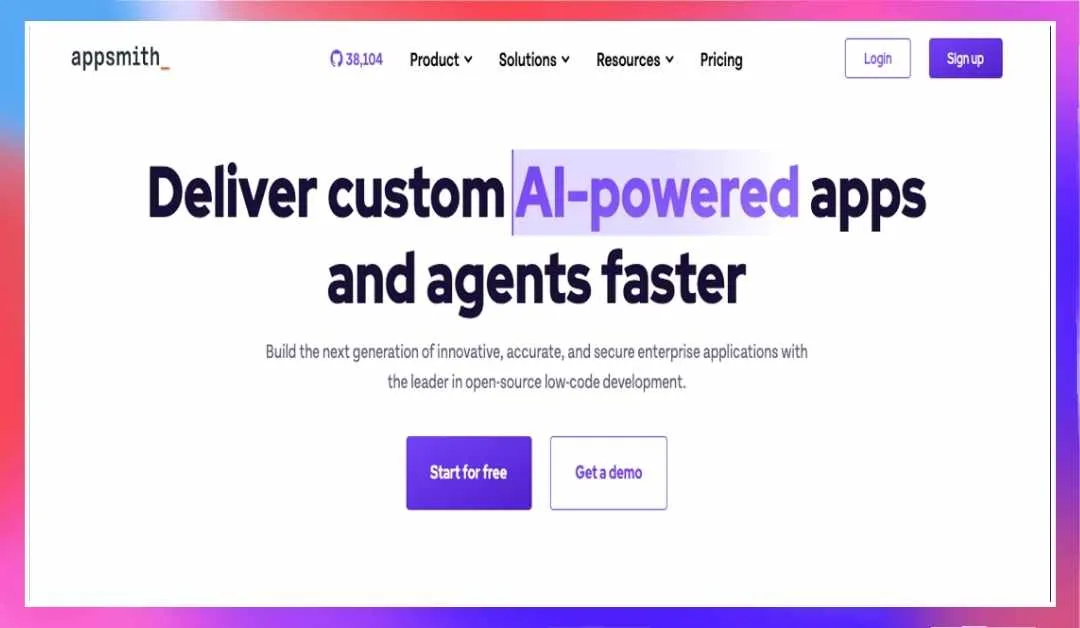
Appsmith is a powerful open-source low-code platform designed for building internal dashboards, admin panels, and workflow tools. Unlike Bubble, which often focuses on consumer-facing apps, Appsmith gives developers and teams the flexibility to connect directly to databases and APIs while keeping full control of their infrastructure.
Key features:
- Open-source with an active and growing community
- Drag-and-drop UI builder with pre-built widgets
- Native support for SQL/NoSQL databases and APIs
- Custom JavaScript logic for advanced workflows
- Flexible hosting options: cloud or self-hosted
Best for: Development teams who want secure, customizable internal tools without vendor lock-in.
Bubble competitor for: Open-source flexibility and deep database connectivity.
9. Softr – Best for Building Web Apps from Spreadsheets
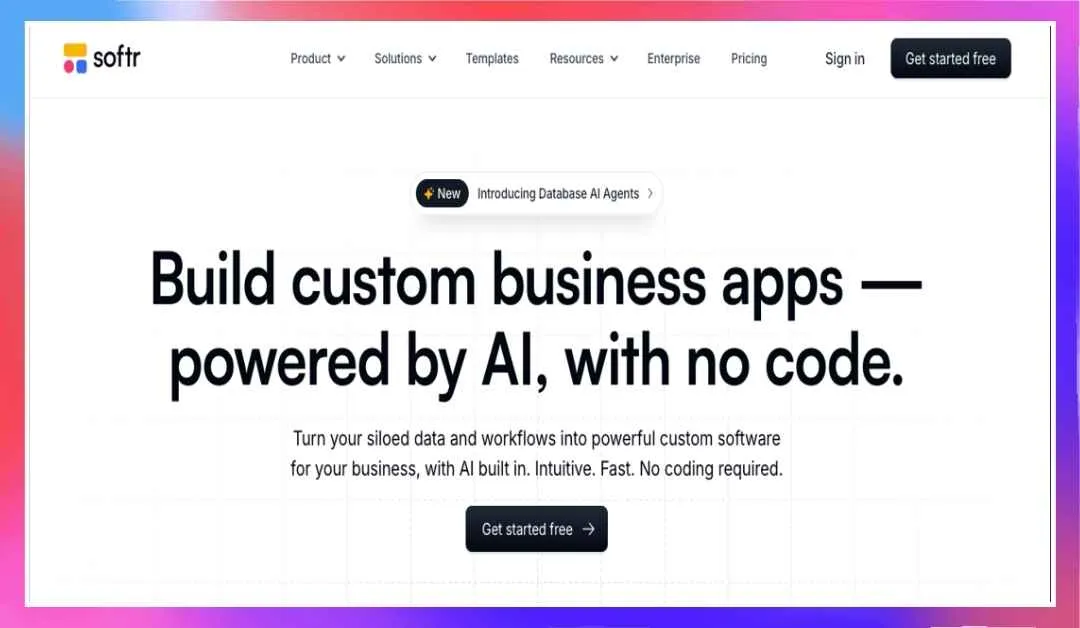
Softr specializes in turning Airtable and Google Sheets into fully functional apps and websites. Unlike Bubble, which requires building logic and UI from scratch, Softr focuses on simplicity with pre-built blocks and templates that allow even non-technical users to create polished apps in hours.
Key features:
- Direct integrations with Airtable and Google Sheets
- Drag-and-drop editor with customizable blocks
- Ready-made templates for marketplaces, CRMs, and member portals
- Built-in membership, payments, and authentication
- SEO-friendly pages optimized for search visibility
Best for: Non-technical founders, creators, and small businesses that need simple, scalable apps fast.
Bubble competitor for: Lightweight, spreadsheet-driven web apps with no steep learning curve.
10. Glide – Best for Spreadsheet-Powered Apps
Glide makes it easy to transform Google Sheets, Excel, or Airtable into mobile and web apps in minutes. Unlike Bubble, which requires a steeper learning curve, Glide focuses on simplicity anyone comfortable with spreadsheets can start building right away.
Key features:
- Direct integration with Google Sheets, Excel, and Airtable
- No-code drag-and-drop app builder
- Pre-designed templates for CRMs, directories, and employee tools
- User authentication and access control
- Apps optimized for mobile and web use
Best for: Entrepreneurs, educators, and small teams who want to build apps quickly without coding.
Bubble competitor for: Beginner-friendly, spreadsheet-driven app creation.
11. WeWeb – Best for Customizable Frontend Development
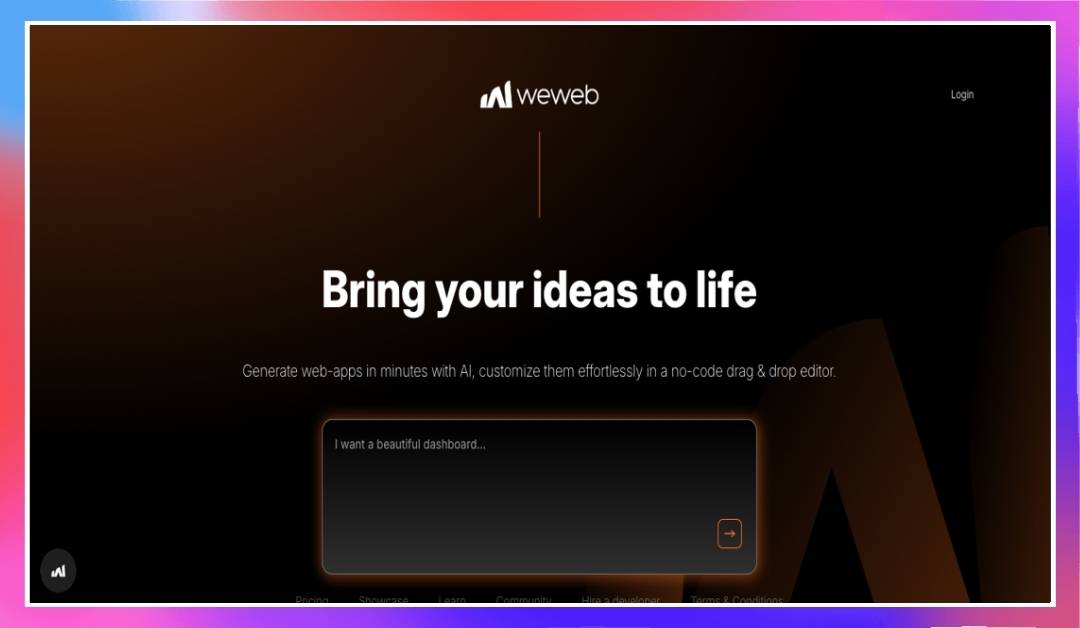
WeWeb is a no-code frontend builder that pairs seamlessly with backend services. While Bubble combines frontend and backend in one ecosystem, WeWeb focuses on giving you clean, exportable frontends that work with any backend of your choice.
Key features:
- Visual editor for responsive web apps
- Real-time data binding with APIs and databases
- Code export for flexibility and control
- Works well with backend platforms like Xano or Supabase
- Strong support for scaling and custom workflows
Best for: Developers and teams that want design freedom while keeping backend flexibility.
Bubble competitor for: Scalable, customizable front ends with clean code export.
Bubble Alternatives Comparison Table
Here’s a quick side-by-side look at the top 10 Bubble competitors. Use this table to see which platform aligns best with your project needs before diving into the detailed reviews.
| Tool |
Best For |
Standout Features |
Pricing (Starting) |
Bubble Alternative For |
| Vitara |
Enterprise-grade low-code apps |
Strong compliance, workflow automation, multi-cloud |
Custom pricing |
Governance, enterprise security |
| Lovable |
Fast UI prototyping with AI |
AI prompt-to-UI, export-ready React code |
Free + paid plans |
Rapid prototyping |
| Bolt.new |
Full-stack AI app generation |
React + Node.js scaffolding, GitHub sync |
Free + paid plans |
Code export, scalable MVPs |
| Windsurf |
AI-native coding and flow-driven dev |
Cascade agent, context-aware multi-file editing |
Free + premium |
AI-assisted full coding environment |
| Replit |
Browser-based full-stack development |
Cloud IDE, AI agent, deployment + databases |
Free + paid plans |
End-to-end AI-powered dev |
| Cursor |
AI-assisted deep code editing |
Natural language code edits, repo-wide refactoring |
Free + premium |
Smart code editing + AI coding |
| Appsmith |
Open-source internal tools |
Open-source, self-hosting, SQL/NoSQL connectors |
Free + paid plans |
Internal dashboards, open-source dev |
| Softr |
Web apps from Airtable/Sheets |
Pre-built blocks, membership features, SEO-friendly |
Free + paid plans |
Spreadsheet-driven apps |
| Glide |
Beginner-friendly app building |
Spreadsheet to app in minutes, mobile optimization |
Free + paid plans |
Easy, no-code mobile/web apps |
| WeWeb |
Customizable frontends with clean code |
Code export, API/database integration, responsive UI |
Free + paid plans |
Frontend freedom + scalability |
Final Thoughts
Bubble has been a game-changer for startups and creators who want to build apps without writing code. But as projects grow, the platform’s limits around scalability, performance, and flexibility become clear. That’s where the alternatives we covered step in.
Whether you’re looking for AI-driven tools like Vitara or Windsurf, open-source platforms like Appsmith, or beginner-friendly builders like Glide and Softr, there’s an option designed to fit your stage and goals. Enterprises can lean on Vitara, Retool-style power, while solo founders can get moving fast with Lovable or Softr.
The best part? Many of these alternatives offer free plans or open-source versions, so you can test-drive them before committing. That means you don’t have to gamble resources and you can start small, validate your idea, and scale with confidence.