I Tested 5 WeWeb Alternatives: Best Picks for SaaS Apps, Portals, and AI App Building
After building a few web app prototypes with WeWeb, I kept running into the same questions: Do I really want to manage a separate backend? Is this the best option for client portals? What if I need a native mobile app, stronger code control, or a faster way to launch an MVP?
So I tested five WeWeb alternatives across different use cases, including SaaS dashboards, client portals, mobile app prototypes, internal tools, and frontend-heavy web apps. Some tools were easier for beginners, some gave developers more control, and a few made more sense only for very specific types of projects.
Here’s what I found after comparing each platform in real app-building scenarios, including where they work well, where they feel limiting, and which WeWeb alternative is actually worth choosing for your project.
Build Custom Apps with Prismetric
Prismetric helps you build SaaS apps, client portals, dashboards, and full-stack web platforms.
Start Your Project
Quick Answer: Best WeWeb Alternatives at a Glance
If you’re comparing WeWeb alternatives, the best choice depends on what you’re trying to build. WeWeb is great when you want a flexible frontend connected to tools like Xano, Supabase, Airtable, or REST APIs. But if you want an AI app builder that can generate more of the product for you, handle backend setup faster, or help you turn an idea into a working MVP with prompts, these alternatives may feel like a better fit.
| Alternative |
Best for |
Main advantage over WeWeb |
Main limitation |
Best backend/data fit |
Ideal user |
| Bubble |
All-in-one no-code app development |
Includes frontend, backend, database, workflows, authentication, and hosting in one platform |
Can feel harder to learn and has more vendor lock-in |
Built-in Bubble database, API connectors, plugins |
Founders and no-code builders who want to build full SaaS apps, marketplaces, CRMs, or MVPs without managing a separate backend |
| Vitara AI |
AI full-stack app building from prompts |
Helps you build web and mobile apps with natural language prompts, including backend pieces like database logic and authentication |
Still best for users who are comfortable refining AI-generated outputs instead of expecting a perfect app in one prompt |
Supabase, authentication, database logic, APIs |
Founders, startups, and non-technical builders who want to create SaaS MVPs, dashboards, or full-stack apps faster with AI |
| Base44 |
Fast AI app generation for MVPs and business apps |
Generates working apps from plain-English prompts, including pages, logic, data structure, and core user flows |
Customization can become harder when your app needs very specific behavior or advanced production-level control |
Built-in visual database, app logic, integrations |
Solo founders, operators, and small teams who want to quickly test app ideas without setting up separate backend tools |
| Lovable |
AI-powered web apps with real code and fast iteration |
Lets you build, edit, and deploy web apps using natural language while still giving more code-aware control than traditional no-code tools |
Beginners may still need guidance when debugging, connecting data, or preparing an app for serious production use |
Supabase, GitHub, APIs, custom app logic |
Startup founders, product builders, and developers who want a prompt-to-app builder for SaaS MVPs and frontend-heavy web apps |
| Rocket.new |
Prompt-to-app building with product planning and deployment |
Goes beyond simple app generation by helping with app structure, screens, backend logic, integrations, previews, and deployment |
May feel like too much if you only need a simple frontend builder or a basic client portal |
GitHub, Supabase, backend scaffolding, APIs, integrations |
Founders, agencies, and product teams who want to move from idea to working app with AI-guided planning, building, and iteration |
1. Bubble
What it does differently
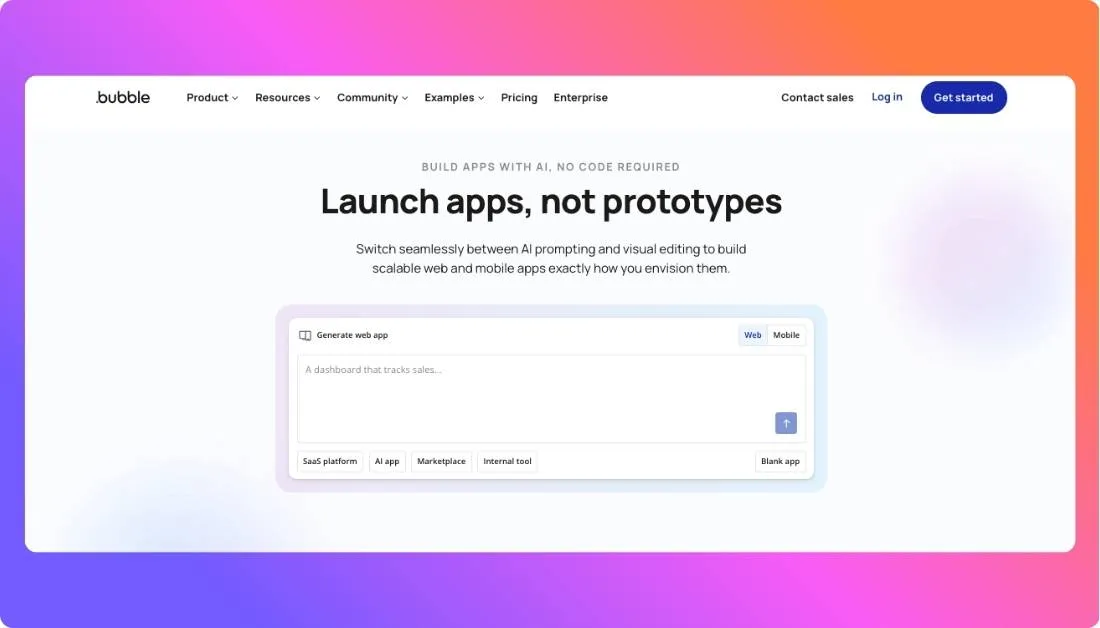
Instead of working mainly as a visual frontend builder like WeWeb, Bubble gives you the frontend, backend, database, workflows, authentication, and hosting inside one no-code platform.
My experience
Bubble felt like the most complete WeWeb alternative when I wanted to build a full SaaS-style app without connecting a separate backend like Xano or Supabase. WeWeb gives you cleaner frontend flexibility in many cases, but Bubble makes more sense when you want one place to design screens, store data, create user accounts, and build app logic.
Key strengths
- Lets you build full web apps without setting up a separate backend
- Includes a built-in database, workflows, user authentication, and hosting
- Has a large plugin marketplace for payments, maps, email, analytics, and more
- Works well for SaaS MVPs, marketplaces, dashboards, booking apps, and CRMs
- Gives non-technical founders a lot of control once they understand the editor
Where it shines
I used Bubble to map out a simple marketplace app with user profiles, listings, saved items, and payment logic. In WeWeb, I would have needed to connect an external backend and configure more pieces manually. Bubble kept everything inside one workspace, which made the early build feel more connected.
Limitations
Bubble has a steeper learning curve than it first appears. The editor can feel heavy, and the workflow system takes time to understand. It also has more vendor lock-in than WeWeb because your database, logic, and app structure all live inside Bubble.
Best For:
Founders, agencies, and no-code builders who want to build full web apps without managing separate frontend and backend tools.
Pricing
- Free: $0/month for apps under construction, with a development version and limited workload.
- Starter: $59/month, billed annually, for projects that are ready to launch.
- Growth: $209/month, billed annually, for team collaboration and larger apps.
- Team: $549/month, billed annually, for scaling teams and businesses.
- Enterprise: Custom pricing for larger companies that need more security, support, and custom workload options.
What it does differently
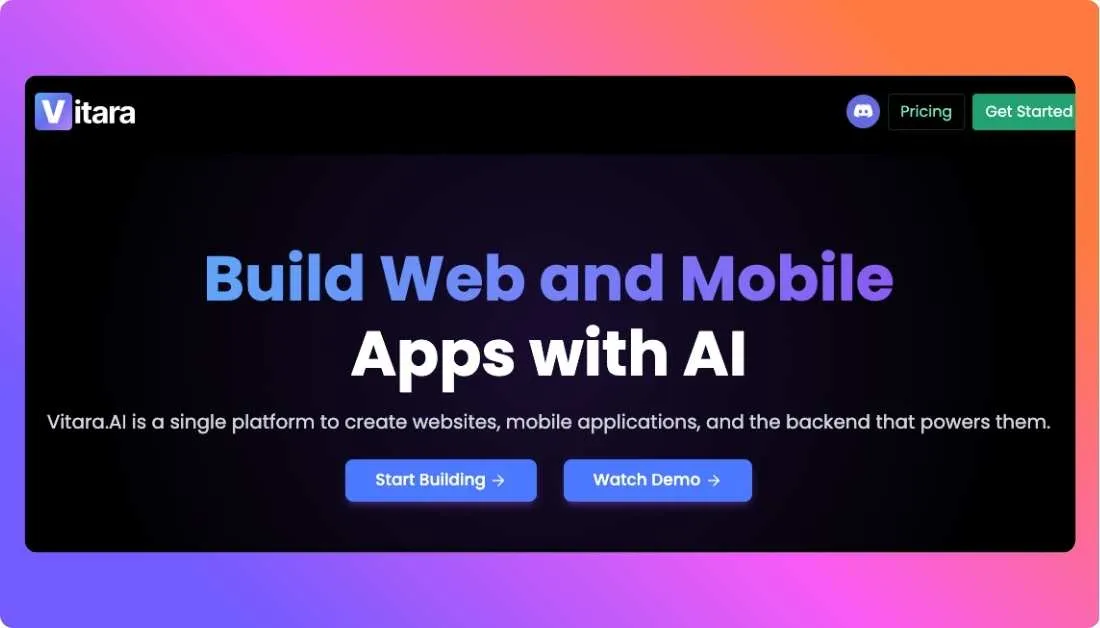
Vitara AI is more focused on AI-powered full-stack app building. Instead of manually designing every page like you would in WeWeb, you can describe what you want and let the platform help generate the app structure, screens, backend logic, database setup, and authentication flow.
My experience
Vitara AI felt useful when I wanted to move faster from idea to working MVP. WeWeb gives you strong visual control, but Vitara is better when you want the AI to help with the first version of the product. It’s especially helpful when you don’t want to start with a blank canvas or spend hours planning database tables and user flows.
Build Full-Stack Apps Without Limits
Prismetric develops frontend, backend, database, API, authentication, and cloud-ready app solutions.
Build Your App
Key strengths
- Helps turn plain-language prompts into working web and mobile app ideas
- Supports full-stack app building, including frontend and backend pieces
- Useful for SaaS MVPs, dashboards, admin panels, and startup prototypes
- Can speed up planning, screen generation, and app logic creation
- Better suited for founders who want AI assistance through the build process
Where it shines
I tested Vitara AI with a simple SaaS dashboard idea that needed login, user roles, project records, and a few analytics-style screens. The biggest advantage was speed. Instead of manually planning every screen and backend action first, I could use prompts to shape the app and then refine the output.
Limitations
Like most AI app builders, Vitara AI still needs review and cleanup. You shouldn’t expect one prompt to create a polished production app. It works best when you can give clear instructions, test the output, and refine the app step by step.
Best For:
Founders, startups, and non-technical builders who want an AI full-stack app builder for SaaS MVPs, dashboards, internal tools, and business apps.
Pricing
- Starter: Free plan with 5 credits per day and 20 total one-time credits.
- Build: $20/month with 100 monthly credits, code download, custom domain support, and faster AI processing.
- Scale: $50/month with 250 monthly credits for professionals and teams that need more usage.
- Custom plan: Available for teams that need a tailored setup.
3. Base44
What it does differently
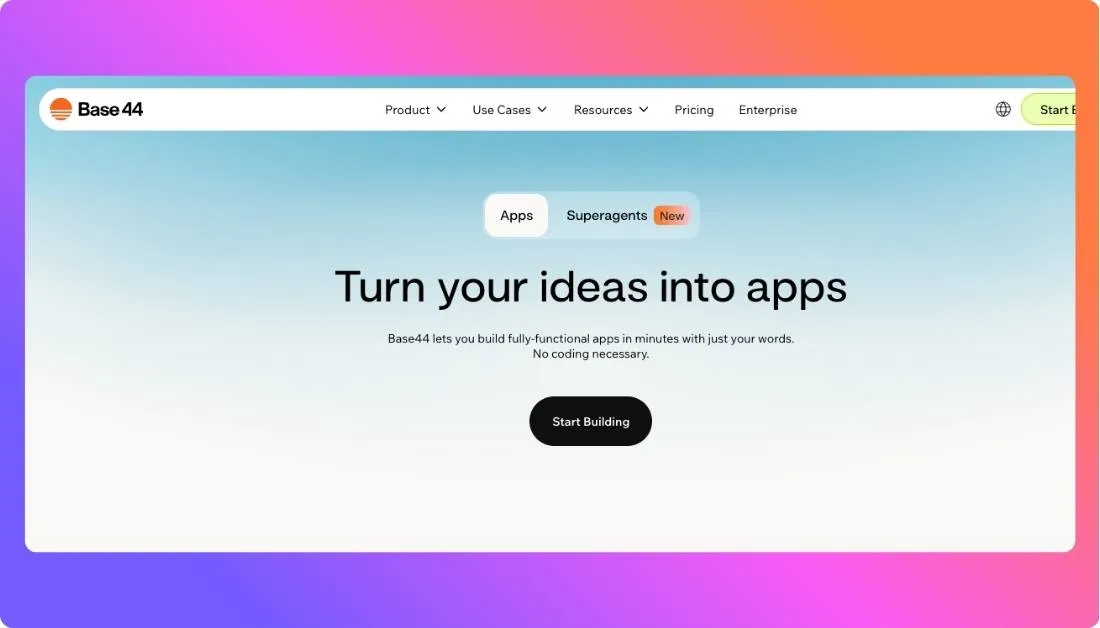
Base44 focuses on generating apps from plain-English prompts. While WeWeb gives you a visual frontend builder, Base44 tries to create more of the app for you, including pages, data structure, authentication, logic, and basic workflows.
My experience
Base44 worked best when I wanted to test an app idea quickly without thinking too much about setup. It felt more beginner-friendly than WeWeb for the first version of a product because I could describe the app and get something usable faster. WeWeb gives you more control once you know what you’re doing, but Base44 feels easier when you’re still shaping the idea.
Key strengths
- Generates working apps from simple prompts
- Includes user authentication and data storage in the app-building flow
- Good for MVPs, internal tools, business apps, and quick prototypes
- Lets users build without starting from a blank frontend editor
- Useful for non-technical founders who want to validate an idea fast
Where it shines
I used Base44 to create a lightweight client management app with contacts, project status, notes, and basic task tracking. The first version came together quickly because the platform handled the app structure and data setup without forcing me to connect separate tools.
Limitations
Base44 can feel limiting when your app needs very specific behavior, custom backend logic, or advanced frontend control. It’s great for getting started, but complex production apps may still need a developer or a more flexible setup.
Best For:
Solo founders, business owners, and small teams who want to build quick MVPs, internal tools, and simple web apps without learning a traditional no-code builder first.
Pricing
- Free: $0/month with 25 message credits and 100 integration credits per month.
- Starter: $16/month, billed annually, with 100 message credits and 2,000 integration credits per month.
- Builder: $40/month, billed annually, with 250 message credits, 10,000 integration credits, backend functions, domain connection, and GitHub integration.
- Pro: $80/month, billed annually, with 500 message credits and 20,000 integration credits per month.
- Elite: $160/month, billed annually, with 1,200 message credits, 50,000 integration credits, premium support, and higher usage limits.
4. Lovable
What it does differently
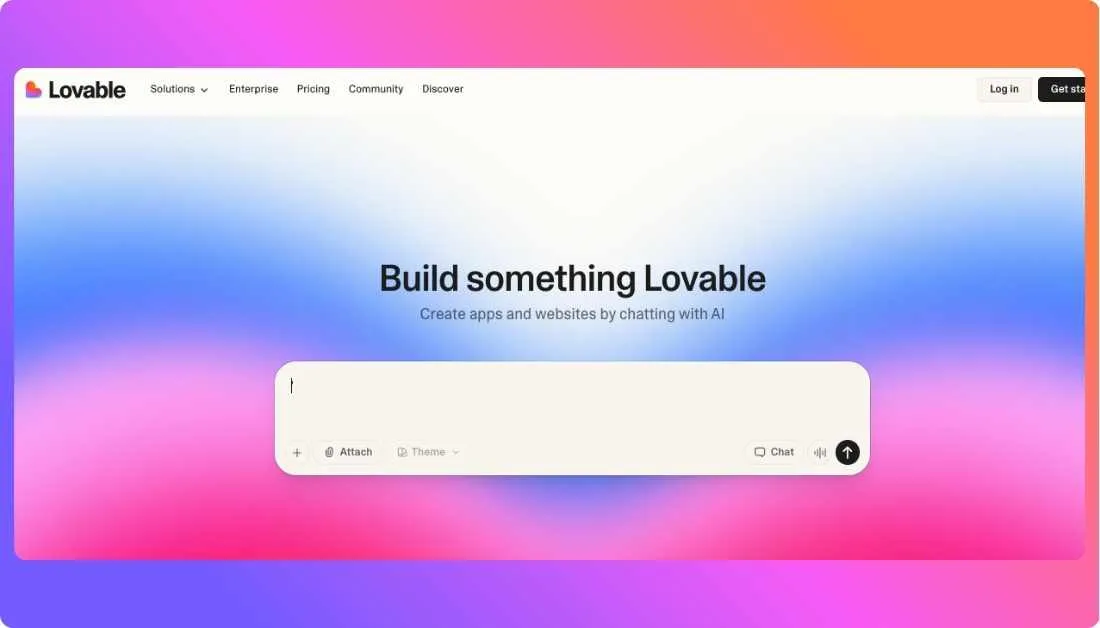
Lovable is a prompt-to-app builder that helps you create web apps with AI while still keeping the experience more code-aware than a traditional no-code tool. Instead of visually building every layout like WeWeb, you describe changes in natural language and Lovable updates the app.
My experience
Lovable felt strongest when I wanted to build a modern web app quickly and keep the option to work with real code. It’s different from WeWeb because the workflow is more conversational. You ask for screens, features, fixes, and layout changes, then review what the AI generates.
Key strengths
- Builds web apps from natural language prompts
- Works well for SaaS MVPs, landing pages, dashboards, and frontend-heavy tools
- Can connect with Supabase for database and authentication needs
- Supports GitHub workflows for teams that want more code access
- Makes quick UI changes easier when your prompts are clear
Where it shines
I tested Lovable with a small SaaS onboarding flow that needed a landing page, signup screen, dashboard, and settings area. The tool was especially good at quickly generating clean-looking pages and letting me iterate on layout changes without manually dragging every element around.
Limitations
Lovable can still get messy when the app becomes more complex. Debugging AI-generated code may be confusing for beginners, and production apps need proper testing before launch. It’s fast, but it doesn’t remove the need to understand how your app works.
Best For:
Startup founders, product builders, and developers who want a vibe coding tool for web apps, SaaS MVPs, dashboards, and fast product experiments.
Pricing
- Free: Available for testing Lovable with limited usage.
- Pro: $25/month with 100 monthly credits, custom domains, badge removal, user roles, permissions, and credit rollovers.
- Business: $50/month with team workspace features, SSO, internal publishing, role-based access, security center, and design templates.
- Enterprise: Custom platform fee for larger organizations that need volume-based credits, dedicated support, audit logs, SCIM, design systems, and custom connectors.
5. Rocket.new
What it does differently
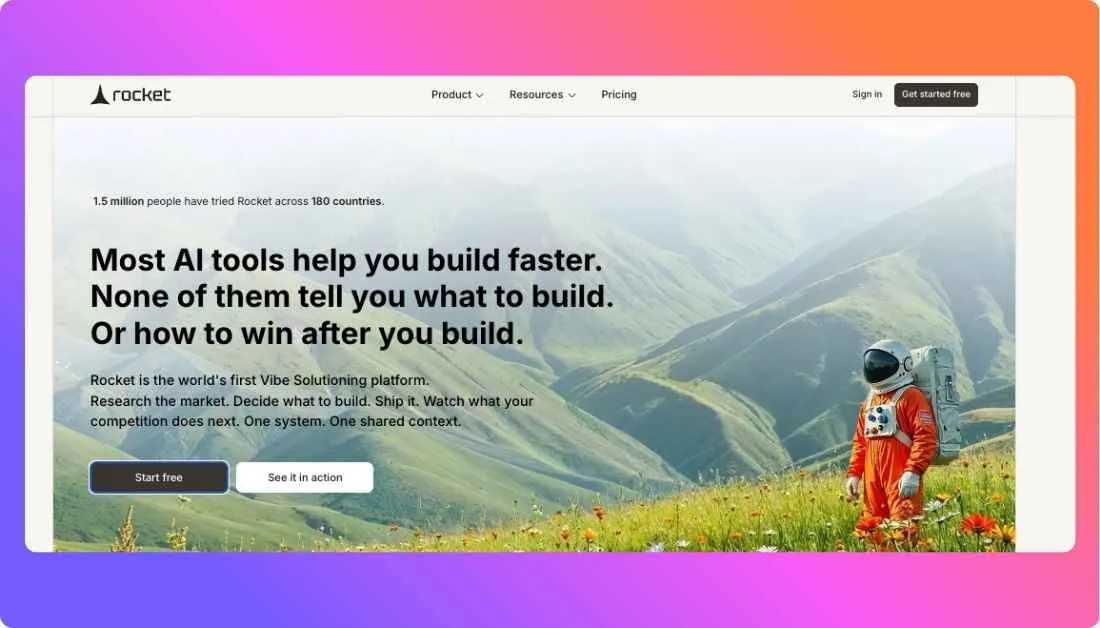
Rocket.new goes beyond basic prompt-to-app building. It combines app generation with product planning, app structure, backend logic, integrations, previews, deployment, and competitive intelligence. Compared with WeWeb, it feels less like a visual frontend builder and more like an AI-guided product-building workspace.
My experience
Rocket.new was most useful when I wanted help thinking through the app before building it. WeWeb is better when you already know your structure and want frontend control. Rocket.new is more helpful when you have an idea but still need support turning it into screens, flows, features, and a launchable MVP.
Key strengths
- Helps turn product ideas into web apps, mobile apps, landing pages, and MVPs
- Supports app planning, screen creation, backend logic, and integrations
- Includes previews and deployment options for faster testing
- Useful for founders who want help with both what to build and how to build it
- Better suited for AI-guided product development than manual frontend design
Where it shines
I used Rocket.new to plan and generate a simple project management app with tasks, teams, dashboards, and user roles. The useful part was not just the generated UI. It also helped shape the product flow, which made the app feel more thought-out than a basic prompt-generated prototype.
Limitations
Rocket.new may feel like too much if you only need a simple frontend builder or a small client portal. The credit-based model also means you need to watch usage, especially if you make lots of changes or rebuild sections often.
Best For:
Founders, agencies, product teams, and startup builders who want an AI app builder that helps with planning, building, testing, and launching MVPs.
Pricing
- Free: $0 with 20 one-time credits for testing Rocket.new.
- Pro: $25/month with 100 credits per month for personal projects and side projects.
- Rocket: $50/month with 250 credits per month, plus Build, consultant-grade solutions, and competitive intelligence.
- Booster: $250/month with 1,500 credits per month, premium support, SSO, data localisation, and higher-volume usage.
- Extra credits: Available as an add-on if you need more credits without changing plans.
WeWeb Alternatives Comparison Table
Here’s a quick side-by-side view of how WeWeb compares with other popular alternatives.
| Tool |
Best use case |
Frontend flexibility |
Backend/data options |
Native mobile support |
SEO suitability |
Code export/self-hosting |
Learning curve |
Pricing predictability |
Best for |
Avoid if |
| WeWeb |
Custom web apps and SaaS frontends |
High |
Xano, Supabase, APIs, Airtable |
Limited |
Good for app pages |
Code export and self-hosting available |
Medium |
Medium |
API-connected web apps |
You want built-in backend |
| Bubble |
Full-stack SaaS apps and MVPs |
Medium-high |
Built-in database, plugins, APIs |
Limited to improving |
Okay for app pages |
Limited code export |
Medium-high |
Lower due to workload pricing |
All-in-one app building |
You need full code control |
| Softr |
Client portals and internal tools |
Medium |
Airtable, Google Sheets, SQL, HubSpot |
No native apps |
Decent for simple pages |
Limited |
Low |
Medium-high |
Fast business portals |
You need complex app logic |
| FlutterFlow |
Native mobile apps |
High for mobile UI |
Firebase, Supabase, APIs |
Strong |
Weak for SEO sites |
Flutter code export |
Medium |
Medium |
iOS and Android apps |
You need SEO-first web pages |
| Plasmic |
React/Next.js teams |
High with codebase |
APIs, CMS, custom components |
No native apps |
Strong with Next.js |
Strong codebase support |
Medium-high |
Medium |
Developer-led web apps |
You’re a complete beginner |
| Nordcraft/Toddle |
API-first web apps |
High |
Xano, Supabase, APIs |
Limited |
Medium |
Developer-oriented |
Medium-high |
Medium |
Visual frontend coding |
You want many templates |
Best WeWeb Alternative by Use Case
The best WeWeb alternative depends on your app type, backend setup, and how much control you need. Here’s a quick use-case breakdown.
Best WeWeb alternative for SaaS apps
Bubble is the best choice for SaaS apps when you need frontend, backend, database, workflows, authentication, and hosting in one platform.
WeWeb or Nordcraft/Toddle makes more sense when you want frontend control and prefer using an external backend like Xano, Supabase, or custom APIs.
Best WeWeb alternative for B2B web apps
For B2B web apps, choose Nordcraft/Toddle, Bubble, or Plasmic.
Nordcraft/Toddle works well for API-first apps. Bubble is better for all-in-one product building. Plasmic is best when your team already works with React or Next.js.
Launch Better Apps with Prismetric
Prismetric helps businesses build AI-powered, mobile-ready, and scalable digital products from scratch.
Talk to Our Team
Best WeWeb alternative for Xano
Nordcraft/Toddle is a strong WeWeb alternative for Xano-based apps, especially when you want a more technical visual frontend builder.
Bubble can connect with Xano through APIs, but it’s usually better when you use Bubble’s built-in backend. Staying with WeWeb also makes sense when your main goal is a flexible Xano frontend.
Best WeWeb alternative for Supabase
FlutterFlow is best for Supabase-powered mobile apps.
Plasmic works well for developer-led React apps. Nordcraft/Toddle is good for visual frontend apps. Softr is better for simpler portals and business tools.
Best WeWeb alternative for client portals
Softr is the best WeWeb alternative for client portals.
It’s easier to set up, works well with business data, and is a good fit for member portals, partner portals, directories, and internal dashboards.
Best WeWeb alternative for native mobile apps
FlutterFlow is the best option for native mobile apps.
It’s built for iOS and Android apps, while WeWeb is mainly focused on browser-based web apps.
Best WeWeb alternative for existing React apps
Plasmic is the best choice for existing React or Next.js apps.
It lets teams add visual editing on top of a real codebase without rebuilding everything in a no-code platform.
Best WeWeb alternative for SEO-indexable pages
Plasmic, Webflow, or a custom React/Next.js setup are better choices for SEO-indexable pages.
FlutterFlow is great for apps, but it’s not the best fit for SEO-heavy websites, blogs, or public landing pages.
Best WeWeb alternative for internal tools
For internal tools, also consider Retool, UI Bakery, ToolJet, and DronaHQ.
These platforms are built for admin panels, dashboards, database tools, approval workflows, and business operations apps.
Which WeWeb Alternative Should You Choose?
Choose Bubble when you need one platform for frontend, backend, database, workflows, and hosting.
Choose Softr when you want to build a client portal, directory, dashboard, or internal tool quickly.
Choose FlutterFlow when your product is mobile-first and needs iOS or Android deployment.
Choose Plasmic when you already have a React or Next.js codebase and want visual editing with developer control.
Choose Nordcraft/Toddle when you want frontend visual development with more technical control and external backend flexibility.
Stick with WeWeb when you already like its frontend flexibility and are comfortable connecting Xano, Supabase, Airtable, REST APIs, or another backend.
FAQs About WeWeb Alternatives
The best WeWeb alternative depends on what you’re building. Bubble is best for full-stack SaaS apps, Softr is best for portals, FlutterFlow is best for mobile apps, Plasmic is best for React teams, and Nordcraft/Toddle is best for API-first frontend development.
Bubble is better if you want frontend, backend, database, workflows, authentication, and hosting in one platform. WeWeb is better if you want more frontend control and prefer using an external backend like Xano, Supabase, or custom APIs.
Softr is better for simple client portals, directories, dashboards, and internal tools. WeWeb is better for custom web apps that need more flexible UI, workflows, and backend connections.
FlutterFlow can replace WeWeb if you’re building a native mobile app for iOS or Android. If your product is mainly a browser-based SaaS app, admin panel, or web dashboard, WeWeb is usually a better fit.
Nordcraft/Toddle is a strong WeWeb alternative for Xano-based apps. Bubble can also connect to Xano through APIs, but WeWeb is still a good choice if your main need is a flexible frontend for a Xano backend.
FlutterFlow is a strong choice for Supabase-powered mobile apps. Plasmic works well for React or Next.js teams, Nordcraft/Toddle is good for visual frontend development, and Softr is better for simpler business portals.
Softr is usually the easiest WeWeb alternative for beginners. It’s simple to use, quick to set up, and works well for portals, directories, internal tools, and business apps.
Bubble is the best choice if you want to build a full SaaS MVP in one platform. If you want AI help building your MVP faster, tools like Vitara AI, Base44, Lovable, and Rocket.new are also worth testing.
Vitara AI, Base44, Lovable, and Rocket.new are good AI-powered alternatives if you want to generate apps from prompts instead of manually building every screen. They’re helpful for SaaS MVPs, dashboards, internal tools, and early product prototypes.
Yes. Bubble, Vitara AI, Base44, Lovable, Rocket.new, FlutterFlow, and other tools can help you build full apps. The main difference is how much they handle for you. Some include backend and database features, while others work better with external tools like Supabase, Xano, or APIs.
Bubble is good if you’re ready to learn a more complete no-code platform. Softr is better if you want something simpler. Vitara AI, Base44, Lovable, and Rocket.new are better if you want AI to help you generate the first version of your app.
Plasmic is a strong choice for teams that already use React or Next.js. Lovable is also useful if you want AI-generated web apps with more access to code and GitHub workflows.
Most WeWeb alternatives offer a free plan or free trial, including Bubble, Softr, FlutterFlow, Lovable, Base44, Vitara AI, and Rocket.new. Free plans are useful for testing, but serious projects usually need a paid plan for custom domains, higher usage, publishing, or team features.
Use WeWeb if you want strong visual frontend control and you’re comfortable connecting a backend like Xano or Supabase. Use an AI app builder like Vitara AI, Base44, Lovable, or Rocket.new if you want to move faster from idea to prototype with prompts.
WeWeb can work for app pages and some public pages, but it may not be the best option for SEO-heavy websites. For blogs, landing pages, programmatic SEO pages, and content-heavy sites, Plasmic, Webflow, or a custom Next.js setup may be a better fit.
You should switch from WeWeb only if your project needs something WeWeb doesn’t handle well. If you need native mobile apps, choose FlutterFlow. If you need simple portals, choose Softr. If you need an all-in-one no-code platform, choose Bubble. If WeWeb already fits your frontend and backend workflow, you may not need to switch.