Base44 vs Emergent: Which AI App Building Platform Is Right for You?
If you are trying to build an app with AI, you are probably asking one very practical question.
Which tool will actually help me turn my idea into a working product faster?
Base44 and Emergent are two popular AI app builders that are known for helping users create apps from simple prompts.
But they focus on solving two different problems.
Base44 is built for people who want a faster, more guided no-code app-building experience, while Emergent is more focused on full-stack app development, code ownership, and building more flexible software projects.
Which makes it difficult to pick any one tool!
In this in-depth comparison, I will break down Base44 vs Emergent across the factors that directly impact real-world app building, including:
- Ease of use for beginners
- App generation quality
- Backend, database, and authentication support
- Code ownership and customization
- Pricing and real-world usability
PS: I will also introduce you to another AI app builder option that may be useful if you want a simpler way to build apps without managing too many technical details.
It can help you create websites, MVPs, dashboards, and internal tools without getting stuck between a fully managed no-code platform and a more developer-focused AI coding tool.
Let us get into the comparison!
Quick verdict: Base44 vs Emergent at a glance
If you just want the quick answer, Base44 is usually the better pick for beginners who want to build an app without dealing with too many technical details.
Emergent makes more sense if you want more control, stronger full-stack app generation, code ownership, and the option to hand the project over to developers later.
Here’s a simple side-by-side view:
| Category |
Winner |
Why |
| Easiest for beginners |
Base44 |
It has a lower learning curve and feels more like a guided no-code AI app builder. |
| Full-stack app generation |
Emergent |
It puts more focus on frontend, backend, database, APIs, and deployment in one workflow. |
| Code ownership |
Emergent |
Its GitHub and export angle is stronger, which matters if you want more control over your project. |
| Fast internal tools |
Base44 |
It works well for dashboards, portals, CRMs, admin panels, and simple business workflows. |
| Complex backend logic |
Emergent |
It is a better fit for custom APIs, app logic, and projects that may need developer handoff. |
| Visual editing |
Base44 |
Its visual workflow is more beginner-friendly and easier to understand for non-technical users. |
| Mobile app support |
Emergent |
It has stronger positioning around building both web and mobile apps. |
| Predictable no-code experience |
Base44 |
It gives you a more managed app-building experience with less setup. |
| Long-term flexibility |
Emergent |
It is a better option if code export, GitHub, and lower platform lock-in matter to you. |
| Best overall |
Depends |
Base44 is better for speed and simplicity. Emergent is better for control and ownership. |
The simplest way to think about it is this:
Choose Base44 if you want to move fast, build a working app from a prompt, and avoid technical decisions around code, backend setup, hosting, and deployment.
Choose Emergent if you want an AI full-stack app builder that gives you more room to customize, connect APIs, work with code, and build something that can grow beyond a simple prototype.
Base44 Vs Emergent: Feature Comparison
To choose between Base44 and Emergent, you need to look at how each AI app builder performs in real app-building workflows, not just what is written on their feature pages.
Both platforms help you build apps with prompts, but they are not built with the same user in mind.
Base44 feels more like a guided no-code AI app builder for people who want to move fast, while Emergent feels more like a full-stack AI development platform for users who want more control over the final product.
In this section, I’ll compare Base44 and Emergent across the features that matter most when you’re building a real app, including:
- Ease of Use for Beginners
- App Generation Quality
- Full-Stack Development Support
- Visual Editing and Customization
- Code Ownership and Export
- Hosting and Deployment
- API and Integration Support
- Team Collaboration and Developer Handoff
- Pricing Plans
1. Base44 Vs Emergent: Which Is Easier for Beginners?
The first thing most users care about is simple.
Can I describe my idea and get something working without feeling lost?
That matters a lot, especially if you’re a founder, small business owner, product manager, or non-technical user who wants to build an app without learning how frontend, backend, hosting, database, and authentication all work.
So let’s start with ease of use.
Base44
Base44 is easier to understand for beginners.
The platform is built around the idea that you can describe your app in plain English and let the AI handle the structure, design, and logic for you. Base44 positions itself as a vibe coding platform that helps users build apps and websites without needing coding experience.
This makes the first experience feel less intimidating.
You don’t need to think about repositories, frameworks, database schemas, or deployment pipelines right away. You can start with a prompt like:
“Build me a client portal for a marketing agency with login, project status, file uploads, and an admin dashboard.”
Then Base44 gives you a working app structure that you can keep improving through prompts.
This is helpful if you want to build:
- Internal tools
- Client portals
- CRMs
- Booking apps
- Dashboards
- Simple SaaS MVPs
- Admin panels
Another thing I like about Base44 is that it hides a lot of technical complexity.
For example, Base44’s backend platform handles databases, authentication, serverless functions, and hosting, which means beginners don’t have to manually set up the technical “plumbing” behind the app.
That’s exactly why Base44 feels beginner-friendly.
You are not forced to understand every part of the stack before building something useful.
But this simplicity also has a trade-off.
If you want deeper control over how the app is structured, how the code is written, or how the backend behaves, Base44 may start to feel limiting as your project grows.
Emergent
Emergent is also prompt-based, but it feels more technical than Base44.
It is built around AI agents that design, code, and deploy applications from conversation. Emergent describes itself as a platform where you can build production-ready apps through conversation, with AI agents handling the process from start to finish.
That sounds simple on the surface.
But once you start thinking about full-stack apps, GitHub, custom agents, system prompts, hosting, and more advanced app logic, Emergent naturally becomes a little more developer-oriented.
This is not a bad thing.
It just means Emergent is better suited for users who are comfortable with slightly more technical workflows.
You don’t need to be a professional developer to use it, but you should be more comfortable with the idea that your app is becoming a real software project, not just a no-code prototype.
Emergent works better if you care about:
- Full-stack app generation
- Web and mobile app builds
- Code ownership
- GitHub integration
- Developer handoff
- More complex app logic
- AI agents and deeper reasoning
So for absolute beginners, Emergent may feel like more than they need.
But for technical founders, product builders, and startup teams, that extra depth can be useful.
Winner: Base44
Base44 wins for beginner friendliness.
It has a smoother learning curve, and the platform feels more guided for people who simply want to turn an idea into a working app without dealing with too many technical decisions.
Choose Base44 if you want the easiest path from prompt to usable app.
Choose Emergent if you are comfortable with a more full-stack, developer-aware workflow.
2. Base44 Vs Emergent: Which Offers Better App Generation Quality?
App generation quality is where things get interesting.
Most AI app builders can create a decent first version.
But the real question is:
Can the tool understand your prompt, create the right screens, connect the logic properly, and give you something you can actually use?
That is what separates a fun demo from a useful AI app builder.
Base44
Base44 performs well when the app idea is clear and business-focused.
If you ask it to build a dashboard, internal tool, form-based app, CRM, customer portal, or simple SaaS MVP, it usually fits the Base44 style quite well.
The reason is simple.
Base44 is strong at turning structured business ideas into usable app layouts.
It can create screens, forms, user flows, data views, and basic logic without making the user think too much about how everything works behind the scenes.
For example, Base44 works well for prompts like:
“Build an employee onboarding dashboard with task tracking, document uploads, admin approval, and employee profiles.”
That kind of app has clear screens, clear roles, and clear data.
Base44 can take that and create something you can refine quickly.
Where Base44 may feel weaker is when the app requires very custom behavior.
If your product needs advanced workflows, unusual database relationships, complex API logic, or developer-level control, you may need more manual effort.
Base44 has backend functions and supports more advanced app behavior, but the platform’s main advantage is still speed and simplicity.
So the app generation quality is good, especially for fast business apps.
But it is best when your project fits into a clear no-code or low-code app pattern.
Emergent
Emergent takes a broader approach.
It is designed to generate more complete applications, including frontend, backend, database, integrations, and deployment from natural language prompts. Emergent’s own AI app builder positioning focuses on AI agents that design, code, and deploy apps through conversation.
This makes Emergent stronger for projects where the app logic is more complex.
For example, Emergent is a better fit for prompts like:
“Build a subscription-based SaaS app with user roles, billing pages, admin analytics, API-connected data, and a mobile-friendly customer dashboard.”
That kind of project needs more than a clean UI.
It needs backend logic, data handling, authentication, user flows, and deployment thinking.
Emergent is better suited for that type of full-stack build.
But there is a catch.
The more complex your prompt becomes, the more carefully you need to guide the AI.
You may need to explain user roles, business rules, data relationships, edge cases, and what should happen when something breaks.
So Emergent can produce more ambitious apps, but it may also require more patience and clearer prompting.
Winner: Emergent
Emergent wins for deeper app generation.
Base44 is great for fast, usable business apps, but Emergent has the stronger full-stack app generation angle.
If your app needs frontend, backend, database, API workflows, and developer-ready structure, Emergent is the better fit.
But if your goal is to get a clean, working app quickly without overthinking the architecture, Base44 may still feel better.
3. Base44 Vs Emergent: Which Offers Better Full-Stack Development Support?
Full-stack development simply means your app has both sides covered.
There is the frontend, which is what users see.
And there is the backend, which handles things like database, login, permissions, workflows, APIs, and server-side logic.
A lot of AI app builders look good on the frontend but become messy once backend logic enters the picture.
So this is an important part of the Base44 vs Emergent comparison.
Base44
Base44 is stronger on backend support than many people assume.
Some comparisons make it sound like Base44 is only a simple no-code frontend builder, but that is not accurate.
Base44’s backend platform is built to handle databases, authentication, serverless functions, hosting, integrations, and backend workflows.
This means you can build more than a static app.
You can create apps with:
- User login
- Role-based access
- Data storage
- File handling
- Admin dashboards
- Custom backend functions
- API connections
- Automation workflows
Base44 also supports backend functions using TypeScript or JavaScript on Deno, with access to databases and integrations.
That is useful if your app needs logic that goes beyond basic screens and forms.
But Base44’s backend is still more managed.
In plain words, Base44 tries to make backend work feel invisible.
That is great for beginners.
You don’t have to worry about setting everything up manually.
But if you are a developer who wants full control over the architecture, the database structure, the backend files, and the deployment pipeline, Base44 may not feel as open as you want.
Emergent
Emergent is built more directly around full-stack app generation.
The platform’s positioning is not just “build a no-code app.”
It is more like:
“Tell AI agents what to build, and they will design, code, and deploy the app.”
Emergent’s platform says it builds production-ready apps through conversation using agents that design, code, and deploy the application from start to finish.
That makes Emergent a stronger fit for apps where backend logic matters from the beginning.
It is better suited for:
- SaaS apps
- API-connected tools
- Mobile app projects
- AI-powered workflows
- Apps with user roles
- Apps with complex data models
- Developer handoff projects
Emergent also includes GitHub integration on its Standard plan, which helps if you want your project to behave more like a real software codebase instead of a closed no-code app.
This is where Emergent starts to stand apart.
It is not just trying to hide the backend.
It is trying to generate and manage the full app-building process.
Winner: Emergent
Emergent wins for full-stack development support.
Base44 does have real backend capabilities, and it is better than a basic website builder.
But Emergent is more clearly built for users who want AI to generate frontend, backend, database, deployment, and code workflows together.
Choose Base44 if you want backend complexity handled for you.
Choose Emergent if you want a more developer-ready full-stack app builder.
4. Base44 Vs Emergent: Which Offers Better Visual Editing and Customization?
App generation is only the first step.
The real work starts after the first version appears.
You’ll want to change button placement, adjust layouts, rewrite copy, add fields, update workflows, change colors, fix bugs, and improve the overall user experience.
This is where editing flexibility matters.
Base44
Base44 has the stronger visual editing experience.
That is one of its biggest advantages for non-technical users.
Base44’s own educational content highlights visual editing, app templates, drag-and-drop interfaces, built-in visual databases, integrations, and cross-platform deployment as key parts of AI app builder workflows.
This matters because many people do not want to edit code.
They want to see the app, point at what needs to change, and ask the AI to fix it.
Base44 is better for that style of work.
For example, if you build a customer dashboard and want to change the layout, add a card, rename a field, or adjust a user flow, Base44 feels more approachable.
You can keep working with the app visually and conversationally.
This works well for:
- Founders
- Operators
- Agencies building quick demos
- SMB owners
- Non-technical teams
- Internal tool builders
The trade-off is that deep customization may still become harder once the app moves beyond the platform’s comfort zone.
You can edit and customize a lot, but you are still working inside Base44’s environment.
So it is easy at first, but may feel less flexible for developers later.
Emergent
Emergent is less focused on visual no-code editing and more focused on AI-led app development.
You can still guide the app through conversation, but the experience is more about generating and improving software through AI agents.
That makes Emergent better for users who care about the app structure and code.
If you want to change how the backend works, adjust the project logic, connect GitHub, or create a more complex app flow, Emergent gives you more room.
But for a beginner who simply wants to visually tweak a dashboard, Base44 will likely feel easier.
Emergent is better when customization means:
- Changing app logic
- Adding backend behavior
- Refining technical workflows
- Connecting code to GitHub
- Building more complex product features
Base44 is better when customization means:
- Editing screens
- Adjusting layouts
- Changing UI elements
- Improving a business tool visually
- Moving quickly without touching code
So the winner depends on what “customization” means to you.
Winner: Base44
Base44 wins for visual editing and beginner-friendly customization.
It is easier for non-technical users to understand and refine the app after the first version is generated.
Emergent gives more technical flexibility, but Base44 feels smoother when you want to edit visually and keep the workflow simple.
5. Base44 Vs Emergent: Which Offers Better Code Ownership and Export?
This is one of the biggest decision points.
At the start, you may only care about getting an app working.
But later, you may care about something else:
Can I own the code?
Can I move the app somewhere else?
Can a developer continue working on it?
Can I connect it to GitHub?
Can I avoid getting locked into one platform?
These questions become more important once your app becomes serious.
Base44
Base44 has improved a lot here.
It now offers GitHub integration that lets users connect a Base44 app to a GitHub repository for version control, collaboration, and external deployment. Base44 says this integration supports export to GitHub, two-way sync, version control, team collaboration, and deployment support, with a Builder plan or higher required.
That makes Base44 more flexible than it used to be.
You can build quickly inside Base44, then connect the app to GitHub when you want a more trackable codebase.
This is helpful for:
- Version history
- Team collaboration
- Developer review
- External deployment
- Long-term app management
But there is still a practical limitation.
Base44 is built around a managed app-building experience.
That means the platform handles a lot for you, which is great for speed but can make ownership feel less direct than working with a more code-first platform.
So Base44 is not weak here anymore.
But it is still best for users who want managed convenience first and code control second.
Emergent
Emergent has a stronger code ownership angle from the start.
Its Standard plan includes GitHub integration, private project hosting, 100 credits per month, and the ability to purchase extra credits as needed.
This makes Emergent more appealing if you want your AI-generated app to become a real code project.
You can start with prompts, but the workflow feels more connected to developer handoff and code-based development.
That matters if you are building:
- A SaaS product
- A mobile app
- A startup MVP
- A tool your developers will later maintain
- A project that needs external deployment
- A product you don’t want trapped inside one builder
Emergent is not just helping you make a quick app.
It is helping you create software that can move closer to a traditional development workflow.
That gives it an edge for long-term ownership.
Winner: Emergent
Emergent wins for code ownership and developer control.
Base44 now has GitHub integration, which is a big plus.
But Emergent makes more sense if code ownership, GitHub, developer handoff, and long-term flexibility matter from day one.
Choose Base44 if you want speed first.
Choose Emergent if you want control first.
6. Base44 Vs Emergent: Which Offers Better Hosting and Deployment?
Building an app is exciting.
But if you cannot share it, test it, or launch it properly, the app is not very useful.
That is why hosting and deployment matter.
Deployment simply means making your app live so other people can use it.
Some tools make this easy but limit your control.
Others give you more control but require more setup.
Base44
Base44 is strong for simple hosting and quick launch.
Its backend platform includes hosting, static site deployment with CDN, automatic HTTPS, and custom domain support.
In plain English, this means Base44 helps you get your app online without asking you to manage servers.
That is useful for beginners.
You can build an app, preview it, share it, and launch it without needing to understand DevOps or cloud infrastructure.
Base44 is especially good for:
- MVP demos
- Internal tools
- Business portals
- Admin dashboards
- Client-facing prototypes
- Apps that need to go live quickly
The main advantage is convenience.
You do not have to think much about hosting.
Base44 takes care of most of that process for you.
The trade-off is flexibility.
If your app needs custom deployment pipelines, advanced server rendering, region-specific hosting, or a very specific infrastructure setup, Base44 may not be the best long-term option.
Emergent
Emergent also supports deployment, but its positioning is more connected to full-stack app delivery.
Emergent says its AI agents design, code, and deploy your application from start to finish.
That makes it better for users who want the AI app builder to think beyond just the UI.
Emergent also includes private project hosting and GitHub integration in its Standard plan, which gives users a stronger path toward developer-style deployment workflows.
This is helpful if you want to:
- Build a working app
- Host it privately
- Connect it to GitHub
- Keep a developer workflow open
- Move toward a production setup later
Emergent is more suitable when deployment is part of a broader software workflow.
Base44 is better when you just want a simple, managed launch.
Winner: Tie
This one depends on your needs.
Base44 wins if you want the simplest managed hosting experience.
Emergent wins if you want deployment connected to code ownership and a more flexible full-stack workflow.
So the answer is:
Choose Base44 for easy launch.
Choose Emergent for more flexible deployment control.
7. Base44 Vs Emergent: Which Offers Better API and Integration Support?
Most useful apps do not live alone.
They need to connect with other tools.
For example, your app may need to connect with:
- Stripe for payments
- Google Sheets for data
- Airtable for operations
- Slack for notifications
- HubSpot or Salesforce for CRM
- OpenAI or Claude for AI features
- Custom APIs for internal systems
That is why integrations matter.
An AI app builder becomes much more useful when it can connect your app to the rest of your workflow.
Base44
Base44 has solid integration and backend function support.
Its backend platform supports built-in integrations like AI text generation, image creation, email, and file storage. It also supports custom API connections with OpenAPI specs and OAuth connectors for third-party services.
That makes Base44 useful for business apps.
You can build tools that send emails, store files, connect to external services, or trigger workflows.
This works well for:
- Internal dashboards
- AI-powered tools
- Client portals
- CRM-style apps
- Workflow automation
- Apps that need file storage or email
- Apps that connect with external APIs
Base44’s advantage is that it keeps integrations approachable.
You do not have to start by writing a full backend from scratch.
The platform gives you managed ways to connect things.
But again, the trade-off is advanced control.
If you want deeply custom integration logic, advanced API orchestration, or very specific backend behavior, you may eventually need more developer involvement.
Emergent
Emergent is better when API and integration support is part of a broader full-stack app.
Because Emergent is built around AI agents that design, code, and deploy applications, it is better suited for apps where integrations are not just “add-ons” but part of the core product logic.
For example, if you are building an app that connects user data, payment events, AI workflows, admin dashboards, and third-party APIs, Emergent may handle that style of request better.
It gives you a more developer-aware foundation.
That is useful when the integration affects how the whole app works.
Emergent is better for:
- Custom API workflows
- SaaS product logic
- AI-agent-based workflows
- Developer handoff
- Complex full-stack apps
- Projects where integrations shape the product
Base44 is better for simpler business app integrations.
Emergent is better when integrations are part of the app’s technical architecture.
Winner: Emergent
Emergent wins for complex API and integration workflows.
Base44 gives you useful integration features and backend functions, especially for business apps.
But Emergent is better suited when API logic, backend workflows, and app architecture need to work together in a more flexible way.
8. Base44 Vs Emergent: Which Offers Better Team Collaboration and Developer Handoff?
The first version of an app is often built by one person.
But once the idea gets serious, more people get involved.
A founder may bring in a developer.
An agency may need to share work with a client.
A product manager may need feedback from a design team.
A startup may need version control, code review, and a clearer development workflow.
That is where collaboration and handoff matter.
Base44
Base44 now has a stronger collaboration story because of its GitHub integration.
Base44 says its GitHub integration supports version history, GitHub repositories for team collaboration, deployment paths, two-way sync, commits, pull requests, reviews, and collaborator invites.
This is a big improvement for teams.
It means a Base44 project does not have to stay inside a closed builder forever.
You can connect it to GitHub and give developers a clearer way to work with the code.
This helps with:
- Version control
- Developer review
- Team collaboration
- Code history
- Deployment workflows
- Pull requests
- External development
That said, Base44 is still mainly designed around fast AI app building.
It is great when one user or a small team wants to create quickly.
But if your team is developer-heavy and already works in GitHub every day, Emergent or a more code-first tool may feel more natural.
Emergent
Emergent is stronger for developer handoff.
Because it is built around full-stack code generation, GitHub integration, and AI-assisted software development, it feels more natural for teams that want to move from AI-generated app to developer-managed project.
Emergent includes GitHub integration on its Standard plan, and its Pro plan adds features like a 1M context window, Ultra Thinking, system prompt editing, custom AI agents, high-performance computing, 750 monthly credits, and priority support.
That makes Emergent better for advanced teams.
It is more useful when you need:
- Developers to review and improve the app
- GitHub workflows
- More technical control
- Advanced AI-agent workflows
- A product that may keep growing
- Better long-term handoff
Emergent is not just built for a quick business tool.
It is built for people who may want to keep developing the app after the AI creates the first version.
Winner: Emergent
Emergent wins for team collaboration and developer handoff.
Base44 has made strong progress with GitHub integration, but Emergent still feels more naturally suited for teams that want AI-generated software to become a real development project.
Base44 is better for fast no-code collaboration.
Emergent is better for code-based collaboration.
9. Base44 Vs Emergent: Which Offers More Cost-Effective Pricing Plans?
Pricing is where the real differences start to show.
The cheapest plan is not always the best deal.
What matters is what you actually get for the money.
You need to look at credits, code access, GitHub support, app hosting, backend features, custom domains, and whether you will need to upgrade quickly.
Base44
Base44 has more pricing tiers, which gives users more flexibility.
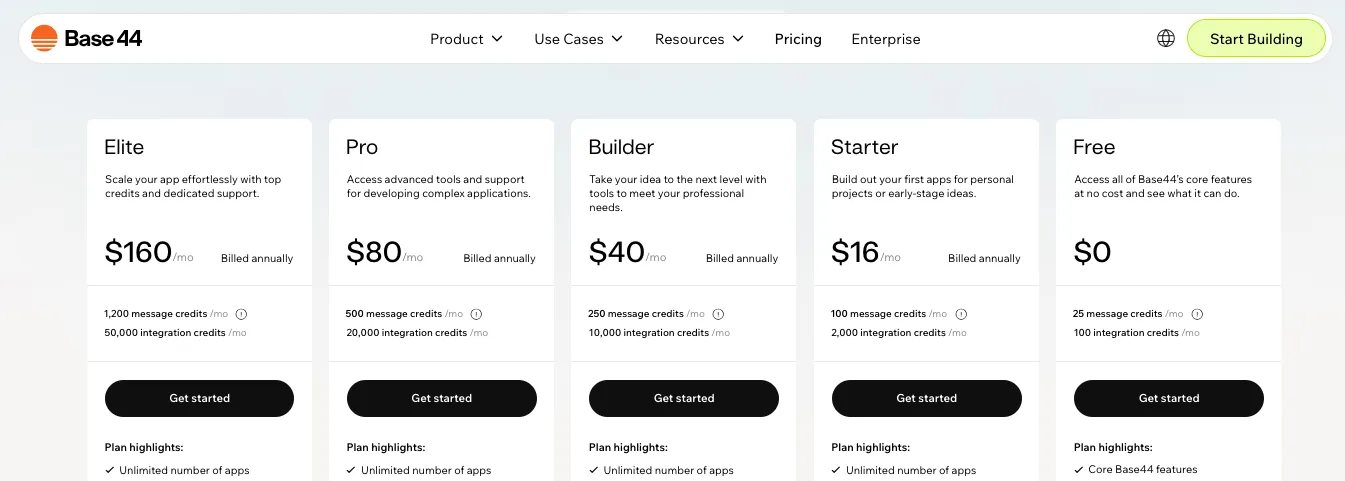
Its pricing page lists a free plan with 25 message credits per month and 100 integration credits per month. Paid plans start at Starter for $16/month billed annually, then Builder at $40/month, Pro at $80/month, and Elite at $160/month.
The good thing is that Base44 gives you a lower-cost paid starting point.
If you are just testing ideas, the Starter plan may be enough.
But the more useful app-building features start showing up as you move higher.
For example, Builder includes features like backend functions, AI model selection, custom domain support, and GitHub integration.
So the real question is not:
“Can I start cheap?”
The better question is:
“Which plan gives me the features I actually need?”
For simple apps and early experiments, Base44 can be affordable.
But if you need GitHub, backend functions, custom domains, and more credits, the practical starting point may be the Builder plan.
Emergent
Emergent has a simpler pricing structure.
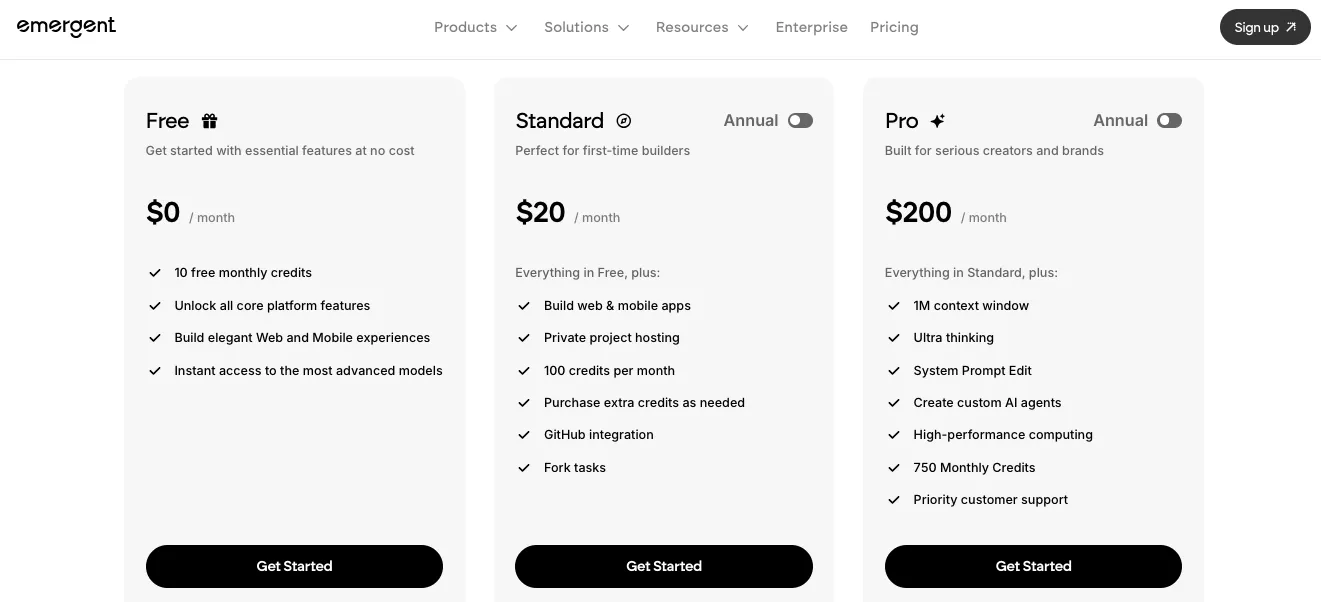
Its pricing page lists a Free plan with 10 monthly credits, a Standard plan at $20/month billed annually with 100 credits, private project hosting, GitHub integration, and extra credit purchases, and a Pro plan at $200/month with 750 monthly credits and advanced features like custom AI agents, Ultra Thinking, system prompt editing, and a 1M context window.
Emergent’s Standard plan is attractive because it includes GitHub integration at $20/month.
That is useful if code ownership matters early.
But the jump from Standard to Pro is large.
The Pro plan is clearly aimed at serious creators, brands, and advanced AI-agent workflows.
So Emergent can feel cost-effective if you stay on Standard.
But if you need Pro-level features, the monthly cost becomes much higher.
Winner: Tie
This depends on what you need.
Base44 has a cheaper annual entry plan and more pricing steps.
Emergent gives GitHub integration on the $20/month Standard plan, which is strong for users who care about code control early.
So here is the simple answer:
Choose Base44 if you want lower-cost entry and flexible plan upgrades.
Choose Emergent if you want GitHub, private hosting, and full-stack app generation at the Standard level.
But for heavy usage, both tools can become expensive depending on credits, app complexity, and how often you regenerate or refine your app.
Base44 and Emergent Alternatives You Should Try
Base44 and Emergent are strong AI app builders, but they are not the only options worth looking at.
Depending on what you want to build, another tool may be a better fit.
Some users need a simpler no-code AI app builder.
Some want full code control.
Some want a proper AI code editor.
And some teams just want to build internal tools without spending weeks setting up the backend.
So before you make the final decision, here are a few Base44 and Emergent alternatives worth checking out.
| Alternative |
Best For |
Why You Might Choose It |
| Vitara AI |
Full-stack apps with code ownership |
Good if you want prompt-based app building with editable and downloadable code |
| Lovable |
MVPs and startup products |
Strong option for non-technical founders building apps and websites with AI |
| Bolt.new |
Browser-based full-stack development |
Useful if you want to prompt, edit, run, and deploy web apps from the browser |
| Replit Agent |
Beginners and fast deployment |
Good for building and deploying apps from natural language prompts |
| Bubble AI |
Visual no-code app building |
Better if you want drag-and-drop control with AI assistance |
| Cursor |
Developers and coding teams |
Best if you already code and want an AI code editor, not a no-code builder |
| Retool |
Internal tools and business apps |
Strong for teams building dashboards, admin panels, and internal workflows |
1. Vitara AI
Vitara AI is one of the closest alternatives to Base44 and Emergent because it sits between both tools.
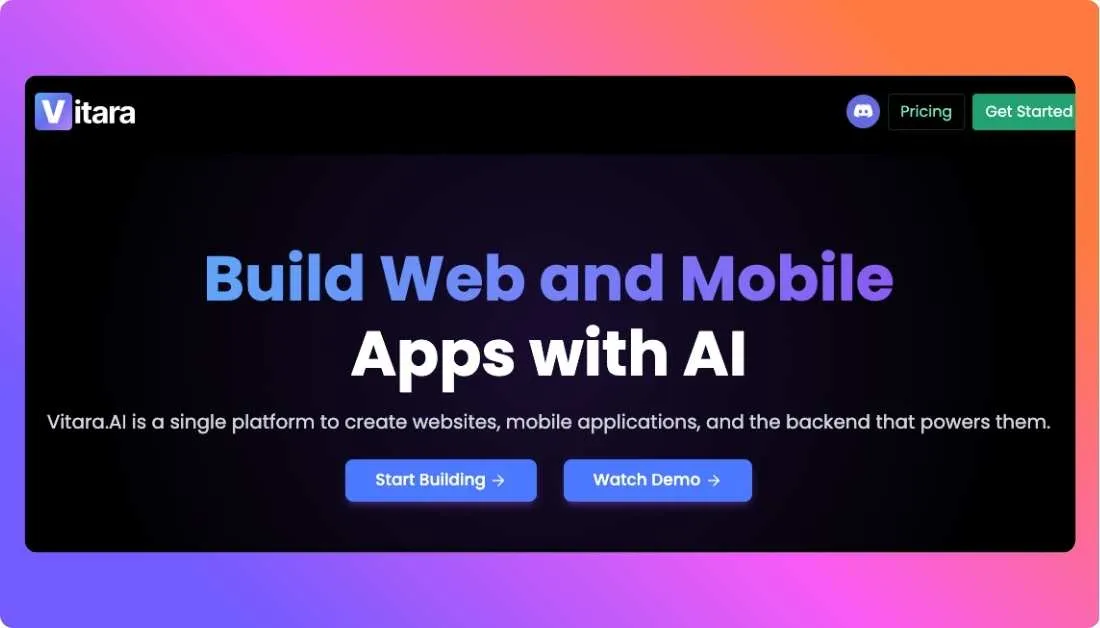
It gives you the prompt-based app-building experience that beginners like, but it also focuses on full-stack app creation, editable code, and code ownership. Vitara positions itself as a vibe coding platform that helps users build software products through a chat interface.
This makes it useful if you want to build:
- SaaS MVPs
- Web apps
- Mobile-friendly apps
- Internal tools
- Dashboards
- AI-powered products
- Apps with frontend and backend logic
The main reason to consider Vitara is simple.
Base44 is easier and more managed.
Emergent gives you more control and full-stack depth.
Vitara tries to give you both: a simple AI app builder experience with more ownership over the final product.
So if you want an AI app builder that can help you move fast without locking you into a basic prototype workflow, Vitara AI is worth testing.
2. Lovable
Lovable is another strong Base44 and Emergent alternative, especially for founders who want to build MVPs, websites, and digital products with AI.
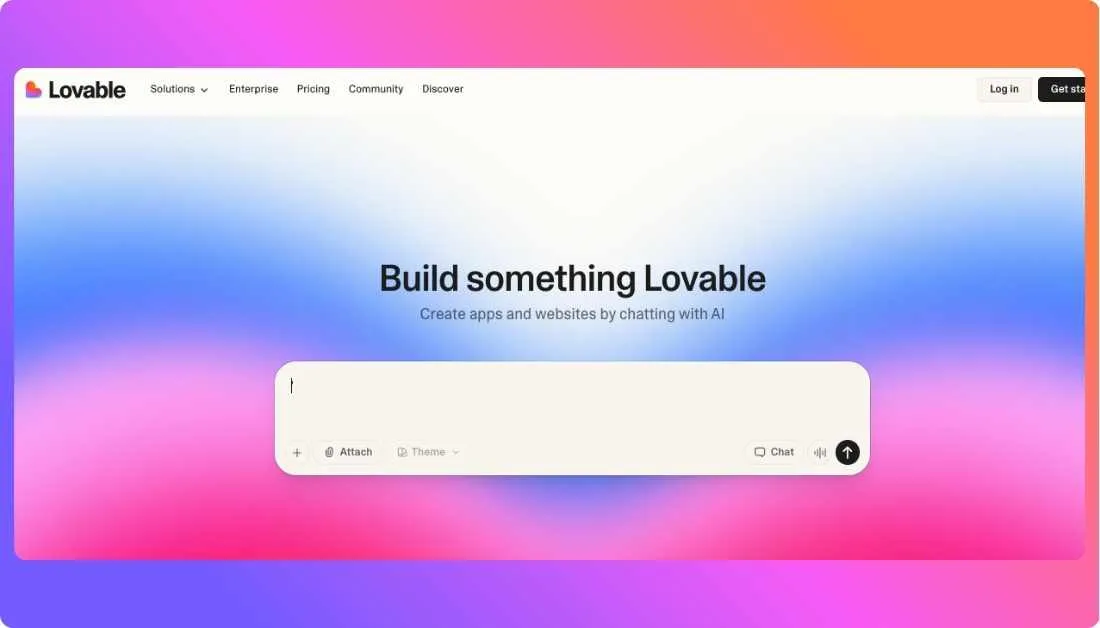
Lovable describes itself as an AI app builder for creating apps, websites, and digital products faster using a no-code and AI-powered platform.
It is a good choice if you want something that feels more product-focused than a traditional code editor.
You can describe what you want, generate the first version, and keep improving it through prompts.
Lovable works well for:
- Startup MVPs
- Landing pages
- Web apps
- SaaS product ideas
- Founder-led prototypes
- Customer-facing apps
You may want to choose Lovable if Base44 feels too managed, but Emergent feels too technical.
It gives you a nice middle ground for turning ideas into working software without starting from a blank codebase.
Also Read:
Now, let’s look at another strong option for browser-based full-stack app development.
Top Lovable Alternatives
3. Bolt.new
Bolt.new is a good alternative if you want to build full-stack web apps directly from your browser.
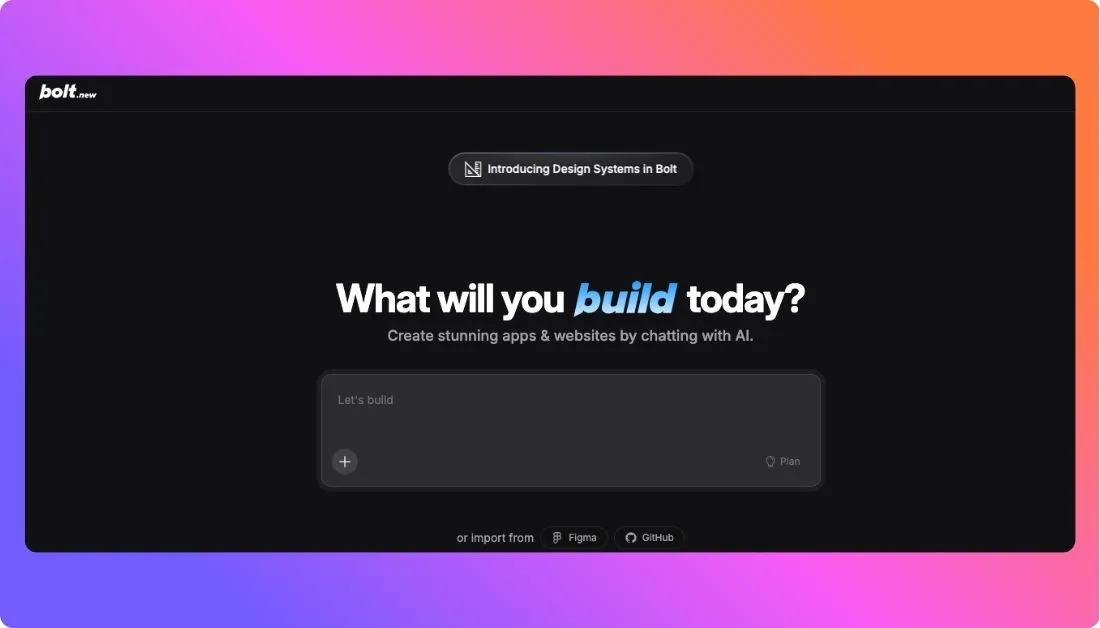
It lets users build websites, apps, and prototypes using natural language prompts. Bolt’s own support docs say it can build websites and JavaScript-based full-stack web applications.
This is helpful if you want more hands-on control than a simple no-code builder gives you.
With Bolt.new, you can prompt the app, edit it, run it, and deploy it without setting up a local development environment.
Bolt.new is better suited for:
- Developers
- Technical founders
- Indie hackers
- Web app builders
- JavaScript-based projects
- Fast prototypes that need real code
You may want to try Bolt.new if Emergent interests you, but you want a more browser-based development workflow.
4. Replit Agent
Replit Agent is a good option if you want a beginner-friendly way to build and deploy apps from prompts.
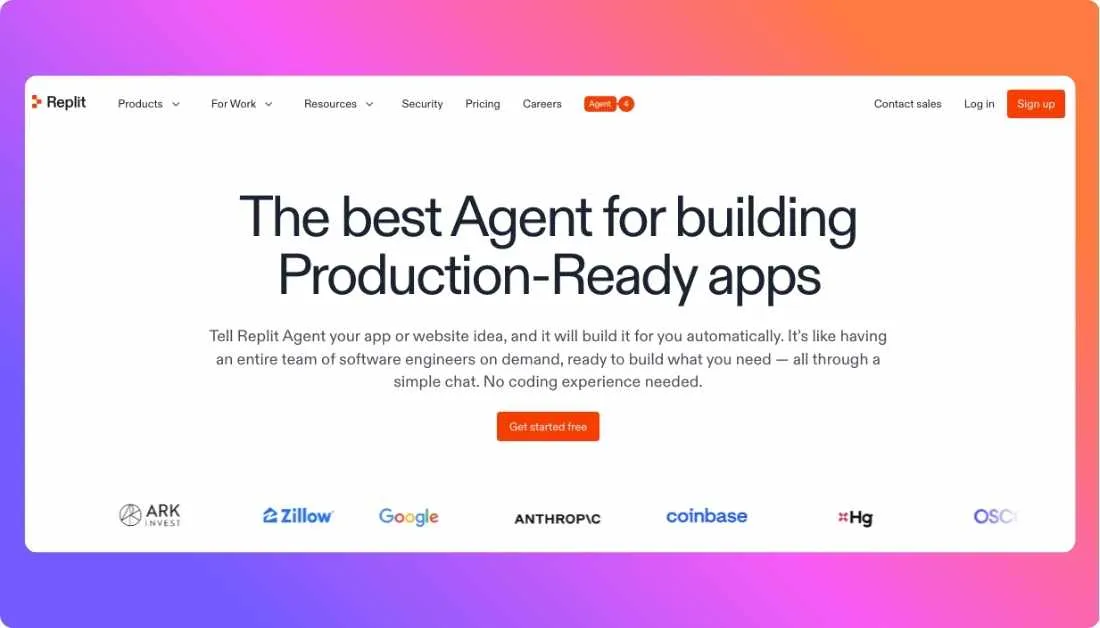
Replit says users can make apps and websites with natural language prompts, and Replit Agent can build and deploy the app through a simple chat workflow.
This makes Replit useful for people who want everything in one place.
You can write prompts, edit code, test the app, and deploy it from the same platform.
Replit Agent works well for:
- Beginners learning app development
- Students
- Indie makers
- Small app ideas
- AI tools
- Side projects
- Quick web apps
Compared to Base44, Replit gives you more exposure to the code.
Compared to Emergent, it may feel more familiar if you want a general cloud coding workspace.
5. Bubble AI
Bubble AI is worth considering if you want a true no-code app builder with visual control.
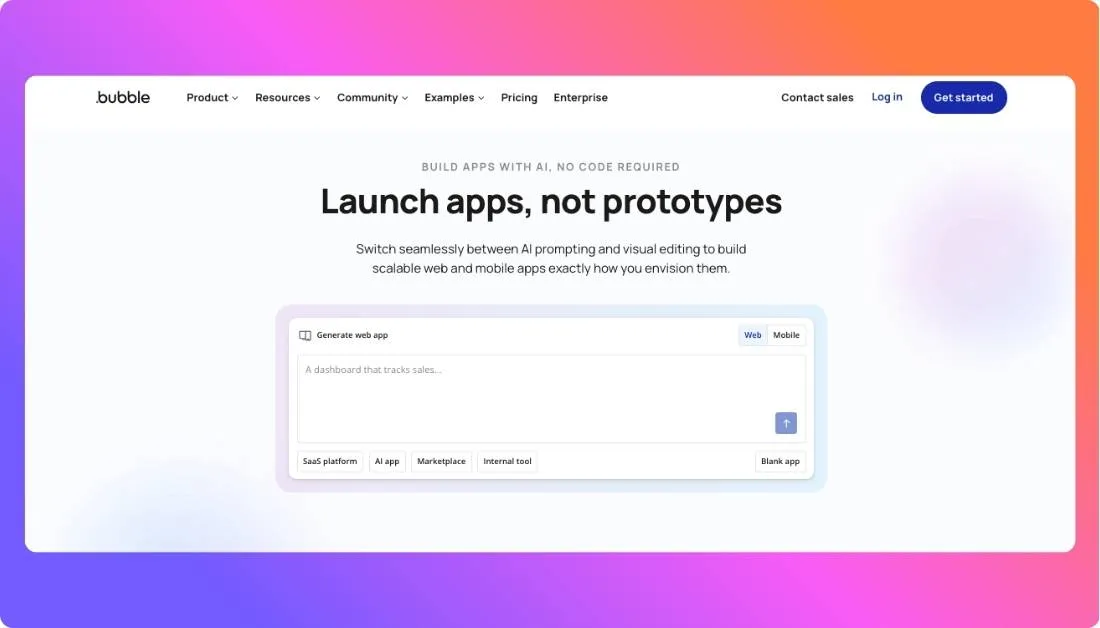
Bubble’s AI app generator lets users start with a text prompt, generate an app structure, and then continue building with Bubble’s drag-and-drop visual development platform.
This makes Bubble different from tools like Emergent or Cursor.
You are not mainly working inside a code-first environment.
You are building visually.
Bubble works well for:
- Marketplaces
- SaaS MVPs
- Directories
- Portals
- Booking apps
- Membership platforms
- Business workflow apps
You may want to choose Bubble if you like Base44’s no-code feel but want a more mature visual builder with a larger no-code ecosystem.
The trade-off is that Bubble has its own learning curve.
It is beginner-friendly compared to coding, but it still takes time to understand workflows, databases, privacy rules, and plugin setup.
6. Cursor
Cursor is not a direct Base44 replacement, but it is a strong Emergent alternative for developers.
Cursor is an AI coding editor that helps developers turn ideas into code, edit existing codebases, and work with AI agents inside a coding environment.
You should choose Cursor if you already know how to code or you have developers on your team.
It is not the best option for someone who wants a pure no-code app builder.
But it is very useful if you want:
- AI-assisted coding
- Codebase understanding
- Faster debugging
- Feature generation
- Refactoring help
- Developer-level control
Base44 and Emergent help you generate apps from prompts.
Cursor helps you work inside the code more deeply.
So if your goal is long-term software development, Cursor may be a better fit than both.
7. Retool
Retool is a strong alternative if your main goal is to build internal tools.
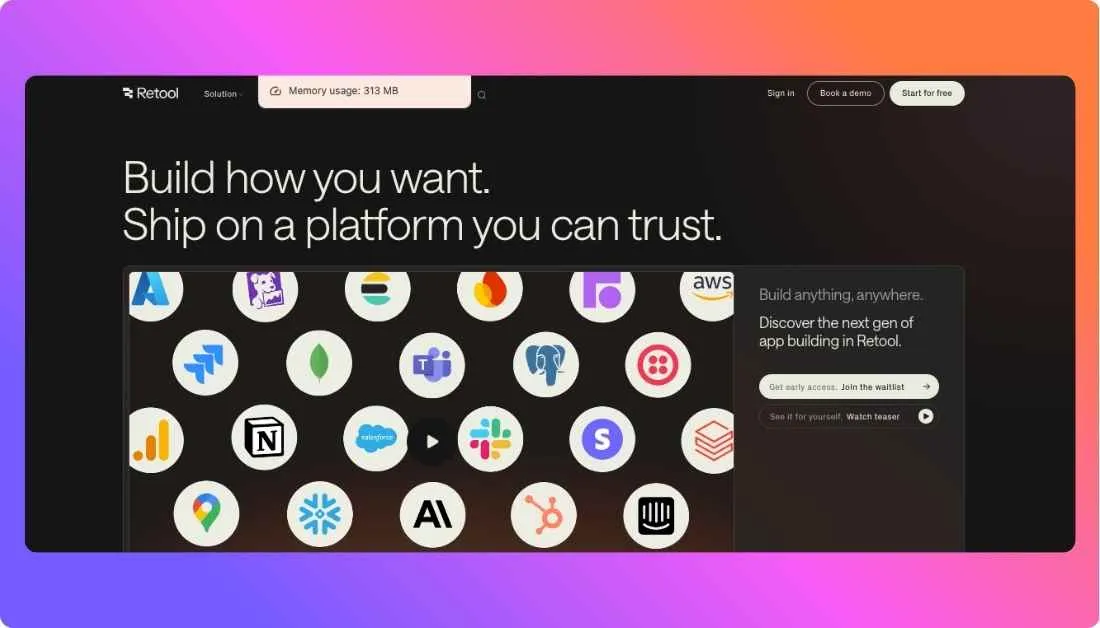
Retool focuses on building, deploying, and managing internal software. It connects to databases, APIs, and LLMs, which makes it useful for business apps, dashboards, admin panels, and operational tools.
Retool is not the best pick for building a consumer SaaS product or a public mobile app.
But it is very strong for internal business workflows.
You can use Retool to build:
- Admin dashboards
- CRM tools
- Inventory systems
- Approval workflows
- Support tools
- Data dashboards
- AI-powered internal apps
Choose Retool if you are building for a team inside a company.
Choose Base44 or Emergent if you are building a more general app, MVP, website, or customer-facing product.
Which Base44 or Emergent Alternative Should You Choose?
Here is the simplest way to decide:
Choose Vitara AI if you want a full-stack AI app builder with more code ownership.
Choose Lovable if you want to build startup MVPs and web apps quickly with AI.
Choose Bolt.new if you want to build and edit full-stack web apps in the browser.
Choose Replit Agent if you want an all-in-one place to prompt, code, test, and deploy.
Choose Bubble AI if you prefer visual no-code app building.
Choose Cursor if you are a developer and want AI inside your coding workflow.
Choose Retool if your main goal is building internal tools for a business.
My personal take:
If Base44 feels too simple and Emergent feels too technical, start by testing Vitara AI, Lovable, or Bolt.new.
These tools give you a good middle ground between fast AI app generation and real software control.
Base44 vs Emergent: Final Verdict
Base44 and Emergent both help you build apps with AI, but they are not trying to solve the same problem.
Base44 is the better choice if you want a simpler, more guided way to build and launch apps without touching code. It works well for non-technical users, founders, small teams, and business owners who want to create simple-to-moderate apps quickly.
For example, if you want to build an internal dashboard, client portal, CRM, booking tool, admin panel, or basic SaaS MVP, Base44 gives you a faster path from idea to working product.
You do not have to think too much about infrastructure, backend setup, hosting, databases, or app architecture. Base44 handles most of that in the background, which makes the whole experience feel easier and less technical.
Emergent is the better choice if you want more control over what you are building.
It is better suited for users who care about full-stack app generation, code ownership, GitHub integration, mobile app support, custom backend logic, and developer handoff.
This makes Emergent a stronger option for technical founders, product teams, startups, and developers who want to use AI to build something that can grow beyond a quick prototype.
The main difference comes down to this:
Base44 is better when you want speed and simplicity.
Emergent is better when you want control and flexibility.
So, if you are building a quick internal tool, a simple business app, or a no-code MVP, choose Base44.
But if you are building a scalable app that you may eventually own, export, customize, or extend with developers, choose Emergent.
My final take:
Choose Base44 if you want to build faster without managing code.
Choose Emergent if you want to build deeper with more ownership over the final product.
The main difference is the type of user each tool is built for.
Base44 is more focused on helping non-technical users build apps and websites without coding. It handles a lot of the structure, design, and logic for you, which makes it easier to start if you don’t want to deal with technical setup.
Emergent is more focused on full-stack AI app development. It uses AI agents to design, code, and deploy applications through conversation, which makes it better suited for users who want more control over the final product.
So, Base44 is simpler and more guided.
Emergent is deeper and more developer-friendly.
Yes, Base44 is usually better for beginners.
If you are a founder, business owner, product manager, or someone without coding experience, Base44 feels easier to understand. You can describe the app you want, then use the platform to keep improving it without thinking too much about code, hosting, backend setup, or app architecture.
Emergent can also be used through prompts, but it feels more technical because it focuses on full-stack app generation, GitHub, deployment, and more advanced app logic.
If this is your first time using an AI app builder, Base44 will likely feel more comfortable.
Yes, Emergent is generally better if you want to build a full-stack app.
A full-stack app includes both the frontend and backend.
The frontend is what users see, like pages, buttons, dashboards, and forms.
The backend is what runs behind the scenes, like databases, login systems, APIs, permissions, and business logic.
Emergent is built around AI agents that can design, code, and deploy an app from start to finish, which gives it a stronger full-stack development angle.
Base44 also supports real app-building workflows, but it hides more of the technical setup. That is great for beginners, but less flexible if you want deeper control.
Base44 is the better choice for most non-technical founders.
It is easier to use, more guided, and better suited for building simple-to-moderate business apps quickly.
For example, Base44 works well if you want to build:
- A client portal
- An internal dashboard
- A booking app
- A lightweight CRM
- A project tracker
- A simple SaaS MVP
- A business website with app-like features
Emergent is better if the founder wants more ownership, more flexibility, and a project that developers may work on later.
It depends on the type of SaaS MVP you are building.
Choose Base44 if your MVP is simple and you mainly want to test the idea quickly. It works well for dashboards, forms, portals, admin panels, and business workflow apps.
Choose Emergent if your SaaS needs more complex backend logic, custom APIs, mobile support, GitHub integration, or future developer handoff.
So, for a quick MVP validation, Base44 is easier.
For a SaaS product you may build into a real software business, Emergent gives you more room to grow.
Yes, you can build real apps with Base44.
Base44 is not just a landing page builder. It is designed to help users build apps and websites from prompts without needing coding experience. It handles structure, design, and logic, which makes it useful for business tools, internal apps, portals, dashboards, and MVPs.
That said, you should still test the app carefully before using it for anything serious.
AI-generated apps can have bugs, missing edge cases, weak security rules, or logic issues that are not obvious at first.
Yes, Emergent is designed for building real full-stack apps through conversation.
Its main promise is that AI agents help design, code, and deploy your application from start to finish.
This makes Emergent a better fit for users who want to build more complete software products, especially if the app needs backend logic, mobile support, GitHub integration, or a developer-friendly workflow.
But the same warning applies here too.
You should not blindly ship an AI-generated app without testing it, reviewing the logic, checking security, and making sure the app behaves correctly.
Emergent has the stronger code ownership angle.
Its Standard plan includes GitHub integration, private project hosting, and web and mobile app building, which makes it more attractive if you want your app to become a real code project.
Base44 also offers GitHub integration on higher plans, so it is not completely closed. But Base44 still feels more like a managed no-code AI app builder, while Emergent feels more like an AI software development platform.
If owning and extending the code matters to you, Emergent is the safer choice.
Yes, Base44 supports GitHub integration on higher-tier plans.
Its pricing page lists GitHub integration along with features such as backend functions, in-app code edits, AI model selection, and custom domain support on advanced plans.
This is useful if you want version control, developer review, or a better handoff path.
But if GitHub access is one of your main priorities from the start, compare the exact plan limits before choosing.
Yes, Emergent supports GitHub integration.
Its Standard plan includes GitHub integration, private project hosting, 100 credits per month, and support for building web and mobile apps.
This is one reason Emergent is more appealing for technical founders, developers, and teams that want to keep working on the app after the AI creates the first version.
Emergent is the better choice if mobile app support matters.
Emergent’s pricing page clearly mentions building web and mobile apps on the Standard plan.
Base44 can help you build apps and websites that work well across devices, but Emergent has stronger positioning around mobile app generation.
So if you are mainly building a mobile-first product, Emergent is the better option to test first.
Base44 is usually better for internal tools.
Internal tools often need clean screens, simple workflows, dashboards, forms, user roles, and data views. Base44 is well suited for this because it gives you a more guided no-code app-building experience.
You can use it to build things like:
- Admin dashboards
- Team portals
- Approval workflows
- Client management tools
- Inventory trackers
- Project dashboards
- Lightweight CRM systems
Emergent can also build internal tools, but it may feel like more than you need if the app is simple.
Emergent is better for complex backend logic.
If your app needs custom APIs, advanced user permissions, payment flows, AI workflows, multi-step automation, or a more detailed database structure, Emergent gives you more flexibility.
Base44 can handle backend-related needs in a more managed way, which is helpful for beginners.
But if the backend is central to your product, Emergent is the better fit.
Base44 has a lower entry point for paid plans, while Emergent’s Standard plan gives strong value if you care about GitHub integration and web/mobile app building.
Base44’s pricing page lists paid annual plans starting from Starter at $16/month, with higher tiers such as Builder, Pro, and Elite offering more credits and advanced features.
Emergent’s pricing page lists Standard at $20/month billed annually and Pro at $200/month billed annually. The Standard plan includes web and mobile app building, private hosting, 100 credits per month, and GitHub integration.
So the better value depends on what you need.
Base44 is better if you want a cheaper starting point.
Emergent is better if GitHub, code ownership, and full-stack app building matter early.
Base44 can be useful for production-style apps, especially simple business apps, dashboards, portals, and internal tools.
But you should be careful with the word “production.”
A production app needs more than just a working interface. It needs proper testing, secure authentication, reliable data handling, error checks, and a clean user experience.
Base44 is good for getting a working product live quickly, but for serious customer-facing software, you should still test everything carefully and involve a developer when needed.
Emergent is better suited for production-style app building than many simple no-code AI tools because it focuses on full-stack generation, deployment, and AI agents that design and code the application.
That said, an AI-generated app should not go live without review.
Even if Emergent creates a strong first version, you still need to check the code, security, database logic, permissions, API behavior, and user flows.
Emergent can help you move faster, but it does not remove the need for proper QA.
Emergent has less vendor lock-in if your goal is code ownership and developer handoff.
Because Emergent includes GitHub integration on its Standard plan, it gives you a clearer path to working with your app outside the platform.
Base44 is more managed. That makes it easier to use, but it can also make you more dependent on the platform’s environment.
So the trade-off is simple:
Base44 gives you convenience.
Emergent gives you more control.
Developers will usually prefer Emergent.
It gives a more code-aware workflow, stronger full-stack positioning, GitHub integration, and better room for custom logic.
Base44 is still useful for developers who want to quickly prototype an idea, create an internal tool, or help a non-technical team build something faster.
But if the developer wants to inspect, extend, or maintain the app long term, Emergent is the better fit.
Agencies can use both tools, but for different types of projects.
Base44 is useful if an agency wants to quickly build client portals, dashboards, MVPs, and simple business apps.
Emergent is better if the agency is building more custom software, mobile apps, or projects that need code ownership and developer handoff.
If your agency sells fast app prototypes, Base44 may feel easier.
If your agency sells more serious AI app development or full-stack software builds, Emergent is a better match.
Not completely.
They can help you build faster, especially in the early stages.
They can create prototypes, MVPs, dashboards, websites, and even more advanced app structures from prompts.
But for serious apps, developers are still useful for:
- Reviewing code
- Fixing bugs
- Improving performance
- Checking security
- Handling complex integrations
- Making the app scalable
- Maintaining the product long term
Think of Base44 and Emergent as AI development accelerators, not full replacements for software judgment.
Emergent is usually better for an AI SaaS product if the app needs custom backend logic, API connections, user accounts, billing flows, or long-term developer involvement.
Base44 is better if your AI SaaS idea is simple and you want to validate it quickly before investing in a full build.
A practical approach would be:
Use Base44 if you want to test the idea fast.
Use Emergent if you already know the product needs more technical depth.
Base44 is usually easier for building websites and simple web apps.
It is built for users who want to create apps and websites without coding experience.
Emergent can also build web experiences, but it may be more than you need if your goal is only a marketing website, landing page, or simple business site.
For websites, choose Base44.
For web apps with deeper logic, choose Emergent.
Choose Base44.
It is better if you only have an idea and want to see it turned into a working app without learning technical concepts first.
You can start with a simple prompt, review the generated app, and keep improving it step by step.
Emergent is better once you are ready to think more seriously about code, app structure, deployment, and long-term ownership.
Some popular alternatives to Base44 and Emergent include Lovable, Bolt.new, Replit, Cursor, Windsurf, v0 by Vercel, Bubble AI, Softr, Firebase Studio, Retool, Appsmith, and Vitara AI.
The right alternative depends on what you are building.
For visual app building, look at no-code AI app builders.
For developer workflows, look at AI code editors.
For SaaS MVPs, look at full-stack AI app builders.
For internal tools, look at low-code platforms with database and workflow support.
There is no single best tool for everyone.
Base44 is better if you want speed, simplicity, and a beginner-friendly no-code AI app builder.
Emergent is better if you want control, code ownership, GitHub integration, full-stack app generation, mobile support, and a better path to developer handoff.
The easiest way to decide is this:
For a quick internal tool, choose Base44.
For a scalable app you may eventually own, export, or extend with developers, choose Emergent.