Top AI Tools for Data Analysis You Need to Know in 2026
Key Takeaways
- AI tools for data analysis in 2026 range from simple no-code platforms like Numerous AI to enterprise-grade solutions such as Google Cloud AI and IBM Watson Studio.
- AI improves data analysis through natural language queries, predictive analytics, anomaly detection, and automated data cleaning.
- Tools like Orange3, KNIME, and RapidMiner enable complex data analysis using drag-and-drop workflows without coding.
- Enterprise platforms such as Azure Synapse and Amazon SageMaker Neo provide scalable and secure analytics with built-in machine learning.
- Selecting the right AI tool depends on goals, data complexity, integration needs, budget, and long-term scalability.
- Prismetric helps businesses transform raw data into actionable insights through custom AI and engineering services.
Data analysis is no longer just for data scientists. With AI tools for data analysis becoming more accessible, anyone can dive into analyzing their data, regardless of their skill level. These tools make it easier to extract meaningful insights and make data-driven decisions faster. And the demand is exploding. The global AI in data analytics market is expected to grow from about $18.5 billion in 2023 to $236.1 billion by 2033 at a 29% CAGR, showing how quickly businesses are adopting smarter analytics solutions.
Whether you’re running a small business or managing a large organization, the right AI tool for data analysis can help you uncover trends, automate tedious tasks, and predict future outcomes.
But with so many options out there, choosing the right tool can feel like a daunting task. In this guide, we’ll break it all down for you. We’ll explore some of the best AI tools for data analysis available, explain how they work, and help you find the one that best fits your needs.
What is Data Analysis?
Data analysis is the process of examining raw data to uncover trends, patterns, and insights that can guide decision-making. It’s about transforming data from numbers and text into something meaningful, whether it’s identifying business opportunities, improving processes, or predicting future outcomes. By organizing and interpreting data, you can make more informed choices and take action that’s backed by facts, not just gut feeling. It’s a crucial step for any business or individual looking to turn data into real-world value.
How AI Tools Enhance Data Analysis
Here’s how AI tools enhance data analysis by simplifying and accelerating key tasks. From allowing you to query data in plain language to predicting future trends and detecting anomalies, AI makes data analysis more efficient and accessible.
- Natural Language Querying
AI tools allow you to interact with data using plain language. Instead of writing complex queries, you can simply ask questions like “What were our sales last month?” and get instant, actionable answers. With our NLP services, data analysis becomes accessible to everyone, even those without technical expertise.
- Predictive Analytics & Forecasting
AI tools help you anticipate future trends by analyzing historical data. Whether you’re forecasting sales, customer behavior, or market shifts, AI can provide predictions that guide strategic decisions, allowing you to plan ahead with more confidence.
- Anomaly Detection
AI-powered anomaly detection automatically spots outliers in your data that might signal errors, fraud, or unexpected trends. By flagging unusual patterns early, AI helps you catch issues before they become bigger problems, saving time and resources.
- Automated Data Cleaning & Feature Engineering
Data cleaning can be one of the most tedious tasks in analysis. AI automates this process by identifying and fixing inconsistencies or missing values. It also handles feature engineering, ensuring the data is ready for analysis without manual intervention.
- AI-Driven Visualization
AI tools turn complex data into simple, interactive visualizations that make insights easier to understand. With dynamic charts and graphs, AI helps you quickly interpret and share data findings with your team, making it easier to act on insights and drive decisions.
Our Approach to Choosing AI Tools for Data Analysis
We carefully selected these AI tools based on specific factors that ensure they deliver the best value for data analysis. Here’s the criteria we used to make our choices:
- Ease of Use: We prioritized tools that are intuitive and user-friendly, making them accessible to both beginners and experienced users.
- Core Features: The tools had to offer essential capabilities like predictive analytics, anomaly detection, and data visualization.
- Scalability: We looked for tools that can grow with your business, handling small to large datasets seamlessly.
- Integration: The ability to integrate with existing systems and software was key to ensuring smooth workflows.
- Cost: We included a mix of free and paid tools, ensuring they provide good value for the price.
- Customer Support: Excellent support and resources to help users troubleshoot and get the most out of the tool.
- User Reviews: We considered feedback from real users to understand the effectiveness and reliability of each tool.

Top 10 AI Tools for Data Analysis in 2026
AI tools are revolutionizing data analysis, making it faster and more efficient than ever before. Here are the top 10 AI tools in 2026 that can help you unlock powerful insights and drive smarter decisions.
1. Numerous AI
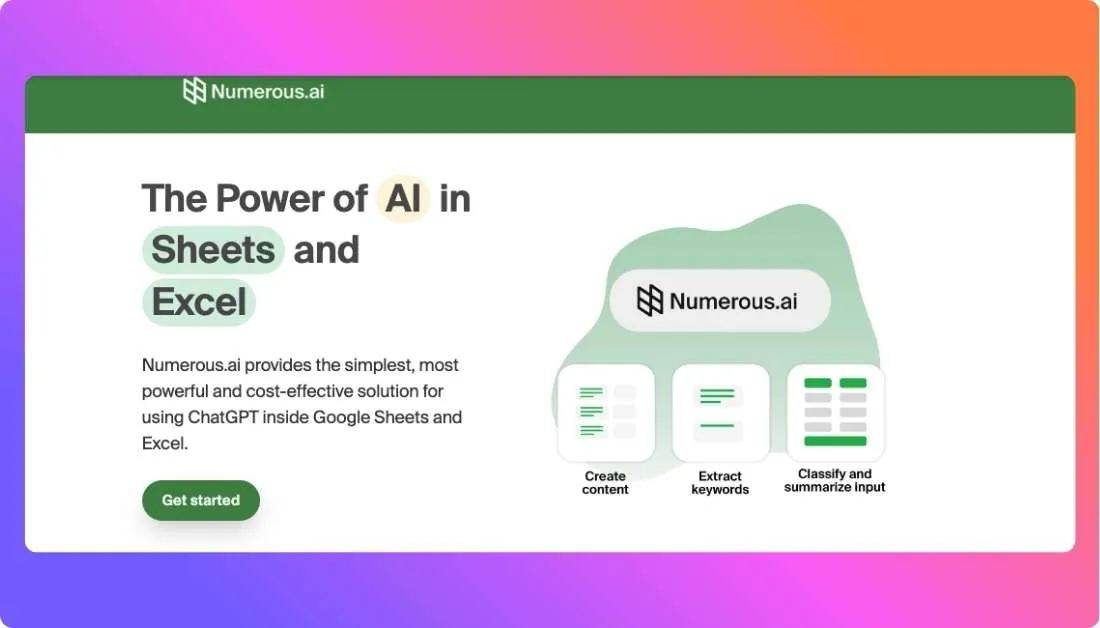
Numerous AI makes data analysis simple and accessible, even for beginners. It integrates directly with Google Sheets, so you can use AI to clean data, predict trends, and visualize insights without needing any coding skills. The tool is perfect for businesses that want to quickly turn their data into actionable results. Whether you’re working with sales numbers or customer behavior, Numerous AI offers an easy, efficient way to make data-driven decisions.
While Numerous AI offers great potential, some of the best tools for AI search data analysis history provide a deeper understanding of long-term trends and past performance, offering more detailed insights.
2. Orange3
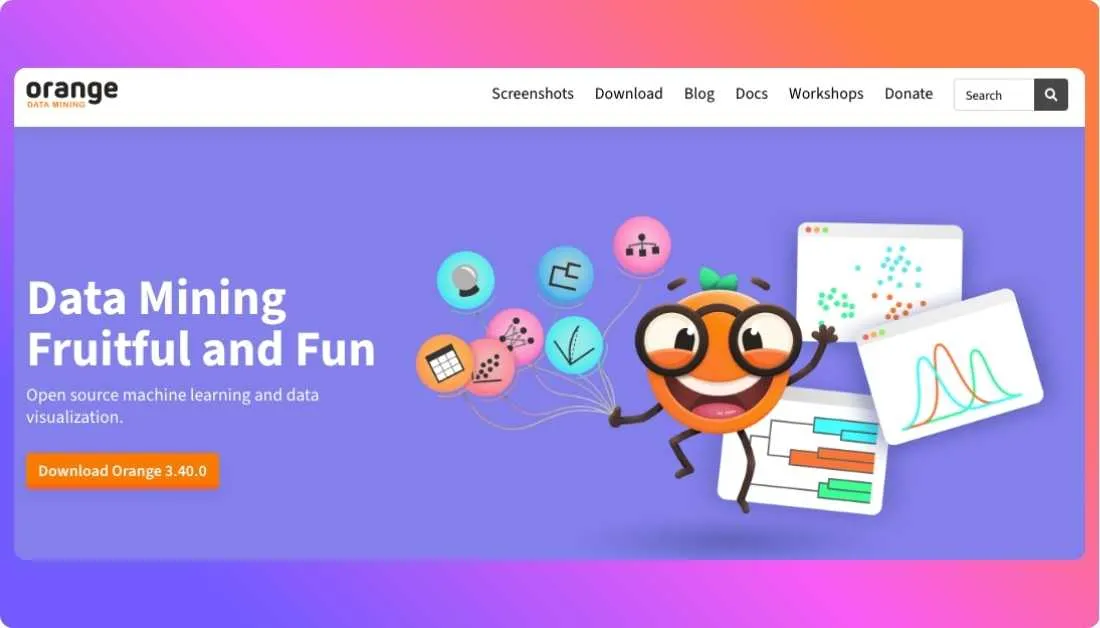
Orange3 is a user-friendly, open-source data analysis tool that’s great for both beginners and more experienced users. It features a visual interface that allows you to easily drag and drop widgets to clean, visualize, and analyze data.
With a wide range of pre-built features, Orange3 makes it simple to experiment with data analysis techniques. Whether you’re handling large datasets or exploring trends, it’s a great choice for creating custom workflows without needing any coding knowledge.
3. KNIME
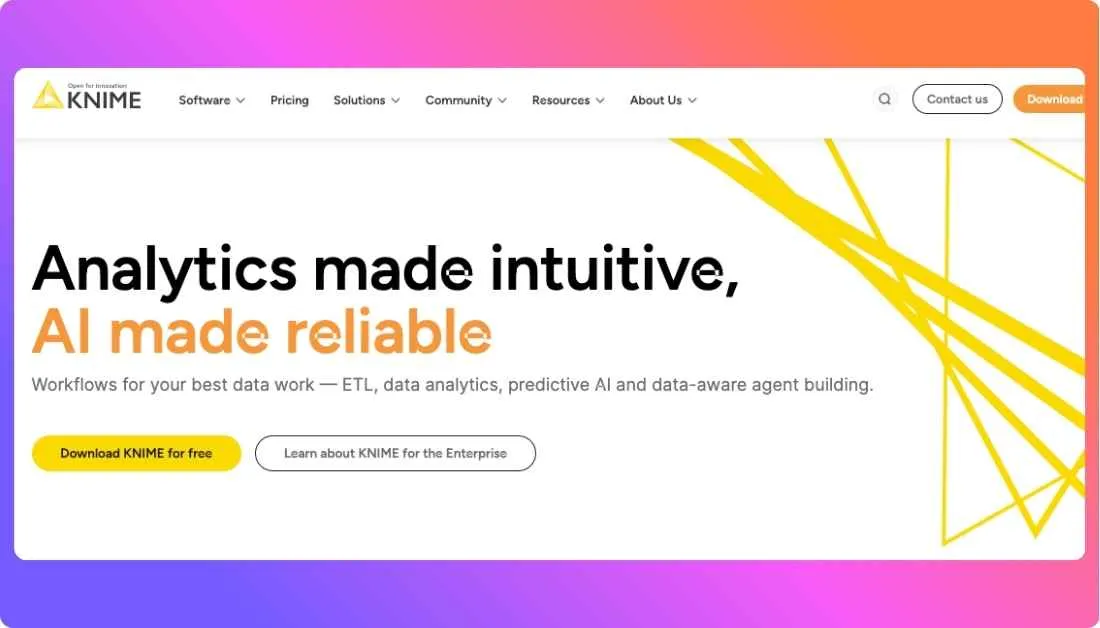
KNIME is an open-source platform designed for advanced data analytics and machine learning. Its drag-and-drop interface makes it easy to build workflows and analyze complex datasets without writing any code.
KNIME integrates with various data sources, such as databases and spreadsheets, giving you the flexibility to create powerful models and visualizations. It’s perfect for data scientists and analysts who need a scalable, adaptable solution to handle complex data problems.
4. RapidMiner

RapidMiner is a popular data science platform designed for both beginners and professionals. It’s packed with features for data preparation, machine learning, and model deployment, all accessible through an intuitive drag-and-drop interface.
- User-Friendly Interface: No coding required, making it easy for anyone to get started.
- Powerful Data Modeling: Offers tools for creating predictive models, clustering, and classification.
- Integration with Multiple Data Sources: Supports integration with various data platforms like Hadoop and SQL.
- Customizable: Ability to build and modify workflows to suit specific data analysis needs.
5. Kaggle Notebooks

Kaggle Notebooks is an online environment where data scientists and analysts can experiment with datasets and machine learning models. It’s ideal for collaborative work and sharing insights within the Kaggle community.
Kaggle Notebooks allows you to write code, run experiments, and share your findings in a cloud-based environment. The best part? It’s free to use and backed by Kaggle’s huge dataset repository.
This tool is widely used by data professionals to test algorithms, run simulations, and compete in data science challenges. It’s an excellent resource for both learning and working on real-world problems.
With powerful integration options and access to top-tier tools, Kaggle Notebooks makes advanced data analysis accessible to anyone who’s interested in learning and experimenting with machine learning.
6. Google Cloud AI & BigQuery
Google Cloud AI & BigQuery is a powerful combination for big data analysis and machine learning. It’s designed to help you quickly analyze massive datasets and build AI models with minimal hassle.
BigQuery enables fast querying of large datasets, making it ideal for businesses that need real-time insights. It supports SQL and integrates seamlessly with other Google Cloud services.
Google Cloud AI brings machine learning capabilities to the table, helping you build custom models or use pre-trained ones. With AI tools, you can predict trends and analyze data at scale.
Google Cloud’s integrated environment makes it easier to move from data processing to AI model development, ensuring a streamlined workflow. It’s perfect for businesses looking to scale their data analysis capabilities quickly and efficiently.
7. IBM Watson Studio
IBM Watson Studio is a comprehensive platform for data scientists, application developers, and business analysts. It offers a range of tools for data preparation, machine learning, and AI model deployment.
With Watson Studio, you can easily build, train, and deploy machine learning models. The platform supports a variety of data sources and allows for seamless integration with other IBM tools.
Watson Studio’s collaboration features make it easy for teams to work together, share insights, and iterate on data analysis projects. It’s designed to accelerate the process from data exploration to actionable results.
Whether you’re working on small datasets or complex machine learning models, IBM Watson Studio provides the tools you need to tackle any data challenge. Its scalability makes it a good choice for businesses of all sizes.
8. Microsoft Azure Synapse Analytics
Microsoft Azure Synapse Analytics is an integrated analytics service that brings together big data and data warehousing. It combines data integration, analytics, and visualization all in one platform.
Azure Synapse offers seamless integration with other Azure services, allowing users to process and analyze data from a variety of sources. It supports real-time data analytics and advanced machine learning capabilities.
It’s especially valuable for businesses looking to analyze large datasets and gain insights quickly. The platform’s scalability makes it a top choice for enterprises needing fast, efficient analysis.
With built-in security and compliance features, Azure Synapse ensures that your data is protected while you analyze it. It’s a solid option for businesses that require a secure, scalable data analytics solution.
9. Amazon SageMaker Neo
Amazon SageMaker Neo is a machine learning service that optimizes models for faster inference on various hardware platforms. It takes pre-trained models and converts them into highly efficient versions, ensuring faster predictions while maintaining accuracy. With SageMaker Neo, you can deploy models to edge devices, such as mobile phones and IoT devices, without compromising performance. It’s an excellent tool for businesses looking to scale their AI models across different environments with minimal effort.
10. Polymer
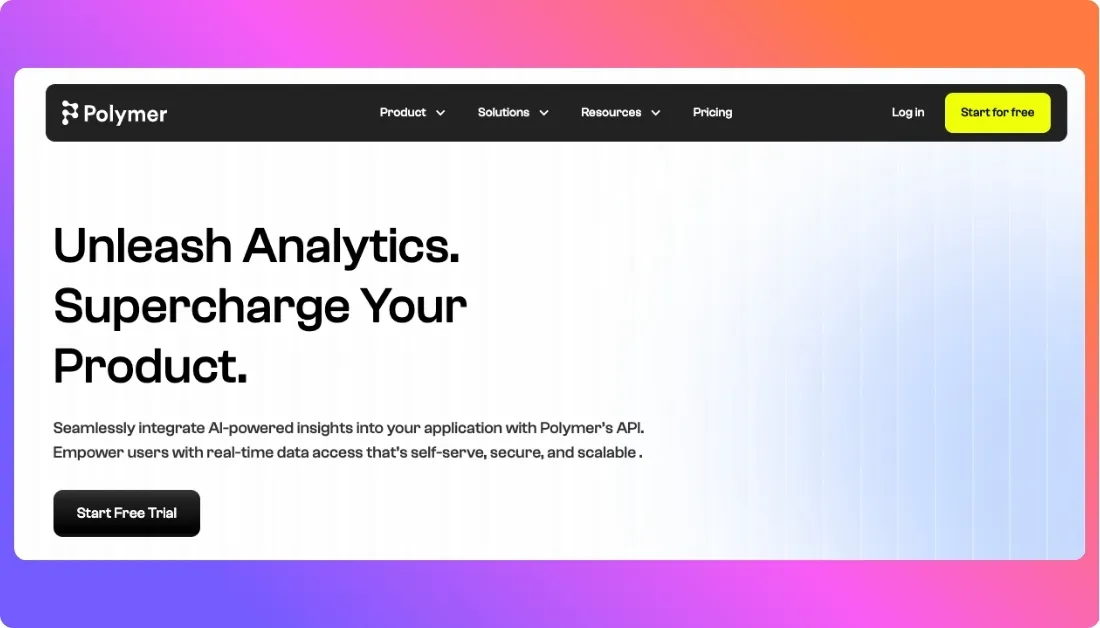
Polymer is a lightweight, open-source library designed for creating web applications that integrate AI-driven data analysis. It helps developers build responsive, data-rich applications with ease, using a combination of simple JavaScript and AI tools. Polymer’s integration with AI technologies allows for advanced data visualization and analysis directly within web apps. This makes it a great choice for businesses looking to create dynamic, data-focused user interfaces without complex coding.
How to Choose the Right AI Tools for Data Analysis?
Choosing the right AI tool for data analysis can be challenging, but considering a few key factors can make the decision easier. Here are some important things to consider when selecting an AI tool:
Define Your Needs
Start by understanding your specific goals whether you need data visualization, predictive analytics, or anomaly detection. Knowing your needs will help you choose the right tool that fits your requirements.
Ease of Use
Look for tools with user-friendly interfaces, especially if you don’t have advanced technical skills. A simple, intuitive design will save you time and make the learning curve less steep.
Scalability
Choose a tool that can scale with your data as your business grows. Scalability ensures that the tool can handle increased data volume without performance issues.
Integration with Existing Tools
Ensure the AI tool integrates well with the software and platforms you already use. Seamless integration saves time and avoids potential issues with data syncing.
Cost vs. Value
Consider both the upfront cost and the potential value the tool will bring. Some tools offer free tiers, while others provide enterprise-level features that justify a higher price.
Support and Resources
Check for strong customer support and available learning resources, such as tutorials or forums. Good support can help you resolve issues quickly and make the most of the tool.
When Your Data Outgrows AI Analysis Tools
AI tools for data analysis work well when data is clean, structured, and a manageable size. Problems start when businesses deal with billions of records, real-time event streams, or data spread across dozens of systems. At that point, the challenge is no longer choosing the right AI tool. It’s building a data foundation that the tool can actually use.
Here are the common signs your data has outgrown your analysis tools:
- Queries and dashboards slow down as data volume grows, even on cloud platforms.
- Real-time insights aren’t possible because data arrives in batches hours or days late.
- Data lives in silos across CRMs, ERPs, IoT devices, and logs, with no unified view.
- AI predictions are inconsistent because the underlying data is incomplete or duplicated.
The fix usually sits beneath the AI layer. Distributed processing frameworks like Apache Spark handle large-scale transformations. Streaming platforms like Apache Kafka move data in real time. Data ingestion tools like Apache NiFi connect scattered sources, and databases like Cassandra store high-volume data reliably. Once this foundation is in place, tools like BigQuery, Azure Synapse, or KNIME can deliver accurate insights at scale.
Building this layer takes specialized engineering skills. Many businesses work with top-rated big data consulting and implementation companies such as Ksolves, which designs and implements big data platforms using Apache Spark, Kafka, NiFi, Hadoop, Cassandra, and other big-data technologies so AI analysis tools have reliable, analysis-ready data to work with.
Empower Your Data with Our AI and Engineering Expertise
Data can often feel overwhelming, but with the right AI tools, it’s a goldmine waiting to be tapped. At Prismetric, we help you unlock the true value of your data with our data engineering services, transforming it into actionable insights that drive smart decisions and growth.
Our blend of AI innovation and engineering expertise means your data isn’t just analyzed; it’s understood. We create custom AI models that not only uncover hidden patterns but also provide practical solutions tailored to your business needs.
With our AI services, you can predict trends, automate processes, and make decisions faster. Whether you’re streamlining operations or enhancing customer experience, we make sure your data works for you, not the other way around.
At Prismetric, we believe in delivering more than just technology. We provide solutions that seamlessly integrate with your business, ensuring your data and AI systems evolve with you as you grow.

Conclusion
As we approach 2026, the landscape of AI tools for data analysis is rapidly evolving, offering exciting opportunities for businesses to unlock deeper insights and improve decision-making. From advanced machine learning algorithms to powerful NLP services, these tools are making it easier than ever to analyze complex data and drive smarter business strategies. Staying updated on the latest AI tools will ensure you remain competitive and leverage the full potential of your data in the years ahead.
Frequently Asked Questions
AI tools enhance data analysis by automating data processing, identifying hidden patterns, and providing actionable insights quickly. They help businesses make more informed decisions, improve operational efficiency, and predict future trends based on historical data.
NLP (Natural Language Processing) enables users to interact with data using plain language, simplifying data analysis. Instead of writing complex queries, users can simply ask questions like “What were my sales last quarter?” and get instant, understandable results, making data analysis accessible to non-technical users.
While a technical background can be helpful, many AI tools for data analysis are designed to be user-friendly. With intuitive interfaces and features like NLP integration, these tools allow even non-technical users to gain insights and perform data analysis without needing deep technical knowledge.
In the coming years, AI tools will continue to become more sophisticated, incorporating advanced machine learning algorithms and NLP. We can expect greater automation, improved predictive capabilities, and even more intuitive interfaces, making data analysis faster and more accessible for all types of users.
Yes, most AI tools for data analysis are built to integrate seamlessly with your existing data infrastructure. Whether you use cloud-based systems or on-premise solutions, these AI tools can easily connect and enhance your current data pipelines, providing enhanced analysis capabilities.