How Conversational AI is Transforming Healthcare?
Key Takeaways
- Conversational AI improves patient engagement by offering 24/7 access, faster responses, and personalized communication.
- AI automates scheduling, triage, and administrative tasks, reducing staff workload and improving operational efficiency.
- Remote monitoring and medication support enable timely, continuous care without frequent in-person visits.
- AI increases accuracy across healthcare workflows by lowering errors in billing, records, and patient data handling.
- Challenges such as data privacy, fairness, transparency, and system integration remain critical for large-scale adoption.
- Wearables, voice interfaces, and AI-driven diagnostics will shape the next generation of smart and accessible healthcare.
Conversational AI is transforming healthcare by enabling real-time, personalized interactions between patients and providers. Tools like chatbots and virtual assistants are not only improving patient experiences but also streamlining administrative tasks, allowing healthcare professionals to focus on delivering quality care.
The shift from traditional methods to AI-driven solutions has been accelerated by advances in Natural Language Processing (NLP) and machine learning. These technologies allow machines to understand and respond to human language more accurately, bridging communication gaps and improving efficiency across healthcare systems.
In this article, we will explore the role of conversational AI in healthcare. We will discuss its applications, benefits, and the challenges that must be addressed as we move toward a more patient-centered future.

What is Conversational AI?
Conversational AI refers to technology that enables machines to communicate with humans through natural language. It combines Natural Language Processing (NLP) and machine learning to understand, process, and respond to human input in a way that feels natural. These AI systems can take the form of chatbots, virtual assistants, or voice assistants, providing users with an interactive and efficient experience.
For example, when you interact with a AI healthcare chatbot on a clinic’s website, you might ask for appointment availability. The chatbot processes your request, understands your language, and provides a response, such as available time slots for a doctor. This AI-driven interaction helps streamline administrative tasks and improves patient convenience.
Key Use Cases of Conversational AI in Healthcare
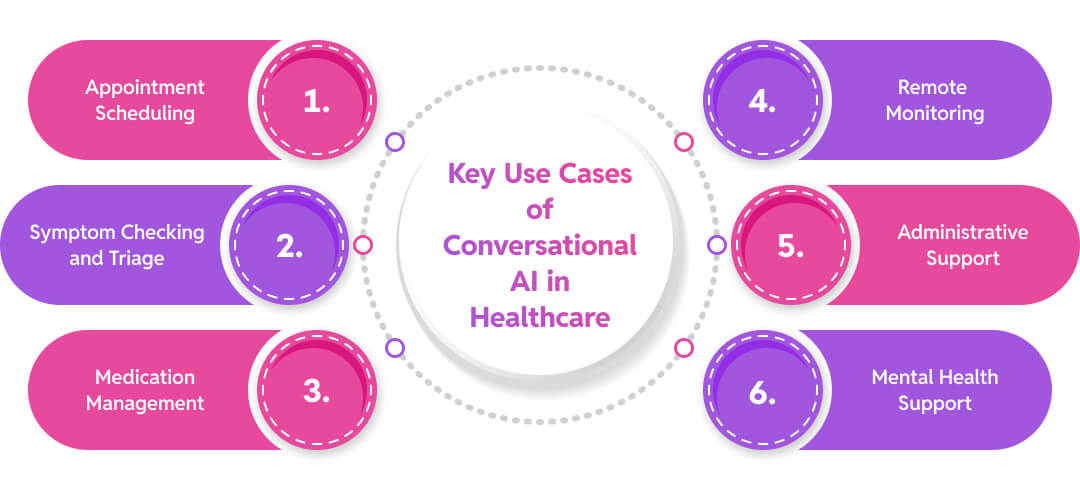
Appointment Scheduling
Conversational AI helps automate appointment booking, making it easier for patients to schedule visits without human intervention. AI-powered systems can suggest available time slots, send reminders, and even handle cancellations. This reduces the number of missed appointments and ensures healthcare providers can efficiently manage their schedules.
Symptom Checking and Triage
AI-driven chatbots can perform initial symptom checks by asking patients relevant questions about their condition. Based on the responses, the system can suggest appropriate next steps, such as booking an appointment with a specialist or visiting the emergency room. This helps prioritize cases, ensuring patients get the care they need in a timely manner.
Medication Management
Conversational AI plays a crucial role in medication management by sending reminders to patients about their prescriptions. AI systems can notify users when it’s time to take their medication, reducing the chances of missed doses. Additionally, AI tools can track medication adherence, alerting healthcare providers if a patient is not following their prescribed treatment plan.
Remote Monitoring
With the rise of wearables and home health devices, remote monitoring is becoming an essential part of healthcare. AI allows these devices to send real-time data back to healthcare providers, keeping track of patients’ vital signs without requiring in-person visits.
For instance, a wearable device might track heart rate or blood glucose levels and alert doctors if something seems off. This continuous monitoring ensures that patients receive timely care, even from the comfort of their homes.
Administrative Support
Healthcare organizations spend a significant amount of time on administrative tasks such as billing inquiries, insurance verification, and answering general patient questions. Conversational AI can handle these repetitive tasks, providing quick and accurate responses to patient inquiries. This reduces the workload on staff, allowing them to focus on more complex or sensitive matters.
By automating administrative support, AI systems can improve efficiency, reduce human error, and enhance the overall patient experience. Patients get faster responses, and healthcare providers can allocate resources more effectively.
Mental Health Support
Mental health is a critical area where conversational AI is making a difference. AI-powered chatbots can provide initial support to individuals dealing with stress, anxiety, or depression by offering coping mechanisms, mood tracking, and guiding users through relaxation techniques. While these tools cannot replace professional therapy, they can serve as a valuable first step in providing support.
Additionally, these AI systems can offer anonymity and comfort, encouraging users to open up about their feelings without fear of judgment. Though it’s important to note that AI in this area should always be accompanied by appropriate disclaimers, it can help bridge the gap until professional care is sought.
Benefits of Conversational AI for Healthcare
here are benefits of using AI for healthcare industry:
Enhanced Patient Engagement
Conversational AI provides patients with continuous access to healthcare services. Patients can ask questions, book appointments, or get information at any time, without the need for human interaction. This 24/7 availability keeps patients engaged and involved in their care process.
With instant responses and personalized communication, patients feel more connected to their healthcare providers. This ongoing engagement fosters better patient satisfaction and encourages proactive health management.
Operational Efficiency
By automating tasks like appointment scheduling and patient inquiries, conversational AI reduces the workload on healthcare staff. This allows them to focus on more complex, patient-centered activities. AI helps streamline administrative tasks, making the overall operation of healthcare facilities much more efficient.
Additionally, AI systems can handle high volumes of patient interactions simultaneously, ensuring that no task is overlooked and reducing wait times for patients.
Cost Reduction
Healthcare organizations can lower their operational costs by incorporating conversational AI into their workflows. Automation reduces the need for additional administrative staff, allowing for a more cost-effective approach to operations. AI can handle routine tasks like insurance verification and billing inquiries, freeing up staff for more critical tasks.
This also minimizes the likelihood of human errors, which could lead to expensive mistakes. Overall, AI-powered automation helps healthcare providers deliver better services while managing expenses effectively.
Improved Accuracy
One of the most significant advantages of conversational AI is its ability to ensure consistent, error-free operations. AI systems follow predefined protocols and standards, making them less prone to mistakes compared to human staff. Whether it’s checking medical records or processing insurance claims, AI minimizes the risk of errors that could lead to costly issues.
This level of accuracy also builds trust with patients, knowing that their healthcare needs are being managed precisely and with attention to detail.
Scalability
As healthcare demand increases, scaling services can be a challenge. Conversational AI offers an efficient way to manage growing patient volumes without the need to expand the workforce. AI can handle numerous interactions simultaneously, whether it’s scheduling appointments, conducting initial assessments, or answering patient queries.
This scalability ensures that healthcare providers can continue to meet patient needs effectively, even during busy periods, without sacrificing service quality or increasing costs.
Challenges and Ethical Considerations
Data Privacy and Security
AI in healthcare must ensure robust data privacy and security measures. Adhering to regulations like HIPAA is essential to safeguard patient information. Healthcare organizations need to implement encryption and secure data storage practices to avoid breaches and maintain patient trust.
Bias and Fairness
AI systems can unintentionally reflect biases present in their training data. It’s crucial to ensure AI algorithms are trained on diverse datasets to prevent unfair treatment of certain patient groups. Regular audits and updates are necessary to ensure the fairness and accuracy of these systems in healthcare.
Transparency
Patients must be informed about how AI is used in their care. Clear communication about the role of AI in decision-making processes helps build trust and allows patients to make informed decisions. Transparency ensures that patients understand when AI is involved and when human intervention is required.
Integration with Existing Systems
Integrating AI with existing healthcare systems can be complex. AI solutions must be compatible with current infrastructure to avoid disruptions. Successful integration requires thoughtful planning and collaboration between healthcare providers and AI developers to ensure seamless functionality.
Regulatory Compliance
As healthcare regulations continue to evolve, AI solutions must comply with new legal standards. Keeping up with these changes is critical to avoid legal issues and ensure ethical AI usage. Healthcare providers need to stay updated on regulatory requirements to maintain compliance.
Best Practices for Deploying Conversational AI in Healthcare
Deploying conversational AI in healthcare requires a strategic, patient-focused approach to ensure it adds real value. Here are the essential best practices:
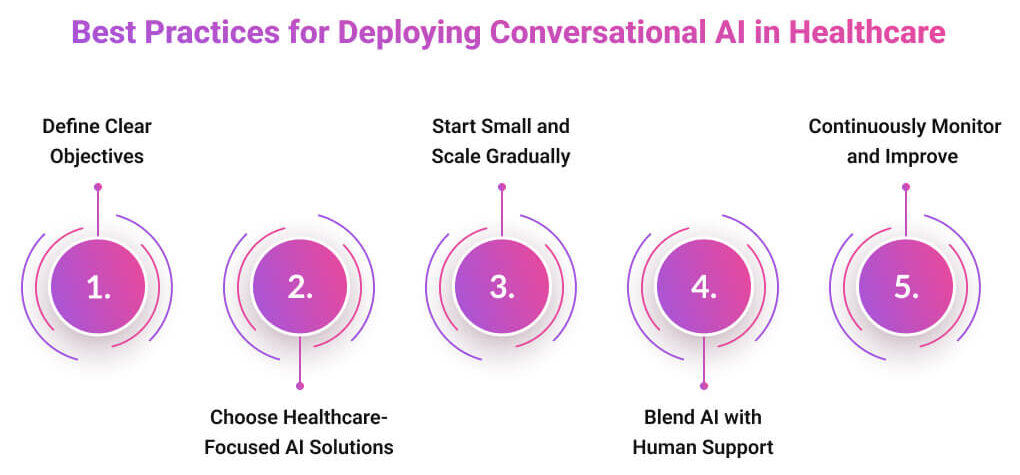
1. Define Clear Objectives
Identify the specific problems you want to solve, whether it’s reducing administrative tasks, improving patient engagement, or automating support services. Clear objectives ensure AI meets the right needs.
2. Choose Healthcare-Focused AI Solutions
Opt for AI solutions designed for healthcare, ensuring compliance with data privacy regulations like HIPAA and seamless integration with Electronic Health Record (EHR) systems.
Also Read: How to Choose the Best AI Development Company
3. Start Small and Scale Gradually
Begin with high-impact, simple use cases like appointment scheduling or answering FAQs. Once validated, expand to more complex workflows like triage and post-treatment care.
4. Blend AI with Human Support
Ensure a smooth transition from AI to human support when necessary. This hybrid approach builds trust and maintains care quality by combining AI efficiency with human empathy.
5. Continuously Monitor and Improve
Regularly analyze AI interactions and patient feedback to refine the system, ensuring it evolves to meet patient needs and improve over time.
By following these practices, healthcare providers can deploy AI solutions that are efficient, scalable, and enhance patient care.
Future Trends in Conversational AI for Healthcare
As conversational AI continues to evolve, its potential in healthcare grows exponentially. Emerging technologies are reshaping how we deliver and access care. Here are some of the future trends to look out for:
Integration with Wearables
AI will increasingly integrate with wearable devices to monitor patients’ health in real time. These devices will collect data that AI can analyze to provide actionable insights and alert healthcare providers to any concerns.
Personalized Healthcare
AI will enable more tailored care plans by analyzing patient data and personal preferences. This will allow for more precise treatments, improving health outcomes by meeting individual needs.
AI-Driven Diagnostics
AI will assist doctors in diagnosing conditions by analyzing patient data, such as medical history and test results. This can lead to faster, more accurate diagnoses, improving overall patient care.
Voice-Activated Interfaces
Voice recognition technology will play a major role in healthcare, allowing patients and providers to interact with systems hands-free. This technology will make accessing information and performing tasks more convenient and efficient.
Global Accessibility
AI will help bridge healthcare gaps in underserved regions by providing affordable, scalable solutions. This could improve access to quality care for populations that currently face significant barriers.

Conclusion
Conversational AI is rapidly transforming healthcare, making it more efficient, accessible, and patient-centered. By automating tasks, enhancing patient engagement, and supporting healthcare professionals, AI is revolutionizing how care is delivered.
As we look to the future, the potential for conversational AI in healthcare continues to grow. With emerging trends like wearable integration, personalized care, and AI-driven diagnostics, the next generation of healthcare will be smarter, more efficient, and more accessible to all. If you’re looking to implement these innovations, partnering with an AI healthcare solutions development company can provide the expertise needed to bring these cutting-edge technologies to life in your organization.
Conversational AI in healthcare uses technologies like chatbots and virtual assistants to interact with patients and healthcare providers. It enables tasks such as scheduling appointments, answering questions, and offering health information. These systems use natural language processing to understand and respond to patients, improving efficiency and care delivery.
Conversational AI enhances patient engagement by providing easy access to healthcare services and personalized communication. Here’s how it helps:
- 24/7 Availability: Patients can access healthcare services at any time.
- Personalized Communication: AI offers tailored interactions based on patient data.
- Timely Reminders: It helps patients stay on track with appointments and treatments.
- Improved Patient Education: AI provides real-time information and guidance to keep patients informed.
Conversational AI offers several key benefits in healthcare:
- Improved Efficiency: Automates tasks like scheduling and answering FAQs, saving time for healthcare staff.
- Cost Reduction: Reduces the need for additional administrative staff, lowering operational costs.
- Enhanced Patient Engagement: Provides 24/7 access to healthcare services, keeping patients informed and engaged.
- Better Resource Allocation: Frees up healthcare professionals to focus on more complex tasks, improving overall care.
- Faster Response Times: AI handles patient queries instantly, leading to quicker access to care.
Conversational AI streamlines appointment scheduling and administrative tasks in several ways:
- Automated Scheduling: Patients can book, reschedule, or cancel appointments through AI-driven systems without human involvement.
- Instant Reminders: AI sends reminders to patients about upcoming appointments, reducing no-shows.
- Insurance Verification: AI can verify insurance details, saving time for both patients and staff.
- Billing Inquiries: Patients can ask AI about their billing status, handling simple inquiries without the need for administrative staff.