I Tested the Best 5 VibeFlow Alternatives: Here Are My Top Picks
A lot of teams start looking for VibeFlow alternatives after they realize that generating an app from a prompt isn’t the problem.
Building something you can actually edit, improve, and ship is.
After all, the success of your app depends on more than a good-looking first version.
I noticed the same pattern across founders, startup teams, product managers, agencies, and non-technical builders.
At first, VibeFlow feels like a smart and easy way to turn an idea into a working app.
But as the project starts getting more serious, a few challenges begin to surface.
- The frontend may need more design control than the AI gives you.
- The backend logic can become harder to manage when your app grows beyond a simple workflow.
- And if you care about code quality, deployment, integrations, or long-term flexibility, you may start wondering if there’s a better tool for your use case.
At the same time, vibe coding has changed.
Most people don’t just want an AI app builder that creates a quick prototype anymore.
They want a platform that helps them build real apps, connect databases, add authentication, edit the UI, manage backend logic, deploy projects, and keep control as the product grows.
And VibeFlow isn’t always the best fit for that.
That’s what pushed me to test the best 5 VibeFlow alternatives and see which tools actually work better for different types of builders.
In this guide, I’ll compare the top options based on app generation quality, ease of use, frontend output, backend support, code control, deployment options, pricing, and overall value.
So by the end, you’ll have a much clearer idea of which VibeFlow alternative is the right fit for your project.
Let’s get started!
Need More Than Glide Can Offer?
Prismetric builds custom software when your app needs deeper logic, workflows, and scalability.
Build with Prismetric
Quick Answer: Best VibeFlow Alternatives
If you’re in a hurry, here’s the simple version.
The best VibeFlow alternative depends on what you’re trying to build and how much control you want over the app after the AI creates the first version.
| Rank |
VibeFlow Alternative |
Best For |
Why It’s Worth Considering |
| 1 |
Lovable |
Best overall for non-technical founders |
Lovable is a strong choice if you want to turn an idea into a working app quickly without getting too deep into code. It works well for MVPs, SaaS ideas, landing pages, and early product testing. |
| 2 |
v0 by Vercel |
Best for frontend and UI generation |
v0 is better suited for users who care about clean interfaces, React components, dashboards, and polished frontend layouts. If your main problem is UI quality, this is one of the strongest options. |
| 3 |
Vitara.ai |
Best for full-stack AI app building |
Vitara.ai is a good fit if you want an AI app builder that can help with both the frontend and backend side of your product. It’s useful for founders and teams who want to build web or mobile apps from prompts while still keeping more control over the final project. |
| 4 |
Bubble |
Best for complex no-code apps |
Bubble is ideal if you want deep no-code control over workflows, databases, user accounts, and business logic. It has a steeper learning curve, but it’s one of the better options for serious no-code app development. |
| 5 |
Windsurf / Devin Desktop |
Best for developers working inside a real codebase |
Windsurf, now part of Devin Desktop, is better for technical users who want AI help inside an actual development workflow. It’s not the easiest choice for beginners, but it gives developers more control over real code. |
For most non-technical founders, Lovable is the easiest place to start.
If you care more about frontend design, v0 by Vercel makes more sense.
If you want a more full-stack AI app builder that can help you move from prompt to working product, Vitara.ai is worth a closer look.
For visual no-code development, Bubble is still one of the strongest options.
And if you’re a developer who wants AI inside your coding workflow, Windsurf / Devin Desktop is the better fit.
Why Look for a VibeFlow Alternative?
VibeFlow is useful if you want to build apps with AI and keep backend logic more visible. But it won’t be the perfect fit for every team or project.
Here are the main reasons you may want to compare other VibeFlow alternatives.
1. You Need Better Frontend/UI Quality
Some builders care more about clean screens, responsive layouts, landing pages, dashboards, and reusable components than backend workflows. In that case, a tool like v0 or Lovable may feel like a better fit.
2. You Want Faster Full-Stack Prototyping
If your main goal is to move from idea to working MVP as quickly as possible, you may want an AI full stack app builder that can create the frontend, backend, database, and basic logic from a prompt.
3. You Need Deeper No-Code Control
Some founders don’t want to touch code at all. They need visual control over the database, app workflows, user permissions, privacy rules, and business logic. That’s where mature no-code tools like Bubble can make more sense.
4. You Want Cleaner Code Ownership
Developers and technical teams often care about what happens after the first version is generated. If you want GitHub sync, code export, or the ability to work inside an existing codebase, you may need a more developer-friendly AI software development tool.
5. You Need Better Collaboration or Pricing Predictability
As teams grow, things like role permissions, SSO, audit logs, custom domains, deployment options, security, and predictable pricing start to matter more. Some VibeFlow competitors may offer a better setup for teams building serious products.
I Tested the Best 5 VibeFlow Alternatives: Here Are My Top 5
Each tool below is ranked based on app generation quality, ease of use, frontend output, backend support, code control, deployment options, and whether it actually helps you build something beyond a basic AI-generated prototype.
1. Lovable
Best VibeFlow Alternative for Non-Technical Founders Who Want to Build MVPs Fast
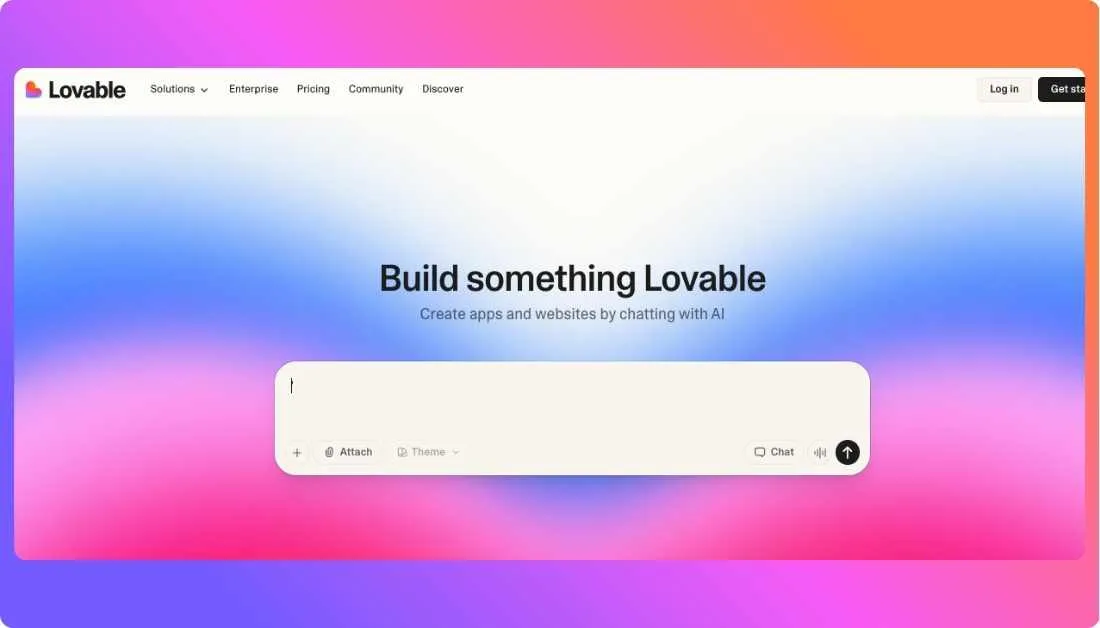
Lovable is one of the most popular AI app builders for turning plain English prompts into working web apps.
It’s built for founders, product managers, designers, agencies, and non-technical builders who want to create something real without starting from a blank codebase.
You describe the app you want, and Lovable helps generate the frontend, backend, database, authentication, and app logic. From there, you can keep editing through chat, preview the app, and publish it.
What makes Lovable useful is that it doesn’t feel like a traditional no-code platform. You’re not dragging every element manually or setting up every workflow from scratch.
You prompt, review, edit, and keep improving the product until it feels close to what you had in mind.
Why Lovable Is a Strong VibeFlow Alternative
The biggest reason Lovable stands out is speed.
With VibeFlow, the focus is more on giving users visibility into backend logic and app workflows. That’s helpful, especially when you want to understand what’s happening behind the scenes.
Lovable feels more direct if your main goal is to get from idea to usable MVP quickly.
When I tested it for a simple SaaS-style app, it did a good job creating the first version of the interface, setting up basic flows, and giving me something I could actually click through.
That makes it a strong fit for startup ideas, landing pages, internal tools, dashboards, customer portals, and early product demos.
I also liked that Lovable gives you more flexibility once the project starts getting serious. You can sync projects with GitHub, work with real code, and avoid feeling fully locked inside the platform.
The limitation is that complex logic still needs review.
If you’re building something with advanced permissions, payment flows, sensitive user data, or a complicated backend, you shouldn’t blindly trust the AI output. You’ll still want a developer to check the structure, security, and edge cases before using it in production.
Pros
- Very beginner-friendly for non-technical founders and product teams
- Can generate full-stack web apps from natural language prompts
- Good for MVPs, SaaS prototypes, dashboards, landing pages, and internal tools
- GitHub sync gives you more code ownership than many no-code tools
- Built-in hosting, preview, and collaboration make iteration faster
Cons
- Complex backend logic may still need developer review
- Credit usage can increase quickly if you keep regenerating and fixing issues
- Not ideal for highly regulated or enterprise-grade apps without technical oversight
- AI-generated code still needs testing before serious production use
Pricing
- Free plan available
- Pro plan starts at $25/month
- Business plan starts at $50/month
- Enterprise pricing is available for larger teams
2. v0 by Vercel
Best VibeFlow Alternative for Frontend and UI Generation
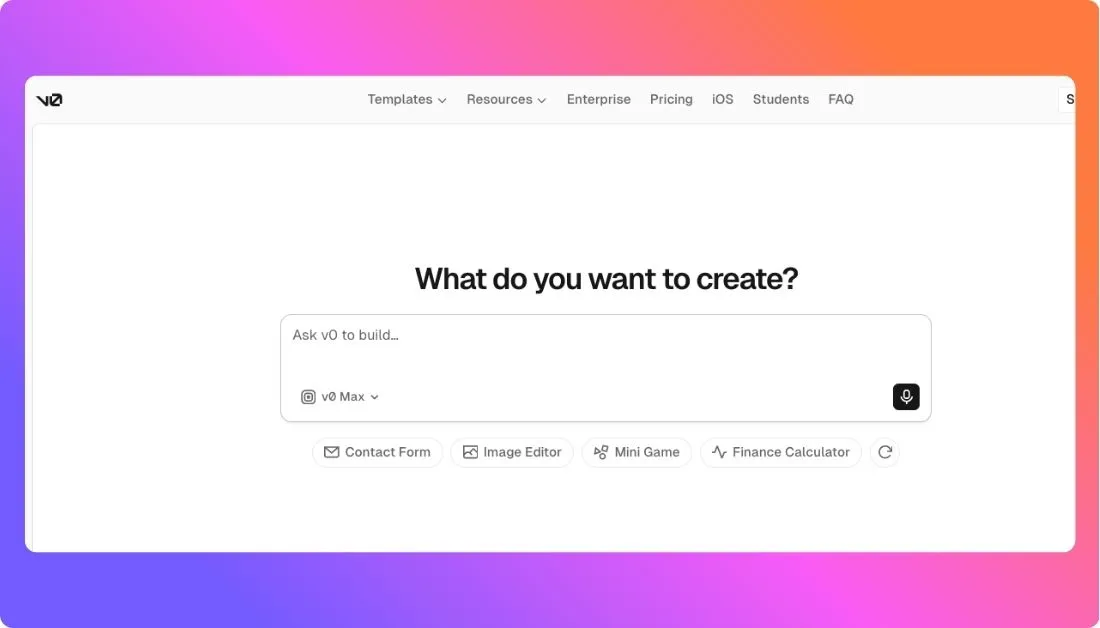
v0 by Vercel is an AI app builder that shines when you care most about frontend quality.
It’s especially useful for generating landing pages, dashboards, UI components, forms, SaaS screens, authentication pages, and polished web app layouts.
Instead of feeling like a full no-code app builder, v0 feels more like an AI frontend assistant that can turn a prompt into clean, modern interface code.
You can describe what you want, start from templates, edit visually with Design Mode, sync with GitHub, and deploy to Vercel.
That makes it a strong option for designers, frontend developers, startup teams, and anyone building with React, Next.js, or the Vercel ecosystem.
Why v0 Is a Strong VibeFlow Alternative
What stood out to me is the UI quality.
VibeFlow is useful when you want to see and manage backend logic, but v0 feels stronger when the first thing you care about is how the app looks and feels.
If you ask it to create a pricing page, analytics dashboard, onboarding flow, or SaaS landing page, the output usually feels more polished than what you get from many general AI app builders.
The Design Mode is also helpful because you’re not limited to prompt-only editing. You can fine-tune the interface visually, which makes small changes less frustrating.
Another big advantage is GitHub and Vercel deployment. If your team already builds on Vercel, v0 fits naturally into that workflow.
The trade-off is that v0 is not the best choice for complete beginners who want a fully guided no-code experience.
It can build working apps, connect with APIs, and help with databases, but it still feels more comfortable for users who understand web apps at least a little. If you want deeper visual control over backend workflows, VibeFlow or Bubble may feel easier to understand.
Pros
- Excellent for frontend screens, UI components, dashboards, and landing pages
- Strong fit for React, Next.js, and Vercel-based projects
- Design Mode helps you edit visually instead of relying only on prompts
- GitHub sync makes it easier to move into a developer workflow
- One-click Vercel deployment is useful for shipping quickly
Cons
- Not the easiest option for complete non-technical beginners
- Backend-heavy apps may still require developer involvement
- Best experience is tied closely to the Vercel ecosystem
- Usage-based credits can become harder to predict on larger projects
Pricing
- Free plan available
- Team plan starts at $30/user/month
- Business plan starts at $100/user/month
- Enterprise pricing is available for larger teams
Best VibeFlow Alternative for Full-Stack AI App Building
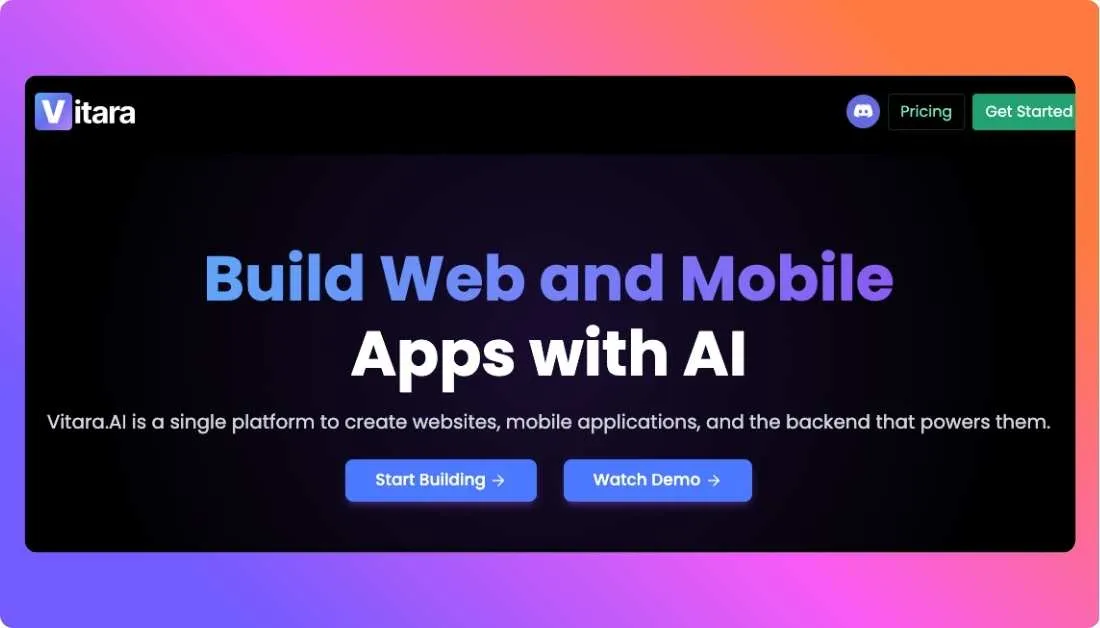
Vitara.ai is an AI-powered full-stack app builder that helps users create web and mobile apps using natural language prompts.
It’s built for people who want more than a frontend mockup. You can describe your product idea, and Vitara.ai helps generate the frontend, backend, APIs, database logic, authentication, and app structure.
That makes it a good fit for founders, early-stage teams, agencies, and builders who want to move from an idea to a working product without handling every technical step manually.
It sits somewhere between a no-code AI app builder and a developer-focused coding tool.
You don’t need to start by writing code, but you still get real code that can be edited, downloaded, and deployed.
Why Vitara.ai Is a Strong VibeFlow Alternative
The biggest reason Vitara.ai belongs on this list is its full-stack focus.
A lot of AI app builders are good at generating screens, but they become weaker when you need the app to actually work behind the scenes.
Vitara.ai puts more attention on the full product flow. It can help with the UI, backend logic, database setup, APIs, authentication, and deployment path.
That makes it useful if you’re trying to build a SaaS MVP, marketplace, mobile-friendly app, dashboard, internal tool, or business app from a prompt.
Compared with VibeFlow, Vitara.ai may feel more direct for users who want to generate and ship a complete app quickly instead of spending more time managing visual backend workflows.
What I liked is that Vitara.ai gives users ownership of their code and data. You can edit the generated code and download it, which matters if you don’t want your project stuck inside one platform forever.
The limitation is that Vitara.ai is still a newer and less widely reviewed option than tools like Lovable, Bubble, or v0.
That means you may need to test it more carefully before choosing it for a serious production project, especially if your app needs complex permissions, heavy integrations, or advanced scaling.
Pros
- Generates both frontend and backend code from natural language prompts
- Useful for SaaS MVPs, dashboards, web apps, mobile apps, and internal tools
- Handles common app needs like APIs, databases, authentication, and deployment
- Lets users edit and download code instead of staying fully locked in
- More beginner-friendly than traditional AI code editors
Cons
- Smaller ecosystem compared with Lovable, Bubble, and v0
- Fewer independent reviews and public case studies available
- Complex production apps still need testing and developer review
- Credit limits may feel restrictive if you iterate heavily
Pricing
- Free starter plan available
- Build plan starts at $20/month
- Scale plan starts at $50/month
- Custom pricing may be available for larger teams
4. Bubble
Best VibeFlow Alternative for Complex No-Code Apps With Deeper Visual Control
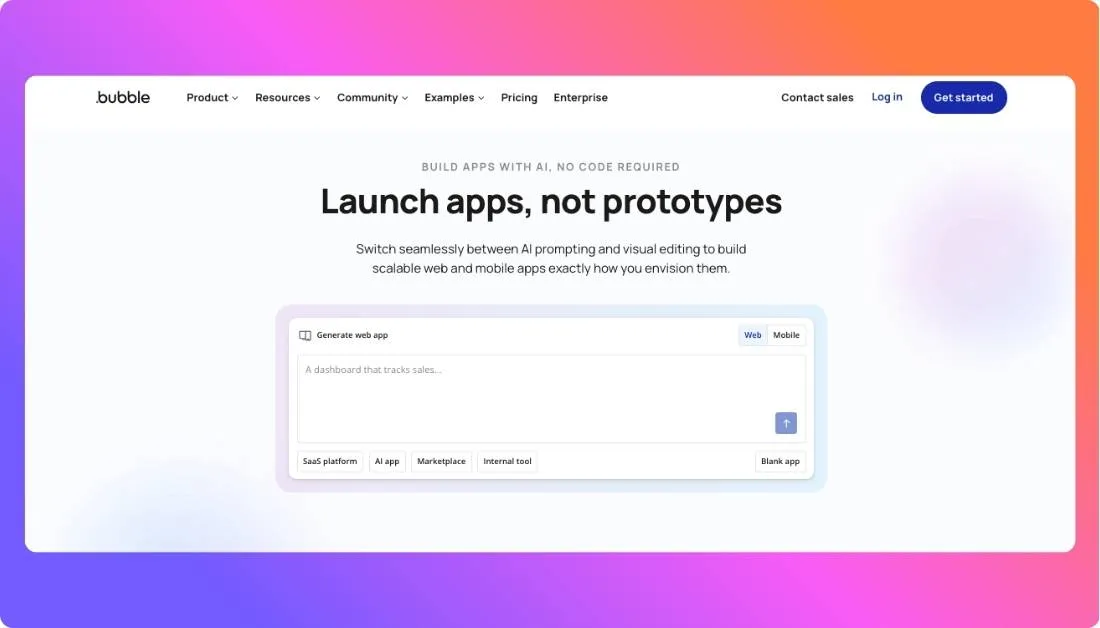
Bubble is one of the most mature no-code app builders for people who want to build real web apps without writing code.
It’s not just for simple landing pages or quick AI-generated prototypes. Bubble gives you a visual editor, built-in database, workflows, user permissions, privacy rules, API connections, and publishing tools.
That makes it useful for SaaS apps, marketplaces, customer portals, CRMs, internal tools, directories, and other apps where the logic matters as much as the design.
Bubble has also added AI features, so you can start from a prompt and then edit the app visually when you need more control.
That mix is where Bubble becomes interesting. You can use AI for speed, but you’re not stuck waiting for prompts to fix every small detail.
Why Bubble Is a Strong VibeFlow Alternative
What I liked most about Bubble is the level of control it gives you after the first version is built.
VibeFlow is useful if you want AI-assisted app building with visible backend logic. But Bubble goes deeper if you want to manually control how your app behaves.
You can create database tables, set up user roles, build workflows, connect APIs, manage privacy rules, and design the interface without writing traditional code.
That’s helpful if you’re building something more serious than a quick prototype.
For example, if you’re creating a SaaS MVP with user accounts, subscriptions, dashboards, admin panels, and conditional workflows, Bubble gives you more room to shape the product exactly how you want.
The trade-off is the learning curve.
Bubble is beginner-friendly in the sense that you don’t need to code, but it still takes time to understand workflows, database structure, responsive design, and workload usage.
If you want the fastest prompt-to-app experience, Lovable or Vitara.ai may feel easier.
But if you want a no-code AI app builder that gives you real visual control, Bubble is still one of the strongest VibeFlow alternatives.
Pros
- Strong visual control over app design, database, workflows, and privacy rules
- Useful for SaaS apps, marketplaces, CRMs, portals, dashboards, and internal tools
- AI app generation helps you start faster before editing manually
- Large no-code ecosystem with templates, plugins, agencies, and community support
- Good fit for non-technical founders who want to build more complex apps without code
Cons
- Steeper learning curve than most prompt-to-app builders
- Workload-based pricing can be hard to predict as your app grows
- Not ideal if you want clean exported code
- Complex apps still need careful testing before launch
- Performance can depend heavily on how well the app is structured
Pricing
- Free plan available
- Starter plan starts at $29/month
- Growth plan starts at $119/month
- Team plan starts at $349/month
- Enterprise pricing is available for larger teams
5. Windsurf / Devin Desktop
Best VibeFlow Alternative for Developers Working Inside a Real Codebase
Windsurf, now closely connected with Devin Desktop, is different from most tools on this list.
It’s not really a no-code AI app builder for beginners. It’s better suited for developers and technical teams that want AI help inside a real software development workflow.
Instead of only generating an app from a prompt, Windsurf and Devin are built around coding, debugging, testing, reviewing changes, and working with existing codebases.
That makes it a better fit if you already have a product, GitHub repository, engineering workflow, or production code that needs to be improved.
You can use AI to write code, refactor files, understand a project, fix bugs, and hand off larger tasks to agents.
Why Windsurf / Devin Desktop Is a Strong VibeFlow Alternative
The main reason to choose Windsurf or Devin Desktop over VibeFlow is technical control.
VibeFlow is more approachable for people who want to build visually. It helps non-technical users understand app logic without opening a full development environment.
Windsurf and Devin Desktop are built for a different kind of user.
If you’re a developer, you may not want a visual app builder to hide the code from you. You may want an AI coding assistant that works directly inside your files, understands your project, and helps you ship cleaner changes.
That’s where this tool feels stronger.
It can help with real development tasks like editing components, fixing errors, testing features, improving backend logic, and working across a larger codebase.
This is especially useful for teams that already have engineering standards, code reviews, branches, tickets, and deployment workflows.
The limitation is obvious: it’s not made for complete beginners.
If you don’t understand code at all, Windsurf or Devin Desktop may feel overwhelming. You’ll get more value from Lovable, Bubble, or Vitara.ai if your goal is to build without touching a codebase.
But for developers, this is one of the strongest VibeFlow alternatives because it gives you AI speed without taking away code-level control.
Pros
- Better suited for developers and technical teams than visual no-code builders
- Works well with existing codebases instead of forcing you into a closed app builder
- Useful for debugging, refactoring, testing, code review, and feature development
- Devin agents can help handle larger coding tasks while you keep control
- Strong fit for production software teams that care about code quality and workflow
Cons
- Not beginner-friendly for non-technical founders
- Requires some understanding of code, repositories, and development workflows
- Less useful if you only want a simple prompt-to-app builder
- Pricing and product structure can feel confusing because Windsurf and Devin are closely connected
- Still requires human review before shipping serious production changes
Pricing
- Free plan available
- Devin Pro starts at $20/month
- Team or enterprise pricing may vary based on usage and organization needs
- Larger engineering teams should check custom pricing before committing
My Final Verdict: Which VibeFlow Alternative Should You Pick?
The best VibeFlow alternative really depends on what you’re trying to build.
If you’re a non-technical founder and you want the easiest way to turn an idea into a working MVP, I’d start with Lovable. It gives you a good balance of speed, ease of use, app generation quality, and code ownership.
If your main focus is frontend quality, clean UI, landing pages, dashboards, or React components, v0 by Vercel is the better pick. It feels more polished for design-heavy work and fits nicely if you’re already using Vercel.
If you want a full-stack AI app builder that can help with both the frontend and backend side of your product, Vitara.ai is worth considering. It’s especially useful if you want to build web or mobile apps from prompts while still keeping access to the generated code.
If you want deeper no-code control, Bubble is still one of the strongest options. It takes more time to learn, but it gives you more control over workflows, databases, user permissions, and app logic than most prompt-based AI app builders.
And if you’re a developer or technical team working inside a real codebase, Windsurf / Devin Desktop makes the most sense. It’s not built for beginners, but it’s much better for debugging, refactoring, editing code, and improving production software.
Here’s the simple way I’d choose:
| Use Case |
Best VibeFlow Alternative |
| Best overall for non-technical founders |
Lovable |
| Best for frontend and UI generation |
v0 by Vercel |
| Best for full-stack AI app building |
Vitara.ai |
| Best for complex no-code apps |
Bubble |
| Best for developers and real codebases |
Windsurf / Devin Desktop |
My top pick for most people is Lovable because it gives you the smoothest balance between beginner-friendliness and real app-building power.
But if your project depends heavily on backend workflows, UI quality, no-code control, or developer-level code editing, one of the other tools may be a better fit.
So don’t just pick the tool with the most features.
Pick the one that matches how you actually want to build.
Create Custom Mobile Apps Faster
Prismetric develops iOS, Android, and cross-platform mobile apps built for users and growth.
Build Your App
The best overall VibeFlow alternative is Lovable for most non-technical founders because it’s easy to use and helps you build MVPs quickly.
If you care more about frontend design, full-stack control, no-code workflows, or developer-level code editing, v0, Vitara.ai, Bubble, or Windsurf may be a better fit.
Lovable is the easiest place to start if you’re new to AI app builders.
It lets you describe your idea in plain English and turn it into a working app without setting up everything manually.
Yes, several VibeFlow alternatives offer free plans or free starting options.
- Lovable has a free plan
- v0 has a free plan
- Bubble has a free plan
- Vitara.ai has a free starter option
- Windsurf / Devin Desktop may offer free or entry-level access depending on the current plan
v0 by Vercel is the best choice if your main focus is frontend quality.
It works well for landing pages, dashboards, SaaS screens, forms, components, and clean React-based interfaces.
Vitara.ai is a strong option if you want to build both the frontend and backend from prompts.
It’s useful when you want an AI full stack app builder that can help with UI, backend logic, APIs, databases, authentication, and deployment.
Lovable may be better if you want a faster and easier way to build MVPs, prototypes, SaaS ideas, and internal tools.
VibeFlow may still be useful if your main priority is seeing and managing backend logic in a more visual way.
Bubble is better if you want deeper no-code control over your app.
It gives you more room to manage workflows, databases, privacy rules, user roles, and complex app logic, but it also takes more time to learn.
For a SaaS MVP, I’d look at three tools first:
- Lovable if you want the fastest beginner-friendly option
- Vitara.ai if you want full-stack AI app generation
- Bubble if you want deeper no-code control over workflows and databases
Windsurf / Devin Desktop is the better option for developers.
It works inside a real coding workflow, so it’s more useful for debugging, refactoring, editing files, reviewing code, and improving existing software projects.
Yes, but it depends on the tool and the complexity of your app.
For simple MVPs and early products, tools like Lovable, Vitara.ai, v0, and Bubble can help you move fast. For serious production apps, you’ll still want to test the code, check security, review backend logic, and make sure the app can scale.
Lovable, v0, Vitara.ai, and Windsurf are better choices if code ownership matters to you.
Look for things like GitHub sync, code export, editable code, and the ability to move your project outside the platform.
Bubble is the strongest option if you want true no-code control.
It’s not the fastest tool to learn, but it gives non-technical users more control over databases, workflows, permissions, and app behavior than most prompt-only AI app builders.
v0 can replace VibeFlow if your main need is frontend generation, UI design, and Vercel-based app development.
But if you want a more visual backend workflow, v0 may not feel like a complete replacement.
Start with Lovable if you want the simplest AI app builder experience.
Choose Bubble if you’re willing to spend more time learning in exchange for deeper no-code control.
Some VibeFlow alternatives can help with mobile-friendly web apps, and tools like Vitara.ai may be better suited if you want web and mobile app generation from prompts.
For native mobile apps, always check the platform’s current mobile support before committing.
Most people are trying to figure out which AI app builder fits their actual skill level and project type.
Common questions include:
- “What is the best VibeFlow alternative for beginners?”
- “Can I build a SaaS app without coding?”
- “Which AI app builder gives me code export?”
- “Is Lovable better than VibeFlow?”
- “Should I use Bubble, v0, or Lovable?”
- “Which tool is best for frontend design?”
- “Which AI app builder is best for production apps?”
If you’re unsure, start with Lovable.
It gives you a good balance of ease of use, app generation quality, and flexibility, so it’s a safer first choice for most founders and non-technical builders.
Choose VibeFlow if you like its visual approach to backend logic and app workflows.
Choose an alternative if you need better UI generation, stronger no-code control, cleaner code ownership, faster full-stack prototyping, or a more developer-friendly workflow.