AI in Transportation Industry: Use Cases, Benefits, Applications and Real World Examples
Key Takeaways
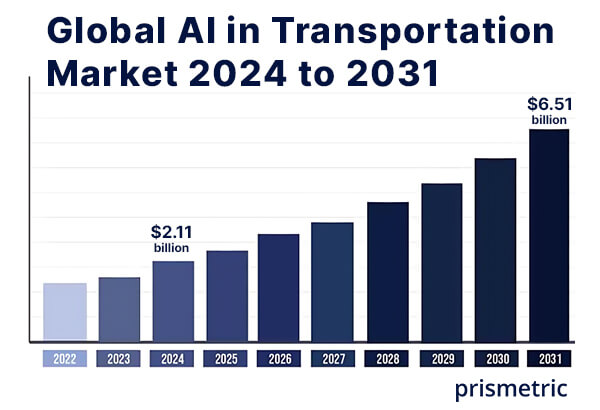
- AI adoption in transportation is accelerating, with the global market projected to grow from $2.11B in 2024 to $6.51B by 2031.
- AI enhances mobility efficiency through smart traffic control, reducing congestion by up to 25 percent in major cities.
- Predictive maintenance powered by AI lowers fleet breakdowns and cuts repair costs by 10–20 percent.
- AI-driven route optimization boosts fuel efficiency by up to 15 percent, saving time and reducing emissions for fleets.
- Autonomous and AI-assisted systems improve road safety, reducing accident risks by 20–30 percent through real-time monitoring.
Today, the transportation industry has reached a remarkable stage where vehicles can operate without any human intervention, thanks to cutting-edge technology. These improvements have been quite helpful in bringing about new ideas and changes in the field. We are currently at a time when AI is changing transportation in big ways that are getting the attention of industry executives all around the world.
The worldwide market for artificial intelligence in transportation is estimated to be worth $2.11 billion in 2024 and to increase to US$ 6.51 billion by 2031, which is a compound annual growth rate (CAGR) of 17.5% from 2024 to 2031. This rise shows that more and more transportation companies are using AI technology.
Let’s look at the ways that AI may help the transportation business. This blog will talk about the main advantages, use cases, applications, real-world examples, problems, and solutions that come up while using AI in transportation. So, be ready to learn how AI is changing the way we move in the future!
AI in Transportation: Key Statistics Highlighting How AI is Transforming Mobility
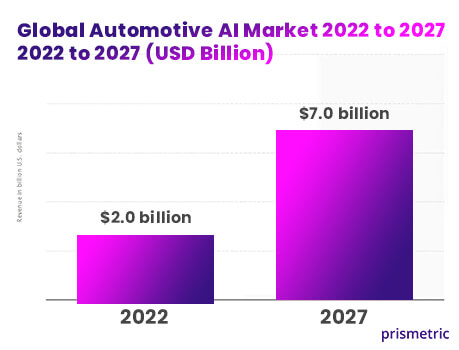
Market Growth: The worldwide AI technologies market for cars was valued $2.3 billion in 2022. It is expected to reach $7.0 billion by 2027, with an annual growth rate of 24.1% over the next five years. This shows that there is a considerable growing tendency in the use of AI solutions.
Autonomous Vehicles: According to statista, there will be almost 58 million self-driving cars on the road by 2030. This shows that autonomous driving technology is making a lot of progress and becoming a part of daily life.
Traffic Management: Smart traffic systems that use AI might cut down on road congestion by 25%, which would mean fewer delays and reduced emissions, making cities more efficient and environmentally friendly.
Cost Savings: AI-powered predictive maintenance may help fleets save 10–20% on maintenance costs, which means fewer breakdowns and better overall performance.
Fuel economy: AI-powered route optimization may improve fuel economy by as much as 15%, which can save a lot of money and have less of an effect on the environment.
Passenger Safety: AI-powered safety measures, such as keeping an eye on how the driver is acting, have been found to lower the rate of accidents by 20–30% in cars that include these technologies. This makes the roads safer for everyone.
These numbers show how AI is changing transportation and how it is helping different parts of the business in real ways. Now, let’s look at some of its most important uses in transportation and how these technologies are being used in real life.
How AI is Transforming Transportation: Key Use Cases
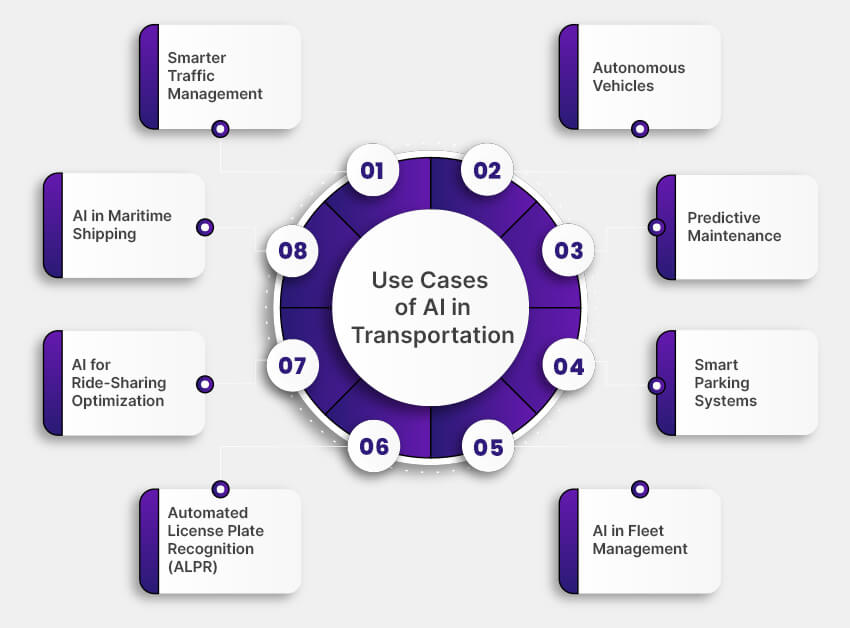
AI use cases are changing a lot of sectors, and transportation is one of them. AI is changing the way transportation networks work by making traffic management better and making it possible for cars to drive themselves. These improvements make the transportation industry safer, more efficient, and more sustainable.Let’s look at how AI is applied in transportation. We will look at some of the most important ways AI is being used in transportation that are making these changes and changing the industry.
Smarter Traffic Management
AI is changing how traffic is managed by looking at real-time data and making traffic flows better to cut down on congestion. AI can change traffic lights, recommend other routes, and cut down on delays at busy times with the use of predictive algorithms. This makes trips easier and safer on the road.
Cities may use AI to better control traffic patterns, which will cut down on fuel use and hazardous emissions. AI technologies keep drivers up to date in real time, which helps them make smarter travel choices. This technology might have a big effect on the environment by making city transportation far less harmful.
Traffic systems that use AI learn from data all the time, which helps them become better over time. As more cities use these systems, the technology will make urban transit networks even more efficient and long-lasting.
Autonomous Vehicles
AI is what makes self-driving cars possible. With AI in automotive, they can drive themselves without any help from people. AI systems use sensors and machine learning to look at the world around them and make judgments right away. This technology might make roads safer and cut down on mistakes made by people.
Self-driving vehicles are already being tested on roadways, and they are doing well at finding their way around and avoiding obstacles. These cars can handle difficult driving scenarios, such shifting weather and traffic patterns, since AI can interpret huge volumes of data.
As AI technology becomes better, self-driving cars are likely to become increasingly common. This change might change the way people and companies get about, making transportation safer and more efficient for everyone.
Predictive Maintenance
AI is very important for predictive maintenance since it keeps an eye on the health of vehicles and finds problems before they become worse. AI systems look at data from sensors to find patterns that show wear and tear, which lets repairs be made on time. This keeps your car from breaking down and makes it last longer.
Fleet operators get a lot out of AI-driven predictive maintenance since it cuts down on downtime and operating expenses. Companies can get the most out of their fleet and save money by only doing maintenance when it is needed.
AI keeps an eye on more than just cars; it also keeps an eye on highways and bridges, forecasting when they will require maintenance. This makes sure that maintenance is done quickly and correctly, which makes transportation networks even safer and more reliable.
Smart Parking Systems
Smart parking systems that use AI make it easier to discover parking spots, which cuts down on the time drivers spend looking for them. These systems employ cameras and sensors to find open places and provide drivers real-time information via smartphone applications. This makes busy locations less crowded and less annoying.
Cities may make greater use of their current parking infrastructure by using AI to help with parking management. It’s easy for drivers to discover vacant places, which helps cut down on traffic generated by people driving about without a purpose. This also makes driving in the city smoother and more efficient.
Also, parking systems that use AI can predict when spots will become free, which makes parking more efficient. Not only does this make it easier for drivers, but it also cuts down on pollution from cars that are idling while looking for parking.
AI in Fleet Management
Artificial intelligence is changing fleet management by making it more efficient and lowering expenses. AI algorithms keep an eye on the condition of vehicles, guess when they will require repair, and use real-time data to make route planning better. Fleet managers may prevent failures and cut down on downtime using these solutions, which boosts overall production.
AI can do things that people usually have to do, including planning maintenance and looking at how well a vehicle is working. This lets fleet managers concentrate on more difficult choices. By doing this, AI-powered fleet management systems make sure that vehicles are working at their best, which cuts down on the need for repairs and maintenance.
Companies may use AI to make their operations more efficient, make their drivers safer, and use less fuel. These advantages save money, cut down on accidents, and make fleet operations more environmentally friendly.
Automated License Plate Recognition (ALPR)
ALPR systems have changed transportation by making it possible to automatically find and follow vehicle license plates. These systems, which are driven by AI, utilize cameras and machine learning algorithms to scan license plates in real time. This helps with things like collecting tolls, enforcing traffic laws, and managing parking.
ALPR technology is very important for police enforcement because it helps them find cars that are implicated in crimes. It also makes it easier for people to get about cities by making things like parking easier. The system collects information, such as vehicle details, to keep traffic moving smoothly and quickly find those who break the rules.
ALPR has made cities and companies safer and more efficient by reducing the need for people to perform things like regulate parking and keep an eye on traffic.
AI for Ride-Sharing Optimization
AI is changing the way ride-sharing businesses work by making routes better, estimating how many people will need rides, and managing fleets better. These new applications of AI in business are important because they utilize machine learning algorithms to look at traffic patterns, rider preferences, and vehicle availability to find the best routes and cut down on wait times for users.
Companies that let people share rides, like Uber and Lyft, use AI to better match passengers with drivers. This cuts down on delays and makes customers happier. These platforms also employ AI to figure out which locations will be in high demand, which helps them spread out their fleets better and cut down on idle hours.
Ride-sharing systems can run more smoothly, use less gas, and provide passengers a more customized experience by using AI. This helps the businesses and makes it easier for people to get about.
You may like reading:
Impact of AI in Demand Forecasting
AI in Maritime Shipping
As AI continues to grow in business and industry, the shipping sector has also experienced big changes. AI, big data, the Internet of Things, and automation are some of the technologies that are increasingly necessary for making navigation better, port operations better, and safety at sea better. AI systems help find problems with maritime processes, which makes things safer overall.
AI-powered automatic identification systems (AIS), for instance, gather and send important information including ship identifying numbers, locations, and speeds. This real-time data makes it easier for ships and port officials to talk to each other, which makes maritime operations run more smoothly.
AI is making marine transportation safer and more efficient. These technologies also help businesses get the most out of their fuel and plan their itineraries, making trade routes throughout the world run more smoothly and at a lower cost.
Key Benefits of AI in Transportation
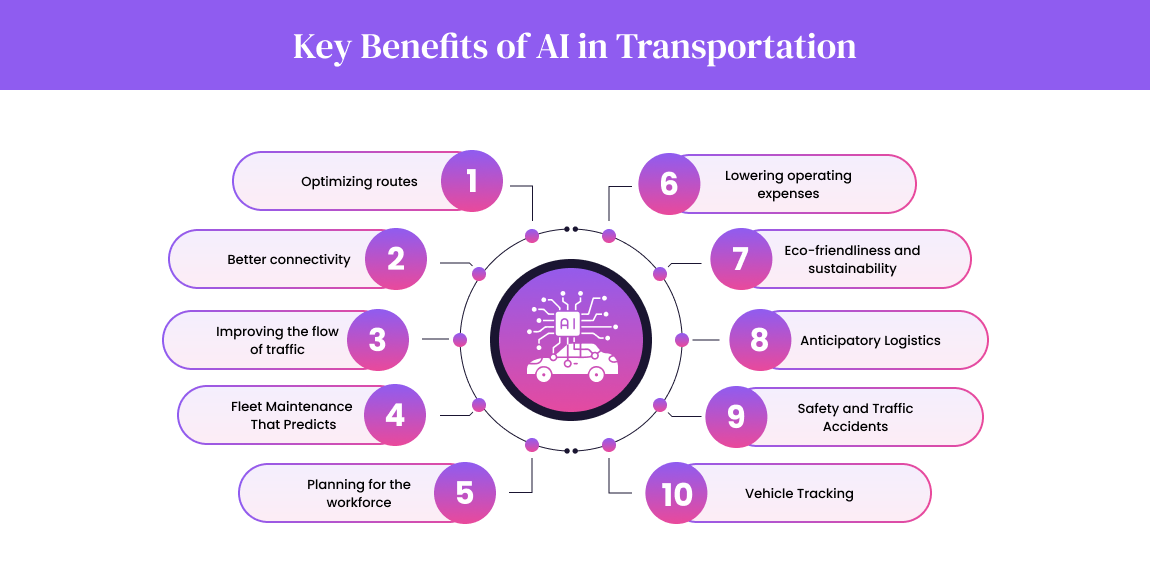
AI is no longer just a futuristic concept, it’s actively driving measurable change across the transportation landscape. From route planning to workforce efficiency, smart systems are empowering companies to move faster, operate leaner, and make decisions backed by real-time intelligence.
Let’s explore the top benefits that AI brings to the table:
1. Optimizing Routes: Smarter Paths, Faster Deliveries
Imagine your entire delivery network adjusting itself in real time, dodging traffic jams, road closures, or even sudden weather changes. That’s exactly what AI makes possible.
By analyzing data points like current road conditions, historical traffic trends, weather forecasts, and vehicle performance, AI recommends the most efficient routes, not just the shortest ones. This leads to:
- Reduced fuel consumption
- On-time deliveries
- Lower vehicle wear and tear
2. Better Connectivity Between Systems, Vehicles & Infrastructure
AI acts as the brain of modern transportation networks , connecting GPS, vehicle sensors, public traffic systems, and fleet management tools into one unified ecosystem.
With technologies like V2X (Vehicle-to-Everything) communication and AI-enhanced IoT sensors, vehicles now “talk” to each other and to the infrastructure around them. This allows for seamless traffic coordination, improved routing, and enhanced visibility for fleet managers.
3. Improving the Flow of Traffic in Smart Cities
Traffic congestion is more than an annoyance , it’s a major drain on time, fuel, and air quality. AI enables adaptive traffic control, where signals adjust based on real-time traffic density, time of day, and even pedestrian movement.
Cities like Barcelona and Singapore have implemented AI-based traffic flow management, leading to reductions of up to 25% in peak congestion.
This doesn’t just benefit drivers , it reduces emissions and enhances urban livability.
4. Fleet Maintenance That Predicts, Not Reacts
A breakdown on the road costs more than just repair, it can delay deliveries, disappoint customers, and damage brand trust.
AI helps prevent that by enabling predictive maintenance. Here’s how:
- Sensors collect data on engine health, tire pressure, fuel efficiency, etc.
- AI algorithms identify early signs of wear or failure
- Maintenance is scheduled exactly when needed, not too early, not too late
5. Smarter Workforce Planning
AI can help organizations better plan staffing needs by analyzing service demand, traffic trends, and vehicle usage patterns. From optimizing driver schedules to predicting future labor shortages, AI gives operations managers the foresight they need to stay ahead.
It also aids in automating routine tasks , like scheduling, compliance tracking, or shift assignments , freeing up your team to focus on more strategic work.
6. Lowering Operating Expenses: Doing More with Less
AI helps transportation businesses spot inefficiencies that are often invisible to the human eye.
Think of it as your virtual CFO, constantly monitoring where time, fuel, or manpower is being wasted. From route optimization and predictive maintenance to smarter driver scheduling, AI automates and streamlines decisions that can:
- Cut down on fuel and overtime costs
- Reduce idle time and vehicle wear
- Improve load optimization and reduce empty miles
7. Eco-Friendliness and Sustainability: Greener Roads Ahead
Sustainability is no longer optional, it’s a competitive differentiator. AI plays a key role in helping companies shrink their carbon footprint while growing operational efficiency.
Here’s how:
- Smarter route planning reduces unnecessary emissions
- Predictive maintenance extends vehicle lifespans
- Traffic optimization leads to fewer idling engines in congested zones
- EV fleet management ensures efficient charging and energy use
8. Anticipatory Logistics: Stay Ahead of the Curve
Instead of reacting to problems, what if you could predict and prevent them?
That’s the power of anticipatory logistics, using AI to foresee delivery delays, demand spikes, or inventory shortages before they disrupt your supply chain. AI models analyze:
- Real-time weather and traffic conditions
- Historical sales and shipping patterns
- Supplier behavior and global trends
Also Read:
AI in Logistics: Use Cases, Benefits, Implementation, Challenges and Solutions
9. Vehicle Tracking with Full Transparency
Modern AI-powered tracking systems go far beyond basic GPS. They analyze routes, traffic patterns, and driver behavior to predict ETAs, flag route deviations, and detect potential misuse or fuel fraud.
This level of intelligence offers real-time visibility into fleet operations. Fleet managers gain instant safety alerts, compliance insights, and performance data, vehicle by vehicle, driver by driver.
10. Boosting Safety and Preventing Traffic Accidents
AI’s ability to process complex driving data in real-time makes it a powerful tool for preventing accidents. From ADAS (Advanced Driver-Assistance Systems) to real-time driver behavior monitoring, AI anticipates dangers and reacts faster than any human can.
It enables features like:
- Automatic braking and lane departure alerts
- Drowsiness detection and distraction warnings
- Collision prediction based on traffic patterns
Key AI Applications in Transportation: Understanding the Role of Artificial Intelligence in the Industry
Artificial intelligence is changing transportation in many new ways. Here are three important areas where AI is having a big effect on the business, making it more efficient, safer, and better at making decisions.
Autonomous Driving Systems: AI is what makes self-driving cars and buses possible. These are examples of autonomous vehicles. These cars have AI-powered sensors, cameras, and algorithms that let them understand their environment and make judgments in real time without needing help from a person. AI helps self-driving cars safely and effectively traverse roadways by looking at traffic conditions, finding barriers, and guessing how other drivers will act.
Companies like Tesla, Waymo, and Uber are leading the way in testing self-driving technology in several places. As AI becomes better, self-driving cars are likely to become more common. This will make roads safer and cut down on accidents caused by human mistake.
Also, self-driving buses might change public transportation for the better by cutting expenses and making sure that service is always on time and efficient. This technology promises to change how people get about in cities by providing safer, more dependable, and greener ways to get around.
Traffic Flow Optimization: AI is very important for improving traffic flow since it helps cities control traffic signals and patterns to cut down on congestion. Cities may use AI algorithms to look at data from sensors, cameras, and GPS systems in real time to change traffic signals and send cars on other routes. This helps ease traffic bottlenecks at busy times. This uses less gas, gets people to their destinations faster, and makes the air cleaner in places with a lot of people.
Cities may better handle the increased demand for transportation by using AI to optimize traffic flow. This also makes driving nicer for inhabitants and tourists.
Passenger Safety Enhancements: AI is changing passenger safety by keeping an eye on how drivers act and finding any dangers on the road. AI systems with cameras and sensors keep an eye on a driver’s attention, weariness, and general conduct all the time, warning them of any risky acts. These systems may step in at important times, such when they see a possible collision and apply the brakes to stop it from happening.
AI not only keeps an eye on drivers, but it also helps cars see pedestrians and bicycles in real time, making crowded city streets safer. This technology makes sure that both drivers and passengers may have safer trips, especially in places where things aren’t always predictable.
Adding AI to safety measures may greatly lower the chance of accidents in transportation systems, making the experience safer for everyone on the road.
Logistics Route OptimizationAI for Logistics Route Optimization looks at traffic, weather, and demand trends in real time to find the best delivery routes. This speeds up and makes delivery more efficient while cutting down on delays across the supply chain. Companies can cut down on gasoline use and speed up delivery times, which makes logistics work better overall.
AI algorithms can figure out when deliveries can be delayed, as when traffic is bad or the weather is bad, and change the route appropriately. This flexibility helps businesses keep things running smoothly and satisfy consumer expectations by cutting down on delays and making sure deliveries are on schedule.
Predictive Fleet Maintenance: AI-powered solutions for predictive fleet maintenance use data from sensors to keep an eye on the condition of vehicles and guess when they will require repair. This keeps cars running longer and reduces breakdowns, which keeps the fleet’s uptime high. Predictive maintenance keeps the fleet running at its best and lowers the expense of unplanned repairs.
AI lets businesses plan maintenance just when it’s required, which saves time and money. This method makes cars work better, makes them safer, and cuts long-term operating expenses by a large amount.
How Big Companies Are Leveraging AI in Transportation: Real-World Examples
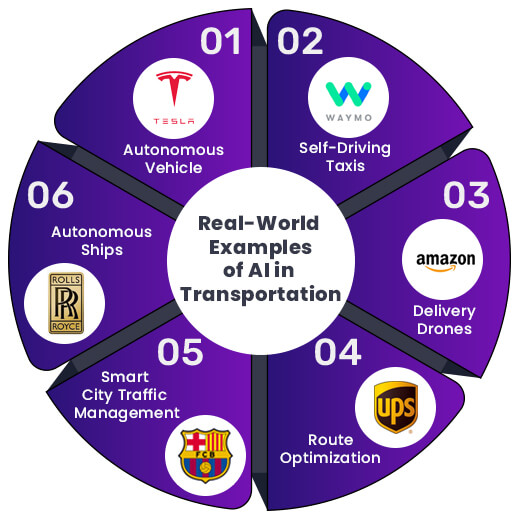
Tesla Autopilot
Tesla’s Autopilot system uses AI to enable vehicles drive themselves with little support from people. It uses sensors, cameras, and radar to find out what the road is like and what is in the way. The technology can switch lanes, speed up, and even stop accidents by taking charge when things go wrong.
Tesla keeps Autopilot up to date with enhancements that come over the air. This lets the system change and become safer over time. Autopilot is one of the most famous instances of how AI is helping us get closer to completely self-driving cars.
Waymo’s Autonomous Vehicles
Waymo, which is owned by Alphabet, is a leader in technology for autonomous cars. It uses AI to analyze its surroundings and drive itself on public highways without any help from others.
The technology uses data from sensors and LiDAR to decide how to drive.Waymo has already started a ride-hailing service for businesses in several areas. People may hire completely self-driving cars for journeys, which shows how AI is transforming the way we get about every day.
Amazon’s Delivery Drones
Amazon has developed AI-powered drones to improve package delivery. These drones use AI to navigate, avoid obstacles, and select the best routes. They may change right away to keep shipments secure in bad weather.Amazon wants to speed up deliveries and lower costs, particularly for the final mile of delivery. Amazon also wants to have less of an effect on the environment by using electric-powered drones to make deliveries more efficient and long-lasting.
UPS Route Optimization
UPS utilizes AI to make their delivery routes better, which makes their logistics work better. AI looks at traffic statistics, weather conditions, and delivery locations in real time to figure out the optimal routes. This helps UPS save gasoline and get packages to customers faster, which makes them happier.
UPS has cut millions of kilometers off of its delivery routes by utilizing AI. Also, the method helps keep everything on time by avoiding delays caused by traffic jams or road closures. This AI-powered method makes sure that UPS can keep running smoothly, even during busy delivery times.
Smart City Traffic Management in Barcelona
Barcelona employs AI to control traffic and ease congestion. Sensors and cameras all across the city provide data to the city’s smart traffic system. AI looks at this data to change traffic signals, move cars around, and stop traffic jams.
This approach makes the city safer for automobiles and pedestrians, cuts down on pollution, and speeds up traffic. Barcelona is becoming one of the smartest cities in the world because to AI. This shows how technology may make it easier to go about in cities.
Rolls-Royce Autonomous Ships
Rolls-Royce has developed self-driving ships that use AI to find their way across the ocean with little or no help from people. These ships utilize AI to look at data from cameras and sensors to assist them avoid obstructions and find the best paths.
The AI systems also guess when maintenance will be needed, which cuts down on downtime and expenses of running the business. Rolls-Royce sees autonomous ships as part of the future of marine transportation. They would make shipping safer and more efficient.
Implementing AI in Transportation: Challenges and Solutions
High Implementation Costs
Challenges:
Using AI in transportation takes a lot of money up front for smart sensors, software, and hardware. Also, businesses have to pay more to recruit experienced workers to run these systems. For small businesses or cities, these hefty prices might be too much to handle.
Solutions:
The initial expenses are considerable, but the long-term advantages frequently lead to savings via better efficiency, less fuel use, and less downtime. Companies may also look into financing sources like public-private partnerships or government subsidies, which can help them pay for the costs of using AI.
Data Privacy and Cybersecurity
Challenges:
AI systems gather a lot of information, some of which is private and operational. These systems are open to cyberattacks, which makes people very worried about the privacy and security of their data. A data leak might put passengers’ safety at risk, mess up transportation networks, and make people lose faith in the system.
Solutions:
Companies need to use robust cybersecurity measures like encryption, frequent system audits, and following rules like GDPR to lower these risks. Also, AI models should be built with data safety in mind, making sure they only gather the information they need and are open with users.
Regulatory and Compliance Issues
Challenges:
The rules for AI in transportation are continually changing, which might make it hard for businesses to follow the law. Rules are needed to keep people safe and protect their privacy, but they may also make it harder to come up with new ideas and put them into action.
Solutions:
Companies should be in regular touch with regulators and politicians to remain up to date on changes to laws and rules. Businesses may keep innovating while making sure they follow the rules by participating in pilot programs and following industry standards. Working with authorities early on may help speed up the process of putting AI systems into use and make sure they fulfill all safety and regulatory requirements.
System Reliability and Public Trust
Challenges:
For people to trust AI technologies in transportation, such self-driving cars and traffic management, they need to be very reliable. If AI-powered systems fail, they might cause accidents, problems with operations, or a loss of public trust.It’s important to Build an AI software that people can trust, particularly when it comes to keeping people safe. People are skeptical and afraid that AI may break down, which is a big problem that has to be addressed.
Solutions:
A lot of testing and validation of AI systems is important to make them more reliable and earn people’s confidence. AI solutions should be put through a lot of tests in various situations to make sure they work the same way every time and are safe. Companies may also be more open by telling people how their AI systems function and what safety precautions they have in place. Teaching people about the advantages and safety aspects of AI may help ease their anxieties and create trust over time.
Skilled Workforce Gap
Challenges:
To create, use, and keep up with AI in transportation, you need highly competent workers. There aren’t enough individuals with AI skills right now, so it’s hard for businesses to find the proper personnel to run AI-powered transportation networks. This lack of skilled workers may slow down the usage and acceptance of AI.
Solutions:
Companies should partner with schools and colleges to educate AI potential and address the gap in skilled workers. Providing AI-specific training and internships may help create a pool of trained individuals. Companies should also encourage existing workers to learn new skills in AI, which will make them less dependent on hiring people from outside the company.
Integration with Legacy Systems
Challenges::
A lot of transportation networks still use old systems that weren’t designed to manage the complexity of AI technology. Adding AI to these older systems may be hard since they may not work well together, cost more, and take longer to set up.
Solutions:
Using a staged approach to integration may assist make it easier to combine AI with older systems. Companies may start by using hybrid systems that combine AI with older infrastructure. Over time, they can move to systems that are completely AI-driven. Upgrading important parts of the old system before fully adopting AI also makes the integration process go more smoothly.
Future Trends in AI for Transportation
To learn more about the future of AI in transportation, this section will look at some of the most significant developments in AI in transportation. Let’s go on an adventure.
AI-Powered Drone Taxis AI-powered drone taxis are going to change the way people get around cities by making travel speedier and without traffic jams. These self-flying cars employ AI to find their way through the air, avoid obstructions, and get people where they need to go quickly. Cities like Dubai and Los Angeles are already looking at drone taxi experiments, which might lead to more widespread use in the future.
Drone taxis are anticipated to cut down on traffic on roadways and be a more environmentally friendly option than regular taxis as the technology becomes better. The future of drone taxis looks good for getting around cities since AI will take care of safety and flying paths.
5G and AI Integration Combining 5G with AI will make it possible for transportation systems to handle data quicker and in real time. 5G networks provide the speed and low latency that AI needs to make judgments in a split second, which makes self-driving cars and traffic systems more responsive.
This mix makes traffic management smarter, vehicle communication better, and safety measures better. 5G will make AI in transportation more dependable, responsive, and able to handle complicated transportation networks more effectively.
AI in Electric Vehicles (EVs) Artificial intelligence (AI) is changing electric cars (EVs) by making them use less energy, making their batteries last longer, and making them better at driving themselves. AI-powered systems may look at how you drive and find the best way to use electricity, which will make your battery last longer and let you charge it more quickly.
AI will be very important for improving self-driving EV technology as more people start using EVs. AI will keep making the whole EV experience better for drivers, from smart route planning to warnings for when maintenance is needed.
AI in Traffic Predictions AI in Traffic Predictions More and more, AI is being used to guess what traffic will be like, which helps drivers avoid traffic jams and get where they need to go faster. AI can predict traffic congestion and offer other routes by looking at live data from sensors, GPS, and cameras.
This technology not only cuts down on time, but it also cuts down on fuel use and pollution. AI-powered traffic prediction systems will become more important as they become better at making cities easier to get about and less harmful to the environment.
Autonomous Public Transport AI for autonomous public transport is going to lead the way in the future, with self-driving buses and shuttles becoming increasingly widespread. These cars employ AI to find their way, pick up passengers, and avoid obstructions, making public transit safe and efficient.
Some cities are already testing self-driving buses. As the technology becomes better, it might help ease traffic and provide a long-term alternative to regular public transportation. Adding AI to public transportation networks might make it much easier for people to get about in cities.
How Prismetric Can Help Integrate AI in Transportation?
The use of AI in transportation is changing how businesses handle logistics and mobility. Prismetric is a top AI development company in the USA, Australia, Saudi Arabia, and other places. They provide unique solutions to assist companies easily add AI to their transportation systems.
At Prismetric, our professionals use cutting-edge AI tools including machine learning algorithms to improve routes in real time, control traffic, and build systems for self-driving cars. We focus on predictive maintenance and AI-powered fleet management. These services help businesses save expenses while making their operations safer and more efficient.
Our team makes sure that AI works well with your current systems, making better use of resources and improving the way decisions are made. Businesses can use AI to stay ahead of industry trends and embrace the future of transportation by working with Prismetric. We provide full AI development services that include everything from start to finish. We tailor AI solutions to match the specific demands of each customer, giving them the tools they need to be leaders in the AI-driven transportation revolution.
Conclusion
Ten years ago, we couldn’t have anticipated how AI will change transportation. AI is changing the way we travel in the future by making traffic flow better, making things safer, and making completely autonomous cars possible. Using AI in transportation has several advantages, like using less fuel, eliminating traffic jams, and making operations more efficient.
Even if there are problems, such high prices and regulatory issues, AI solutions promise long-term benefits. AI-powered drone taxis, 5G integration, and improvements in electric cars will keep changing how people get about in cities in the future. The transportation sector may work with AI consulting companies, to build systems that are safer, more efficient, and better for the environment for both people and businesses.
The future seems bright, and as new ideas come out, AI will have an even bigger impact on changing the way we travel.
AI in transportation refers to using artificial intelligence to improve mobility and logistics. It includes traffic management, autonomous driving, safety monitoring, and route optimization, aiming to enhance efficiency and sustainability.
AI reshapes transportation by enabling autonomous vehicles, optimizing traffic flow, predicting maintenance needs, enhancing safety, and improving route planning. These advancements increase efficiency and reduce operational costs.
AI powers autonomous vehicles by processing data from sensors to recognize objects, navigate traffic, and make real-time driving decisions, minimizing human input. This technology ensures safer and more efficient road navigation.
AI optimizes traffic flow by adjusting signals, predicting congestion, and suggesting alternative routes. It analyzes real-time data from GPS and sensors to reduce delays and fuel consumption.
AI enhances passenger safety through various technologies. I have mentioned some of them below:
- Driver monitoring: AI detects signs of drowsiness, distraction, or aggressive driving, alerting drivers to take corrective action.
- Collision avoidance: AI-powered systems identify potential hazards and activate safety measures like emergency braking.
- Pedestrian detection: AI recognizes pedestrians and cyclists, ensuring safer interactions between vehicles and vulnerable road users.
- Predictive analytics: AI analyzes vehicle data to predict safety risks, enabling preventive measures to avoid accidents.
AI-driven logistics route optimization provides several advantages, including:
- Reduced Delivery Times: AI calculates the most efficient routes, ensuring timely deliveries.
- Fuel Cost Savings: Optimized routes lower fuel consumption, decreasing transportation costs.
- Dynamic Rerouting: AI can predict delays due to traffic or weather and suggest alternative paths.
- Improved Customer Satisfaction: Ensures reliable deliveries, meeting customer expectations.
- Environmental Impact: Reduces carbon emissions by minimizing unnecessary mileage.
AI detects vehicle wear by analyzing data from sensors, predicting maintenance needs. This prevents breakdowns and reduces unplanned downtime.
The technology can schedule repairs during non-peak hours, minimizing service disruption. This proactive approach also extends vehicle lifespan.
By addressing issues early, AI reduces repair costs and ensures better safety, keeping fleets operational for longer periods.
The main challenges of AI implementation in transportation include:
- High Costs: Upfront investment in AI systems can be expensive for small businesses.
- Data Privacy Issues: AI collects sensitive data, raising privacy concerns.
- Regulatory Compliance: Evolving regulations can be difficult to navigate.
- System Integration: AI may not easily fit with older, legacy systems.
- Skilled Workforce Shortage: AI adoption requires specialized skills and training.
Companies can start with pilot projects to demonstrate AI’s value, reducing financial risks. This phased approach helps manage investment costs.
Partnering with public agencies or applying for technology grants can offset expenses. Focusing on cost-saving AI solutions aids gradual adoption.
By targeting areas like predictive maintenance, companies can generate savings to finance more extensive AI integration over time.
Autonomous vehicles will become more common, with AI making them safer and more efficient. Drone taxis could offer alternative urban transport.
AI integration with 5G will enhance data processing speeds, enabling better real-time decision-making across transportation networks.
Electric vehicles will use AI to improve battery life and optimize energy consumption, reshaping the future of sustainable mobility.
AI-powered drone taxis offer an innovative mode of transportation that can reduce traffic congestion by flying above crowded roads. These drones provide faster travel options for short-distance urban trips, significantly cutting travel time. They also reduce carbon emissions, as they are typically electric-powered, offering an eco-friendly alternative to traditional taxis.
The integration of 5G with AI enhances transportation by enabling real-time data processing, which supports faster decision-making in autonomous vehicles. It also improves vehicle-to-vehicle and vehicle-to-infrastructure communication, increasing safety. The combination allows for smoother traffic management and better handling of dynamic traffic conditions.
AI optimizes EV performance by managing battery usage, extending battery life, and predicting charging needs. It assists in selecting energy-efficient routes, further reducing power consumption. Additionally, AI-powered diagnostics monitor EV components, ensuring timely maintenance to keep vehicles running efficiently.
AI in transportation offers several environmental benefits by making travel and logistics more efficient. Here are some key advantages:
- Reduced Emissions: AI helps cut greenhouse gas emissions by optimizing traffic flow and reducing idle times, which decreases fuel consumption and air pollution.
- Improved Fuel Efficiency: By planning more efficient routes and predicting traffic conditions, AI minimizes unnecessary mileage, leading to lower fuel usage and carbon output.
- Support for Electric Vehicles: AI enhances the performance of electric vehicles (EVs) by optimizing battery usage and charging schedules, promoting cleaner energy sources.
- Minimized Waste: Predictive maintenance powered by AI ensures timely vehicle repairs, reducing resource waste from unexpected breakdowns and prolonging the lifespan of parts.
- Smart Traffic Management: AI adjusts traffic signals and reroutes vehicles to avoid congestion, improving air quality in urban areas by reducing emissions from idling vehicles.
AI reduces congestion by adjusting traffic signals based on real-time data and rerouting vehicles to less crowded roads. Predictive algorithms anticipate peak traffic times, allowing for proactive measures. These improvements help lower emissions, contributing to better air quality.
Smart cities utilize AI to manage traffic signals, optimize public transport schedules, and predict high-traffic areas. AI systems analyze data from cameras, sensors, and GPS to adjust traffic flow, reduce congestion, and improve commuter experiences, enhancing overall urban mobility and sustainability.
Ethical concerns include data privacy, as AI collects and processes personal information, and potential bias in AI algorithms, which may affect decision-making. Additionally, accountability for AI-driven incidents and the impact on employment as automation increases pose significant ethical challenges.
AI reduces costs through predictive maintenance, which prevents costly repairs and minimizes downtime. It optimizes routes to cut fuel expenses and supports automation in logistics and traffic management, lowering operational costs. These efficiencies translate to substantial savings over time.
AI improves public transportation by optimizing routes and schedules based on real-time demand, reducing delays. It enhances safety through driver monitoring and predictive maintenance, ensuring vehicles operate efficiently. AI-driven ticketing systems also personalize services and increase revenue.