Computer Vision in Retail: Real-Life Use Cases, Benefits & Future Trends
Key Takeaways
- Computer vision gives retailers real-time clarity on shelves, shoppers, and store activity, transforming daily operations.
- Automated checkout, smarter layouts, and instant shelf alerts help stores reduce friction and improve customer experience.
- Vision systems cut errors, speed up restocking, and strengthen loss prevention with faster, more accurate detection.
- Retail teams gain stronger insights into shopper behavior, helping them optimize staffing, product placement, and store flow.
- The retail computer vision market is rising fast, expected to grow from 1.66B dollars to nearly 12.56B dollars by 2033.
Retail has always moved fast, but computer vision is pushing it into a whole new gear. Stores are starting to see what’s happening on the floor with the kind of clarity that used to feel impossible.
You can spot it in the small moments as empty shelves restock before shoppers notice, checkouts blend into the flow of the visit, and layouts shift based on real behavior instead of guesswork. It feels subtle, yet it quietly changes how a store operates from the inside out.
And the momentum behind this shift keeps building. Statista shows the computer vision market growing from 29.26 billion dollars in 2025 to 46.96 billion dollars by 2030 with a steady 9.92 percent CAGR. Retailers are no longer experimenting. They are investing, scaling, and shaping a new kind of in-store intelligence that improves every part of the shopping experience.
What is computer vision and why does it matters in retail services?
Computer vision is the part of AI that lets machines see and understand what is happening in images and video. It does more than record pixels. It recognizes products on shelves, tracks movement in stores, and turns visual signals into actions that help retailers work smarter and faster.
And the numbers show why it matters right now. The global computer vision AI in retail market is valued at about 1.66 billion dollars and is expected to reach nearly 12.56 billion dollars by 2033 with a CAGR above 25 percent. Growth at that pace is happening because retailers are seeing real value in everything from automated checkout to customer behavior insights.
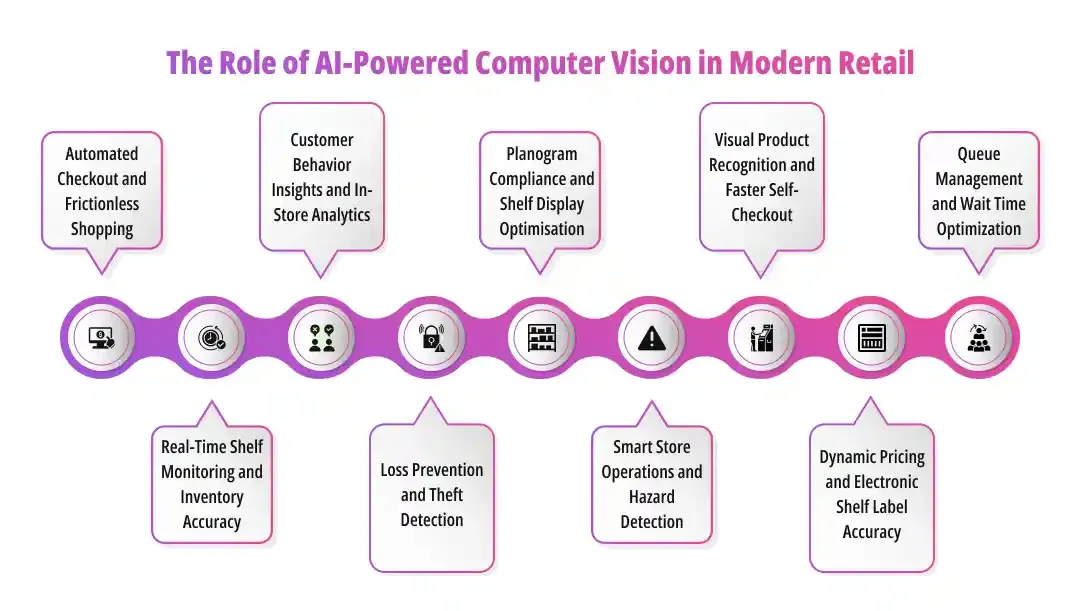
How Computer Vision is Transforming Retail: Key Use Cases
Computer vision is changing the way retail teams work. Tasks that once depended on slow manual checks now move at the speed of visual intelligence running in real time.
The use cases below show how retailers are already putting it to work in stores of every size.
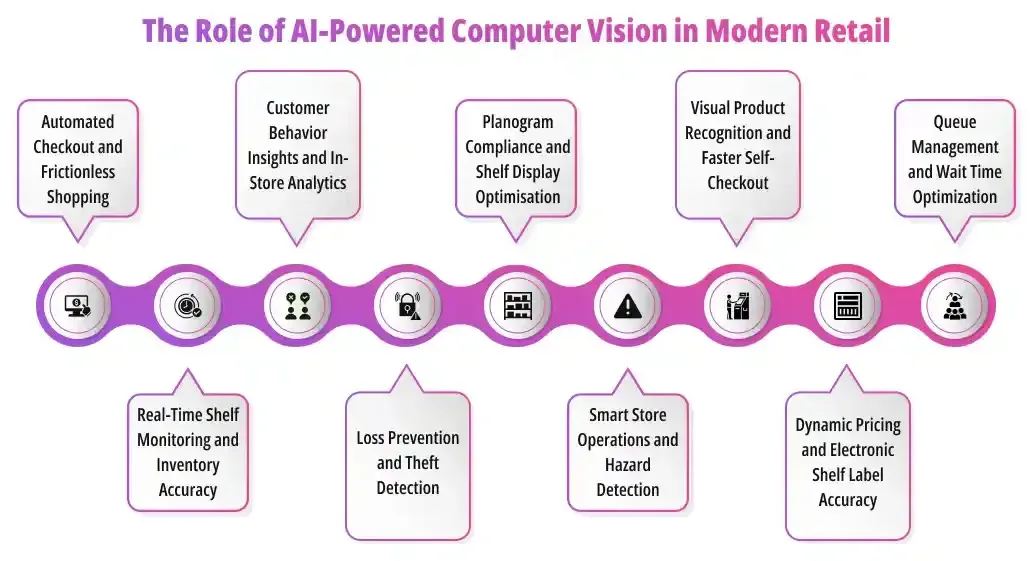
1. Automated Checkout and Frictionless Shopping
Retailers use computer vision to remove the pain points of long lines and traditional scanning. When a shopper picks up items and walks out, vision systems track what they selected, match it to their account, and complete the transaction without stopping. This creates a smoother experience and frees staff to focus on help rather than checkout.
Business Benefits
- Shorter queues and happier customers
- Higher throughput during peak shopping hours
- Fewer errors compared to manual scanning
Real-Life Example
Amazon Go uses computer vision to power its Just Walk Out technology. Cameras track the items shoppers take from the shelves and charge them automatically as they exit. This model proves that checkout can disappear entirely when vision systems understand real-time shopper behavior.
2. Real-Time Shelf Monitoring and Inventory Accuracy
Stores lose sales when products are misplaced, mispriced, or missing from shelves. Computer vision keeps an eye on inventory in real time and flags gaps or errors the moment they appear. Staff can respond faster, and shoppers get the products they came for.
Business Benefits
- Fewer out-of-stock moments
- More accurate pricing and shelf labeling
- Better compliance with planograms
- Reduced time spent on manual audits
Real-Life Example
Walmart tested computer vision for shelf scanning through in-store robots that monitor inventory levels and identify missing products. The system helped staff restock faster and improved shelf accuracy across high-traffic aisles.
3. Customer Behavior Insights and In-Store Analytics
Retailers use computer vision to understand how shoppers move, pause, and interact with products. Vision systems track foot traffic patterns and dwell times so teams can design layouts that match how people naturally shop.
Business Benefits
- Better store layouts informed by real shopper patterns
- Improved product placement decisions
- Smarter staffing during busy hours
Real-Life Example
Zara’s parent company, Inditex, uses computer vision and analytics to study shopper flows and product engagement inside stores. These insights shape layout changes that improve conversions and reduce bottlenecks.
4. Loss Prevention and Theft Detection
Retail shrinkage costs stores billions every year, and traditional video surveillance alone often catches issues too late. With computer vision, retailers can spot suspicious behavior or checkout anomalies in real time so teams can act before losses multiply and customers feel unsafe.
Business Benefits
- Early detection of potential theft or suspicious movement
- Reduced shrinkage from checkout manipulation and concealment
- Faster alerts sent to store staff or security
- Gives teams clearer evidence to review when incidents happen
Real-Life Example
Weis Markets, a grocery chain with nearly 200 stores, is rolling out advanced AI systems at its self-checkout lanes that automatically identify produce and detect potential theft in real time. The technology has already been adopted by more than 94 percent of self-checkout users and helps reduce loss while speeding up the shopping experience.
5. Planogram Compliance and Shelf Display Optimisation
Keeping products arranged correctly matters more than most people realize. When shelves don’t match the intended layout, it can confuse shoppers, hurt sales, and lead to wasted space. Computer vision watches shelves and compares what it sees to the store’s planogram, helping teams fix issues quickly instead of discovering them during slow manual audits.
Business Benefits
- Better adherence to merchandising plans
- Fewer lost sales due to misplacement
- Faster fixes when products stray from their intended spot
- Helps marketing teams ensure promotions are displayed correctly
Real-Life Example
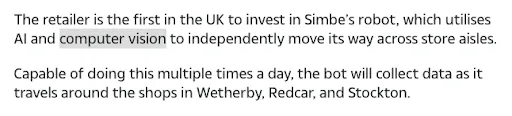
Morrisons, a major UK supermarket chain, is trialling autonomous inventory robots that use computer vision to scan aisles for product placement and compliance. These robots can check tens of thousands of products per hour and help associates focus more on customer service and less on time-consuming shelf audits.
6. Smart Store Operations and Hazard Detection
Retail floors change constantly. Spills, fallen items, blocked aisles, and equipment issues can create safety risks or slow down the shopping experience. Computer vision keeps watch in real time and alerts teams the moment something needs attention so problems get fixed long before they disrupt customers.
Business Benefits
- Faster response to hazards and in-store issues
- Cleaner and safer shopping environments
- Less time spent on manual floor checks
- Reduced risk of accidents or liability
- More consistent store standards across every location
Real-Life Example
Carrefour has partnered with AI companies to pilot computer vision systems that detect spills, clutter, and hazards on store floors. These systems send alerts to employees so they can fix issues quickly which helps maintain safety standards across busy locations.
7. Visual Product Recognition and Faster Self-Checkout
Shoppers move quickly, and scanning items one by one can slow everything down. Computer vision helps by recognizing products instantly as they appear at self-checkout kiosks so customers spend less time wrestling with barcodes and more time finishing their trip.
Business Benefits
- Faster self-checkout experiences
- Fewer scanning errors
- Easier identification of produce and loose items
- Reduced frustration for both shoppers and staff
- Shorter queues during peak hours
- Smoother flow for high-volume stores
- Better accuracy for promotions or weighed items
Real-Life Example
Auchan Retail introduced computer vision powered self-checkout technology that recognizes products placed in front of the camera without needing a barcode. Early pilots showed faster checkout times and fewer errors, especially for produce and bakery items.
8. Dynamic Pricing and Electronic Shelf Label Accuracy
Prices change often in retail, and keeping them updated across thousands of items can turn into a daily headache. Computer vision helps by spotting price mismatches, checking label accuracy, and syncing with digital shelf labels so stores stay aligned with promotions, discounts, and inventory needs.
Business Benefits
- More accurate shelf pricing
- Faster price updates across departments
- Better execution of promotions and discounts
- Less manual work required from staff
- Fewer customer disputes at checkout
- Improved consistency across multiple store locations
Real-Life Example
Kroger partnered with Microsoft to bring digital shelf technology to stores, combining computer vision and smart shelf displays to manage real-time price updates and promotions. This setup ensures accurate pricing at scale and reduces the time staff spend updating labels manually.
9. Queue Management and Wait Time Optimization
Long lines can frustrate customers and hurt sales. Computer vision keeps an eye on queue lengths and identifies when service counters need extra support. Stores can react instantly which helps maintain smoother traffic flow and a more relaxed shopping experience.
Business Benefits
- Shorter wait times for customers
- Better allocation of staff during rush periods
- Improved checkout efficiency
- Fewer abandoned purchases
- Clear visibility into peak-hour patterns
Real-Life Example
ALDI has been testing computer vision systems in select markets to track queue lengths and notify staff when additional checkout lanes need to open. These systems help maintain short lines and improve the overall pace of store operations.
Revolutionize Your Retail Business Operations with Prismetric’s Future Proof Computer Vision Development Services
At its core, Prismetric builds custom technology that helps retailers work smarter and faster. They don’t just deliver software, they design AI systems and visual intelligence tools that fit the way your business actually operates, whether you’re a growing chain or a global brand.
When it comes to retail, Prismetric brings computer vision expertise together with deep experience in data engineering, ML development, and system automation. That means you’re not just getting a vision model; you’re getting a complete solution that can watch shelves, analyze shopper behavior, detect hazards, and improve checkout experiences right inside your store’s workflows.
What sets them apart is the way they tailor every project from the ground up. Prismetric begins by understanding your challenges, maps out the best AI tools for your goals, and then builds everything to scale with your existing systems. Whether you need vision-powered inventory tracking, customer flow analytics, or loss prevention tools, their team can create and integrate the right solution for your business vision.
With Prismetric as your computer vision development partner, retail operations become more efficient and more intelligent. You get systems that reduce manual work, boost accuracy, and turn visual data into actionable insights freeing your teams to focus on serving customers and growing your business.
Frequently Asked Questions
Computer vision helps retail teams understand what is happening in the store the moment it happens.
- Spots low-stock shelves before they affect sales
- Tracks foot traffic patterns and shopper movement
- Identifies spills, hazards, or blocked aisles in real time
- Reduces scanning errors at checkout
- Highlights issues that normally go unnoticed during manual checks
Yes, and many already do. Smaller retailers usually start with a focused use case like shelf monitoring or queue tracking because it delivers value right away. As they see results, they expand into other areas.
The cost keeps dropping as hardware becomes cheaper and models become more efficient which makes it accessible even for stores with tight budgets.
No, it supports them. Vision systems handle repetitive tasks that take time away from customer service such as checking shelves, spotting spills, or verifying labels. When these tasks run automatically, staff can spend more time helping shoppers, managing departments, and handling work that needs a human touch.
Modern vision models are highly accurate when trained on the right data and tailored to a store’s environment. They can recognize products, detect missing items, and verify price labels with impressive consistency. Accuracy continues to improve as retailers feed real shelf images, lighting conditions, and product variations into their models.
Most retailers use a mix of existing security cameras, edge devices, and small in-store sensors. In many cases, the current camera setup is enough because computer vision models run on top of the video feed.
More advanced use cases like frictionless checkout may require additional cameras or sensors, but simpler tasks need very little new hardware.
Yes, as long as retailers follow strong privacy guidelines. Most systems do not store personal identities. They focus on patterns like movement, shelf activity, dwell time, or product interactions. Many solutions process video on local devices and avoid sending raw footage to the cloud which helps protect customer privacy and meet regulatory expectations.