Emergent Alternatives: Exploring the Top Competitors in 2026
Key Takeaways
- About 63 percent of businesses switch no-code AI tools like Emergent within a year due to scalability, integration, and workflow limits.
- Vitara offers modular workflows, memory, and API support, making it suitable for scalable, production-ready AI agents.
- Lovable and Base44 help non-technical teams build real AI apps quickly using prompts, visual workflows, and ready-made templates.
- Bolt.new and Replit enable full-stack AI app development with real code, GitHub sync, and one-click deployments.
- The right alternative depends on team skills, product goals, and whether backend control or speed to launch matters more.
Are you exploring AI tools but finding Emergent AI too limited for your needs? Are you struggling with scaling, customization, or pricing unpredictability? Or maybe you’re just looking for a platform that better fits your business use case?
If so, you’re probably searching for Emergent AI alternatives that offer more flexibility, faster onboarding, stronger integrations, and transparent pricing all while delivering real business value.
Emergent AI has quickly gained popularity among startups and teams building AI agents without heavy coding. It’s clean, easy to use, and great for prototyping. But as your product matures, you might face roadblocks like limited scalability, lack of advanced workflows, integration gaps, or concerns around control and support.
In fact, according to a recent report by Gartner, over 63% of organizations experimenting with no-code AI tools end up switching platforms within the first year due to scalability and integration challenges.
That’s where this guide comes in.
In this blog post, we’ll break down the top 5 Emergent AI alternatives, highlighting AI tools that help you build smarter, more scalable AI solutions.

Our Criteria for Ranking the Top Emergent AI Alternatives
We began by evaluating over 25 AI agent platforms, automation tools, and no-code/low-code AI builders. This list was compiled from trusted sources like G2, Capterra, Product Hunt, and verified user communities. From there, we analyzed each platform across several critical factors to ensure a fair and practical comparison.
Here’s what we focused on:
- Ease of Use: How quickly can someone with minimal technical experience get started and see value?
- Scalability: Does the platform grow with your business or hit limits too soon?
- Custom Workflow Support: Can users build advanced logic and agent behavior without deep coding?
- Integration Capabilities: Does it connect easily with third-party apps, APIs, databases, and CRMs?
- Pricing Transparency: Are the costs predictable, fair, and aligned with usage?
- Speed to Deploy: How long does it take to go from idea to working solution?
- Community & Support: Is there strong documentation, onboarding help, and an active support channel?
Detailed Comparison of Top Emergent Alternatives
| Tool |
Best For |
Skill Level |
Code Export |
Backend / Database |
Deployment Options |
Integrations / APIs |
Collaboration / Version Control |
Pricing Entry |
Best Stage |
| Vitara.ai |
Complex workflows & enterprise use cases |
Intermediate to Advanced |
Limited / Partial |
Strong workflow + backend logic |
Cloud-based |
Strong API integrations |
Team-friendly, structured workflows |
Mid-tier |
MVP → Production |
| Lovable.dev |
Non-technical founders & quick apps |
Beginner |
No |
Basic backend support |
Hosted deployment |
Limited integrations |
Minimal collaboration features |
Low / Free tier |
Prototype → MVP |
| Replit |
Developers who want full control |
Intermediate to Advanced |
Yes (full code access) |
Full backend + database control |
Flexible (cloud + export) |
Extensive API support |
Strong collaboration + versioning |
Free + usage-based |
MVP → Production |
| Bolt.new |
Fast MVPs with real code output |
Beginner to Intermediate |
Yes |
Moderate backend support |
One-click deploy |
Growing API ecosystem |
Basic collaboration |
Low to Mid |
Prototype → MVP |
| Base44 |
No-code builders needing backend power |
Beginner to Intermediate |
Limited |
Solid backend capabilities |
Cloud deployment |
Good integrations |
Moderate collaboration |
Mid-tier |
MVP → Production |
What are the challenges with Emergent and why current users are looking for alternatives?
1. It works fast for demos, but some users hit limits when the app starts getting real.
One Reddit user said tools like Emergent feel great for quick demos, but once the app grows beyond a few screens, things can start breaking. They specifically mentioned issues like missing auth, weak backend depth, and random API errors, which is exactly where buyers start looking for something more dependable.
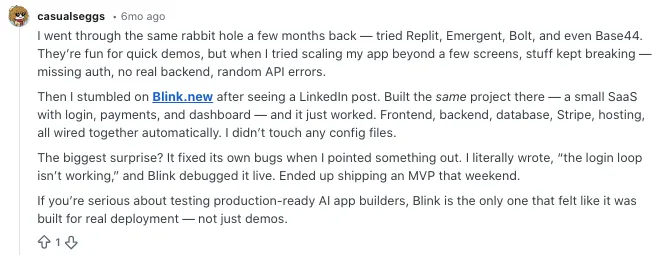
Source of Information: Reddit
2. Production-readiness is still a big concern.
This is one of the clearest themes across the category. Competing pages keep drawing a line between tools that are good for rapid prototyping and tools that can support production apps with stronger infrastructure, deployment control, and long-term maintainability. That tells you the market sees this as a real gap, not a minor objection.
3. Integrations become painful once the product needs to connect with real business systems.
As soon as a team needs APIs, internal tools, databases, or third-party services to work reliably together, expectations change. Competitor pages keep highlighting advanced integrations as a reason teams move away from lighter AI app builders, and Emergent’s own content around what makes a better alternative also points to the need for cleaner external connections without fragile workarounds.
4. Pricing clarity matters more than most listicles admit.
In the Reddit thread, one user directly said they couldn’t easily find pricing details and were worried about surprise publishing costs. Another reacted sharply to a high monthly figure. That kind of response usually means buyers are not just comparing features anymore. They’re trying to avoid cost surprises before they commit to a platform.
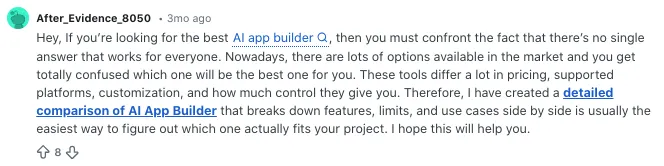
Source of Information: Reddit
5. Buyers are actively trying to avoid platform lock-in.
When people compare Emergent alternatives, they’re often really asking a deeper question: “Will I still have control when this app grows?” That’s why competitor comparison tables keep emphasizing code export, deployment flexibility, and version control.
Those are not just features. They’re escape hatches buyers want before they invest too much time.
6. The trust factor is weaker when community conversations feel promotional.
The Reddit thread also includes skeptical reactions from users calling out comments that felt more like advertising than genuine experience. That matters because trust plays a huge role in this category. If buyers feel the conversation is too hype-driven, they naturally start looking for alternatives with stronger proof, clearer positioning, and more grounded product claims.

Source of Information: Reddit
Top 5 Alternatives and Competitors of Emergent AI to Explore in 2026
So here is the list of alternatives to emergent AI you came for:
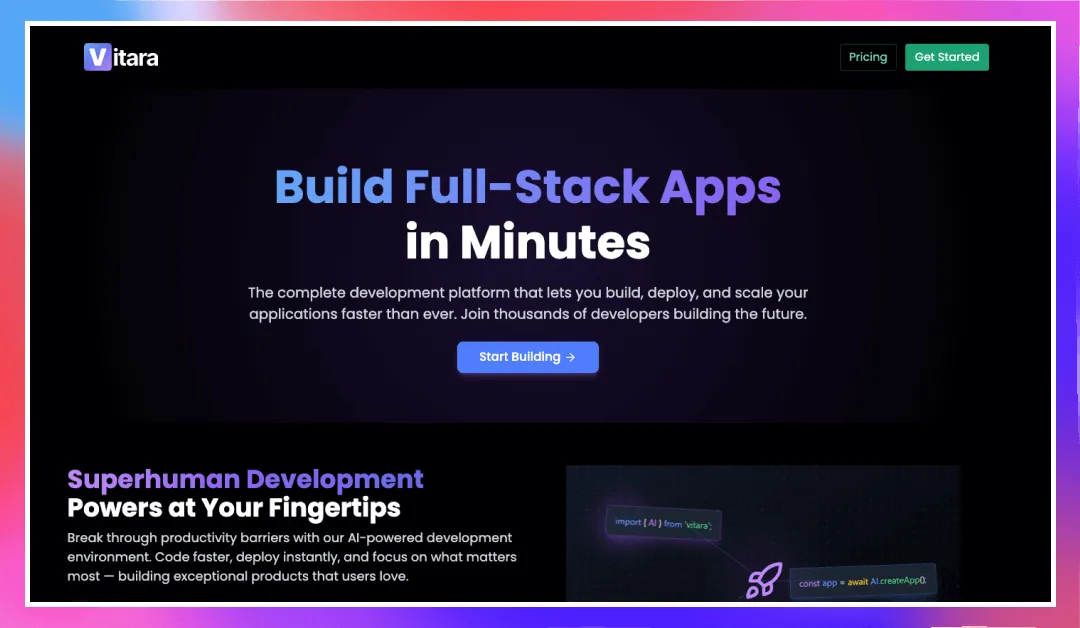
Vitara brings advanced control and scalability to the AI agent-building space. Unlike Emergent AI, which focuses on simplicity, Vitara is designed for teams that need flexible workflows, persistent memory, and deeper customization. It features a modular system where agents are built with reusable blocks, each capable of handling logic, memory, and API calls.
This makes it a solid pick for technical teams or businesses scaling AI-driven operations, especially when workflow complexity or cross-platform integration becomes a challenge.
Key features:
- Modular agent builder with drag-and-drop workflow logic
- Built-in long-term memory and dynamic context switching
- Native API and webhook integration
- CLI and GitHub sync for advanced users
- Role-based access for collaborative teams
Best for: Teams building scalable, logic-heavy AI agents with custom workflows and integration needs
Pricing:
- Starter Plan: Free
- Build Plan: $20/month
- Scale Plan: $50/month
- standard plan: Custom
(Refer to their official pricing page for current pricing)
Emergent AI alternative for: Full-stack, production-grade AI app creation
2. Lovable
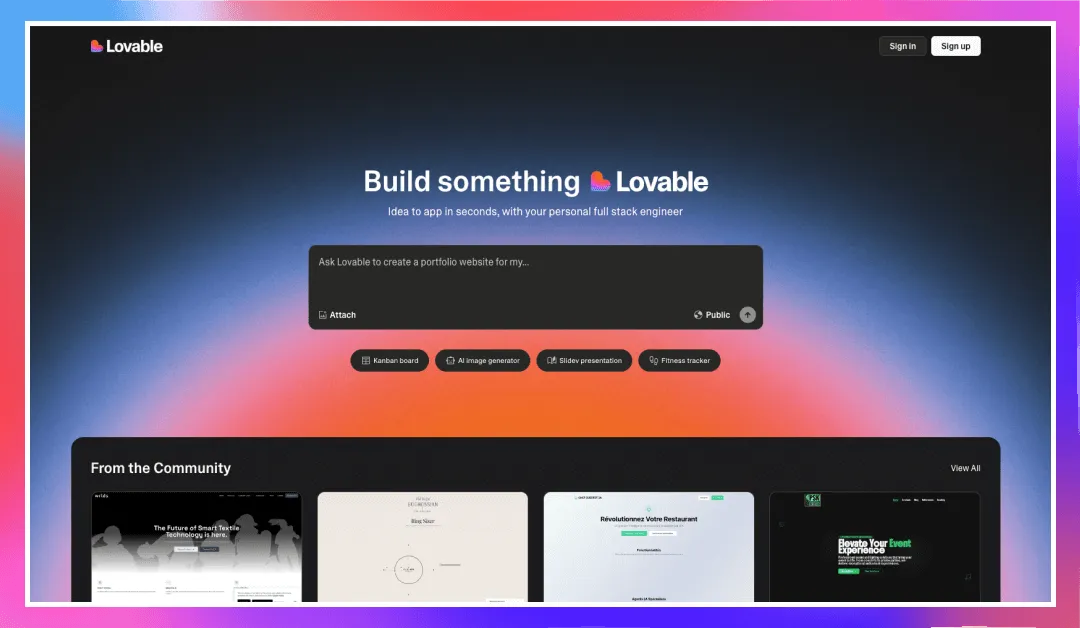
Lovable focuses on speed and simplicity in AI agent creation. Unlike Emergent AI, which sometimes requires tweaking to get results right, Lovable lets users go from prompt to prototype in just minutes. It’s built for teams who want to test ideas quickly, iterate visually, and deploy lightweight agents with minimal friction.
That makes it a great choice for founders, product teams, or ops leads looking to automate basic tasks like customer support, onboarding, or lead qualification without relying on developers.
Key features:
- Prompt-to-agent creation with natural language input
- Visual editor for prompt flows and logic tuning
- Prebuilt templates for common business use cases
- Real-time testing interface
- Team collaboration and version control
Best for: Startups and teams needing quick, no-code AI agent deployment for simple business tasks
Pricing:
- Starter Plan: Free
- Pro Plan: $25/month (includes 100 credits)
- Business Plan: $50/month
- Custom Plan: Custom pricing.
(Check the official pricing page for the latest details)
Emergent AI alternative for: Full-stack, production-grade AI app creation
3. Replit
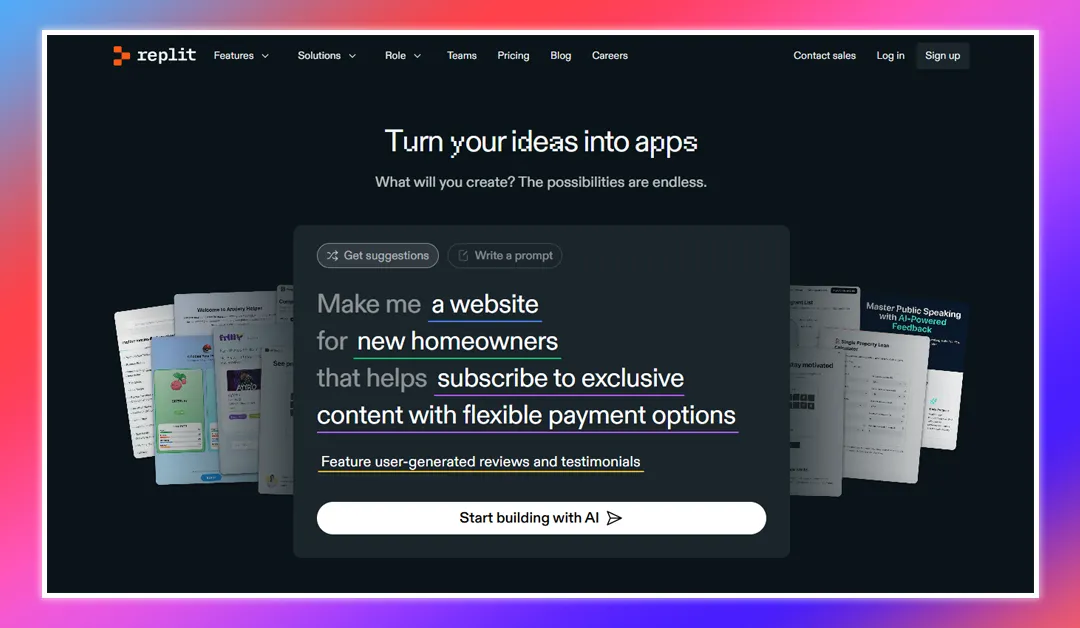
Replit brings full-stack development into the browser, combining AI assistance with live deployment and database support. Unlike Emergent AI, which focuses on no-code agent workflows, Replit supports frontend and backend coding, real-time collaboration, and instant deployment all in one place.
This makes it a powerful choice for developers, product engineers, and teams that want a flexible, code-first environment without managing local setups or infrastructure.
Key features:
- Cloud IDE for frontend and backend development
- Built-in Ghostwriter AI assistant
- Database hosting and one-click deployment
- Real-time collaboration and team workspaces
- Secure access controls and version history
Best for: Teams needing flexible, full-stack development with built-in AI and cloud deployment
Pricing:
- Starter Plan: Free
- Core Plan: $20/month
- Pro Plan: $100/month per user
- Enterprise Plan: Custom
(Check their official pricing page for up-to-date details)
Emergent AI alternative for: Full-stack, production-grade AI app creation
4. Bolt.new
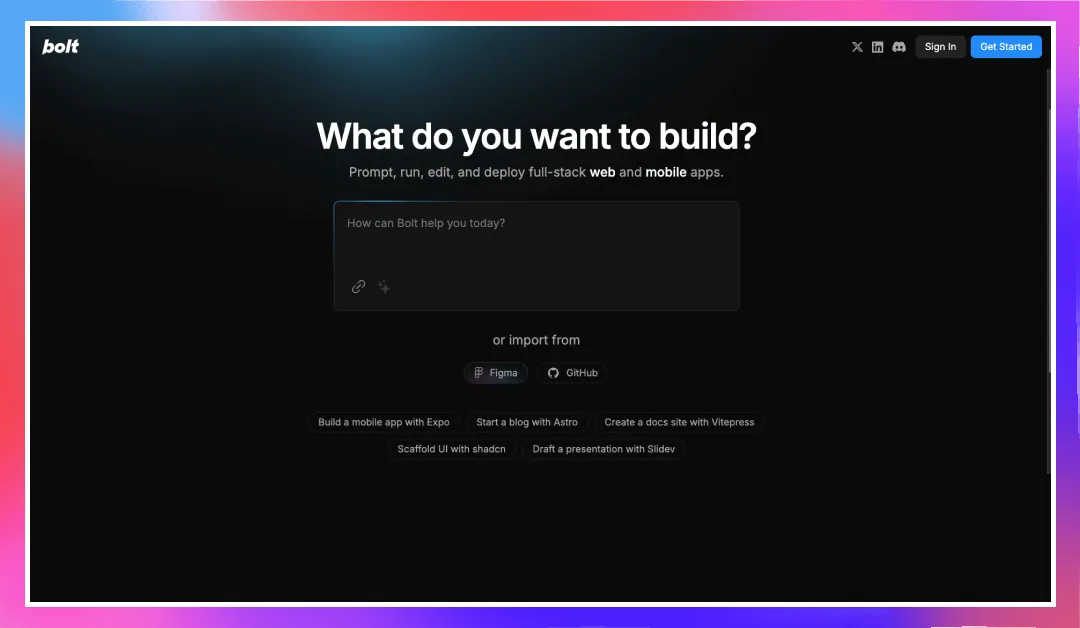
Bolt.new delivers full-stack web apps from natural language prompts. While Emergent AI focuses on building logic-based agents, Bolt.new takes a developer-first approach by generating actual deployable apps using modern tools like React, Node.js, Prisma, and PostgreSQL.
This makes it ideal for startups and product teams looking to build MVPs that are not just demos, but production-ready.
Key features:
- Natural language prompt-to-app generation (frontend and backend)
- Code export and GitHub sync
- Built-in authentication, database, and API layers
- Developer-friendly stack with real codebase control
- One-click deployment environment
Best for: Startups and product teams building MVPs with real backend and frontend structure
Pricing:
- Starter Plan: Free
- Pro Plan: $20/month
- Team Plan: $50/month
- Enterprise Plan: Custom
(Visit the official pricing page for the latest updates)
Emergent AI alternative for: Full-stack, production-grade AI app creation
5. Base44
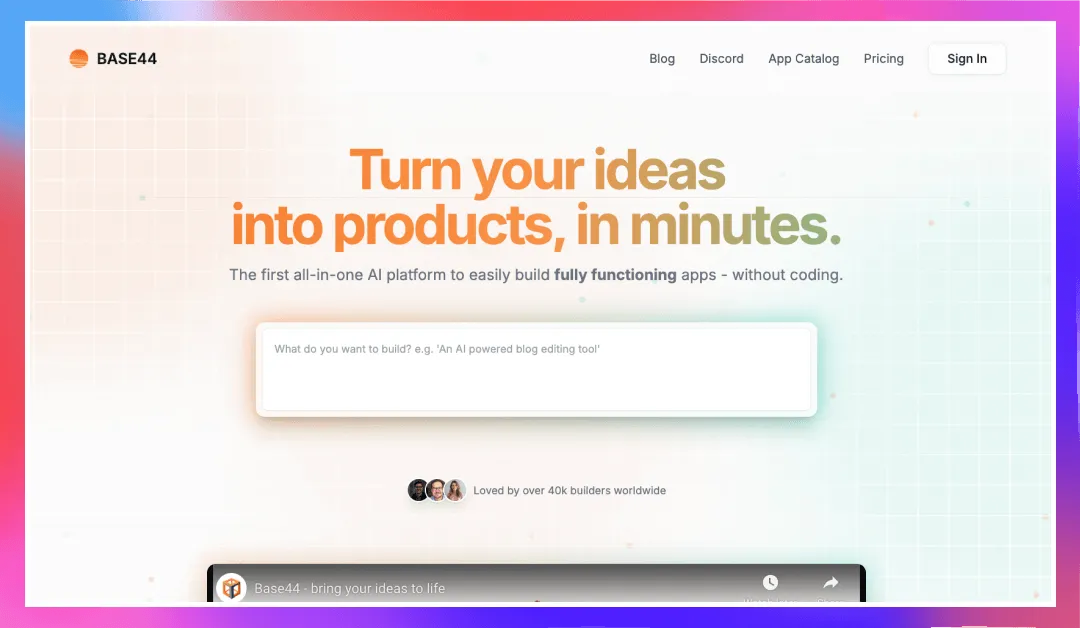
Base44 is a no-code platform powered by AI that lets you build and launch full-featured web apps through simple prompts and visual workflows. Unlike Emergent AI, which can become limited when building beyond simple agent flows, Base44 gives you full control over frontend, backend, authentication, and integrations all without writing a single line of code.
This makes it a great option for teams that want to move fast, test ideas, and deliver working apps without heavy developer support.
Key features:
- Prompt-based app builder with backend automation
- Visual workflow editor with conditional logic
- Built-in auth, database, and analytics modules
- Integrations with external APIs and third-party tools
- Multi-user collaboration and project management
Best for: Founders, product teams, and non-technical users building real apps without code
Pricing:
- Basic Plan: Free
- Starter Plan: $20/month
- Builder Plan: $50/month
- Pro Plan: $100/month
- Elite Plan: $200/month
(Check the official pricing page for updated information)
Emergent AI alternative for: Full-stack, production-grade AI app creation
Choosing the Right Emergent Alternative (Simple Guide)
Choose Vitara if…
You’re building something more serious—think integrations, workflows, or team-based apps. It’s better suited when your project needs structure, scalability, and more control beyond basic app builders.
Choose Lovable if…
You don’t want to touch code and just need something working fast. It’s great for testing ideas, building simple apps, or getting a prototype in front of users without overthinking the setup.
Choose Replit if…
You care about control and flexibility from day one. If you’re comfortable with code and want to build something you can scale, customize, and actually own, Replit makes more sense.
Choose Bolt.new if…
You want speed, but not at the cost of real code. It’s a good middle ground when you need to launch an MVP quickly and still keep the option to tweak things later.
Choose Base44 if…
You prefer no-code but your app isn’t that simple. If you need backend logic, data handling, or slightly more complex workflows, Base44 gives you that extra layer without getting too technical.
Final Thoughts
While Emergent AI is a strong starting point for building lightweight, no-code AI agents, it can fall short when projects demand more advanced workflows, backend customization, and third-party integrations. As your needs grow, so should your tools.
If you’re searching for alternatives that support real production-grade apps, deeper logic control, and scalable infrastructure, the platforms covered above offer reliable, flexible solutions. Whether you’re a solo founder testing MVPs, a fast-moving startup automating workflows, or a technical team building intelligent agents at scale, there’s an Emergent AI alternative designed for your use case.
And the best part? Many of these tools offer free tiers or affordable entry plans, making it easy to explore and experiment before committing long-term. Choose the one that fits your workflow, team, and vision and start building smarter.
Frequently Asked Questions
There isn’t one single best option for everyone. The right choice depends on what you’re building, how much control you need, and whether you care more about fast prototyping or long-term product development.
If you want the safest all-around pick, Replit stands out for developers, Lovable works well for non-technical users, and Vitara makes more sense for teams building more structured, workflow-heavy apps.
For most non-technical users, Lovable is usually the easiest place to start.
- It’s simple to use
- It helps you move from idea to prototype fast
- It doesn’t expect deep coding knowledge
- It works well for early-stage products and quick validation
If your goal is speed and simplicity, Lovable is often the least overwhelming choice.
If you’re thinking beyond mockups and MVPs, Replit and Vitara are stronger picks than lighter prompt-to-app tools.
Replit is better when you want code-level control, flexible deployment, and room to scale. Vitara is a better fit when your app depends on structured workflows, integrations, and team collaboration from the start.
Some tools give you more ownership than others, and that matters a lot once your product starts growing.
Replit is the clearest choice here because it gives you real code access. Bolt.new also makes sense if code export matters to you, while tools like Lovable and Base44 may offer less flexibility depending on how you plan to extend the app later.
Yes, some of them can work well for mobile-focused projects, but not all of them are equally strong if you want a polished, production-ready mobile experience.
Here’s the simple way to look at it:
- Good for fast mobile-friendly prototypes: Lovable, Bolt.new
- Better for deeper app logic and flexibility: Replit, Vitara
- Worth considering for no-code mobile-style workflows: Base44
If mobile is your main priority, you should look closely at deployment options, responsive design support, and backend handling before choosing.
Pricing predictability usually comes down to how transparent the platform is and how quickly usage-based costs can grow.
If you want fewer surprises, look for tools with:
- clear starter plans
- simple feature limits
- transparent deployment or publishing costs
- less dependence on hidden usage-based pricing
In many cases, buyers prefer platforms with more visible pricing over tools that feel cheap at first but become expensive once the app starts getting traction.
For many developers, yes. Replit usually makes more sense when you want actual control over the codebase instead of relying mostly on prompt-driven generation.
It’s the better choice if you care about customization, debugging, deployment flexibility, and long-term maintainability. Emergent may feel faster for early experimentation, but Replit often wins once the project gets more serious.