Anthropic Launched A New AI Tool That Has Global Software On Edge
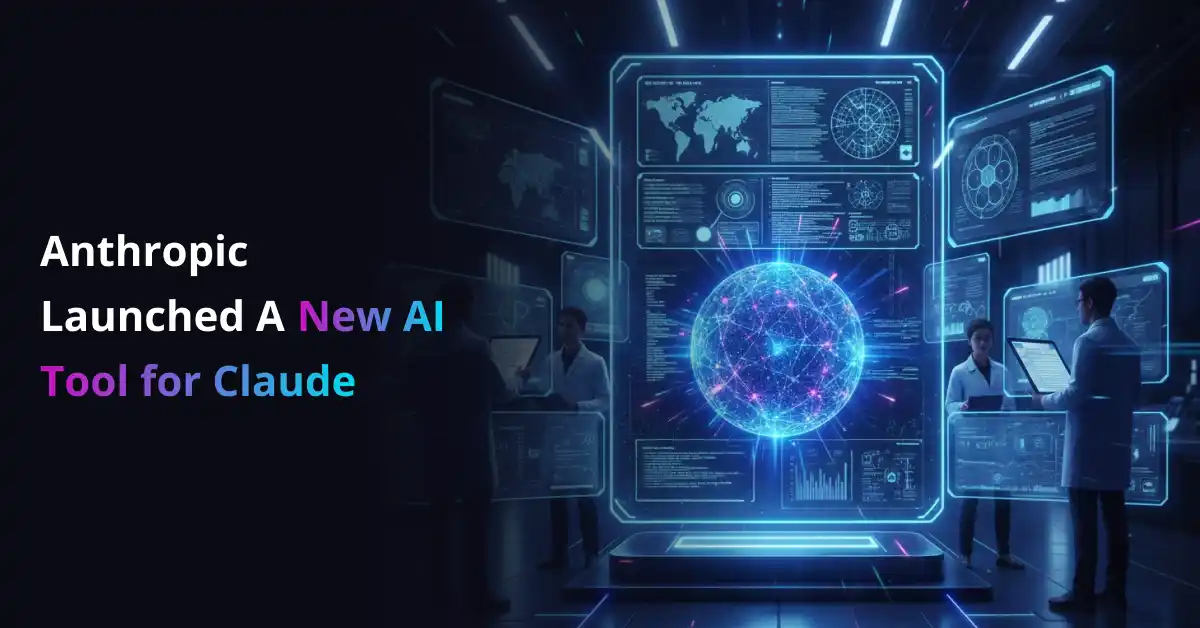
Anthropic just launched a new AI tool for its Claude agent, and it has the global software industry asking hard questions about the future.
The company rolled out a pack of AI plugins for its Claude Cowork agent that can run complex workflows for corporate teams, starting with legal work and expanding into sales, marketing, and data analysis.
The reaction was instant. In a matter of days, a sharp selloff in software and data companies wiped out hundreds of billions of dollars in market value, and nearly 1 trillion dollars over a longer window, as investors tried to price in the risk that AI agents could replace parts of the existing software stack.
This is not just a market story though, it is a signal of how fast AI agents are moving from “nice extra” to “main interface” in the enterprise world.
AI Agents In Software: Powerful But Disruptive
AI already sits inside many tools as a helper. It writes emails, drafts code, summarizes documents, and answers basic questions. The rise of agents is different. Instead of giving you a feature inside an app, an AI agent becomes the front door for the whole workflow.
In this model, you tell the agent what you want done, and it decides which tools and data to use. That is a big shift from the current pattern where people jump between separate apps for documents, contracts, tickets, analytics, and email. For software companies that have spent years fighting for “time in app”, the idea that users might talk to an AI layer first is uncomfortable.
This is why Anthropic’s launch hit a nerve. It shows a real, working example of AI workflow automation, not just a chatbot that writes nicer text. And it arrives at a time when many companies, from small SaaS vendors to giants like Microsoft and Adobe, are still figuring out how to position themselves in an AI heavy world.
What Exactly Did Anthropic Launch?
Earlier in January, Anthropic introduced Claude Cowork, an “agentic” AI assistant that can live in a folder on your system, read and modify files with your permission, and handle multi step tasks through a simple chat interface.
Think of it as a general purpose office coworker that understands documents, code, and business context.
The new move is a set of plugins for Claude Cowork, with the most visible one aimed at legal teams. This legal automation plugin is designed to take on routine but heavy work: reading long contracts, extracting key clauses, comparing them against company playbooks, flagging risks, and drafting new versions and summaries that a lawyer can review.
On top of that, Anthropic also shipped plugins that let Claude Cowork automate parts of sales, marketing, and data analysis workflows. For example, it can pull from CRMs and documents, then prepare a sales brief, or scan campaign data and generate a performance summary.
In every case, the pattern is the same: the user describes the outcome, the agent handles the steps.
Anthropic is careful in its language. The company says the legal tool does not give legal advice and that qualified lawyers must review the output.
On paper, humans stay in charge. In practice, a big chunk of “junior” work shifts from people to an AI layer that never sleeps.
Why Global Markets Reacted So Strongly
Once the legal plugin was announced, shares in major data and legal service providers dropped sharply. Companies like Thomson Reuters, RELX and Wolters Kluwer saw some of their steepest one day falls in years, as investors worried that high margin research and workflow tools could be undercut by AI agents sitting on top of raw data.
The selloff then widened to a broader list of software names, including global software and advertising firms, as traders began to treat this as a wake up call for the whole sector.
The fear is simple: if agents like Claude can coordinate tasks across many tools, some standalone products may be reduced to quiet background services. Seat based pricing and “time in app” metrics look weaker in a world where the main seat belongs to the agent itself.
Not everyone agrees with the panic. Nvidia chief Jensen Huang called the multi hundred billion dollar wipeout “illogical”, arguing that AI will change how software is built and used, but will not erase every existing vendor.
Executives at firms like Arm have also described the selloff as short term “micro hysteria”, pointing out that enterprise AI is still in the early stages and that many software companies are already building their own AI layers.
Making Enterprise AI Tools Responsible And Useful
The launch also revives an important question: how should AI be used inside core business workflows. When an AI agent can rewrite contracts or summarize sensitive data, accuracy, security, and transparency can not be afterthoughts.
First, data access and privacy matter. Tools like Claude Cowork work best when they can see documents, emails, and internal systems. That makes permission design, logging, and clear boundaries critical. Companies need to know what the agent saw, what it did, and who approved the output.
Second, there is the problem of trust. Legal and financial work often requires a clear trail of reasoning, not just a confident answer. If an AI plugin changes a key clause, teams need to understand why that change happened and what sources the model relied on. That will push vendors to invest in better explanations, stronger guardrails, and tools that make human review easier instead of skipping it.
Finally, there is the human side. Jobs that center on repetitive document work will feel the pressure first, but new roles also open up around workflow design, AI supervision, and policy setting. The companies that adapt best are likely to be the ones that upskill their people and treat AI as a powerful assistant, not a black box replacement for human judgment.
The Path Forward For Global Software Companies
Anthropic’s new tool is a clear sign that AI agents are moving into the heart of business workflows, starting with legal and data heavy tasks and then spreading wider.
For global software and services firms, the message is blunt. Products that are just a thin layer over common operations are at risk. Products that own critical data, enforce policies, and work well with agents have a better chance of staying central in the stack.
In other words, this is not simply a story about one company’s launch. It is an early look at a larger shift where the main “user” of software might be an AI agent instead of a human. The firms that treat this as a design constraint, not a threat, are the ones most likely to come out ahead when the panic fades and the real restructuring begins.